
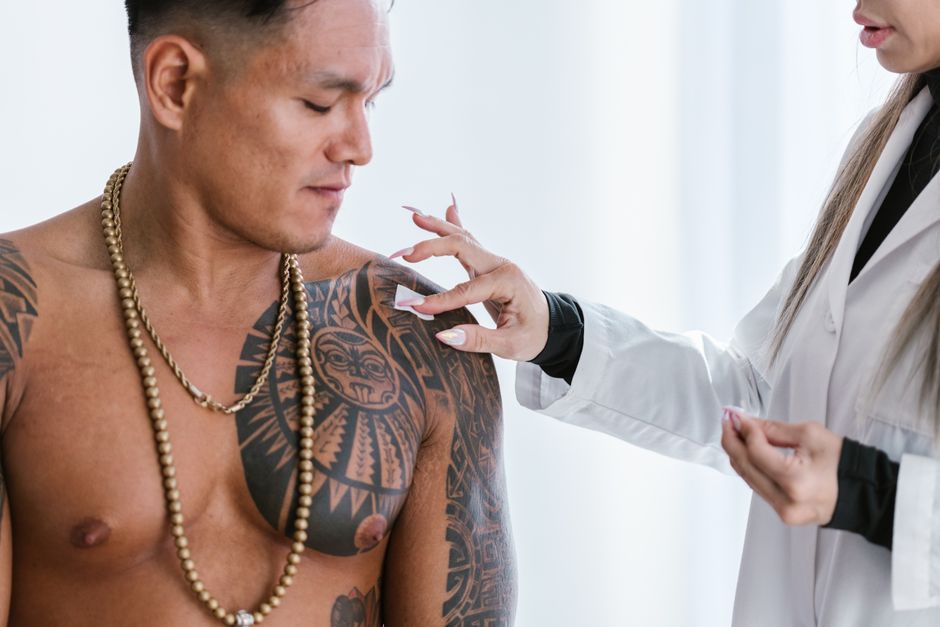
Aquaphor is one of the most commonly recommended products for tattoo aftercare, and it can be appropriate when used correctly. The key word is correctly. Aquaphor is a heavy ointment, and applying too much of it — or using it too early or too long — can cause problems that range from minor irritation to damage to the tattoo itself. Used in a thin layer during the right phase of healing, it is a reasonable option for many people.
Is Aquaphor Good For Tattoos?
Aquaphor Healing Ointment is a petrolatum-based product. Its main ingredient is petrolatum, also called petroleum jelly, which forms a semi-occlusive barrier on the skin. This barrier reduces water loss from the skin surface and helps protect the wound from outside contaminants.
The logic behind using it on a new tattoo is straightforward. A fresh tattoo is essentially a superficial wound. The skin has been punctured repeatedly by needles, creating an open surface that needs to heal. Keeping that surface moist supports the healing process and reduces the risk of scabbing too heavily.
Petrolatum-based ointments do serve this purpose. They create a protective seal that helps maintain a moist wound environment. This is a well-established principle in wound care generally. The challenge with tattoos is that the product must be applied in a very thin layer. A thick coating traps moisture, bacteria, and heat against the skin. That combination can soften the tattooed skin excessively, potentially pulling ink out along with the scab, and can create conditions where bacteria multiply.
So the answer is conditional. Aquaphor can be a good choice during the early healing phase if applied sparingly. It is not a good choice if applied thickly, used for too long, or used as a substitute for proper wound hygiene.
How Should Aquaphor Be Applied To A New Tattoo?
The technique matters as much as the product. A common mistake is treating the tattoo like dry skin and applying a visible layer of ointment. That is too much.
The appropriate amount is often described as a thin film — enough to give the tattoo a slight sheen without any visible white residue. Some artists describe it as the amount you would use if you were trying to blot the surface rather than coat it. If the tattoo looks greasy or wet, too much has been applied.
General steps that align with common aftercare guidance:
- Wash your hands thoroughly before touching the tattoo.
- Gently clean the tattoo with lukewarm water and a mild, fragrance-free soap. Pat dry with a clean paper towel. Do not rub.
- Apply a very thin layer of Aquaphor over the tattoo surface.
- Blot away any excess with a clean paper towel.
- Repeat this cleaning and reapplication process a few times daily during the initial healing phase.
Your tattoo artist’s specific instructions should take priority over general guidance. Artists see how different skin types respond and may have preferences based on their experience with their own clients.
How Long Should You Use Aquaphor On A Tattoo?
Aquaphor is generally suited to the first few days of healing, not the entire healing process. Many artists recommend using it for roughly the first three to five days, then switching to a lighter, fragrance-free moisturizer or lotion for the remainder of the healing period.
The reason for the switch is that petrolatum is very heavy. Once the initial wound-closing phase has passed, the skin benefits from moisture that allows it to breathe more freely. Continuing with a thick ointment for two weeks or more may keep the skin overly soft and could interfere with the natural peeling and flaking process that is part of normal healing.
Full tattoo healing typically takes several weeks. The surface may look healed before the deeper layers of skin have fully recovered. Even after the visible peeling and flaking stops, the skin beneath may still be recovering. This is why some artists advise avoiding sun exposure, swimming pools, hot tubs, and long baths for a period after getting a tattoo. The exact timeline varies by person and by tattoo size and location.





What Happens If You Use Too Much Aquaphor?
Overapplication is the most common problem with Aquaphor on tattoos. When a thick layer sits on the skin, it can clog pores and trap bacteria. This may contribute to small pimples or folliculitis around the tattooed area. In some cases, it can lead to a bacterial infection that requires medical treatment.
Another issue is that excessive ointment can soften scabs prematurely. Scabs that come off too early can take ink with them, leaving patchy or faded areas in the tattoo. This is not a guaranteed outcome, but it is a recognized risk when the healing environment is not managed well.
Signs that something may be wrong include:
- Increasing redness or swelling after the first few days
- Pain that gets worse rather than better
- Yellow or green discharge
- Foul odor from the tattoo site
- Fever or chills
These symptoms warrant medical attention. A bacterial infection on a tattoo is not something to manage at home with more ointment.
Are There Alternatives To Aquaphor For Tattoo Aftercare?
Several alternatives exist, and some people prefer them based on skin sensitivity or personal experience. There is no single product that is universally best for every person or every tattoo.
Common alternatives include:
- Fragrance-free lotions or creams — lighter than Aquaphor and often used after the initial healing phase. Products labeled for sensitive skin are generally preferred.
- Other petrolatum-based ointments — similar in function to Aquaphor, with slight differences in formulation.
- Specialized tattoo aftercare balms — many are plant-based and lighter than petrolatum. Evidence on whether these outperform basic petrolatum is limited.
- Medical-grade wound dressings — some artists apply transparent film dressings that stay on for several days. These are used in clinical settings for certain wound types, and their use in tattoos has increased. They are not appropriate for every tattoo or every person.
What matters most is keeping the tattoo clean, moisturized at an appropriate level, and protected from irritation. The specific product is less important than how it is used.
Does Aquaphor Help Tattoo Color And Longevity?
Proper aftercare supports good healing, and good healing supports how a tattoo looks over time. If a tattoo heals without infection, excessive scabbing, or premature scab removal, the ink is more likely to remain evenly distributed in the skin.
Aquaphor itself does not enhance ink retention beyond its role in maintaining a moist wound environment. No product can guarantee that a tattoo will stay vibrant or prevent fading over years. Fading is influenced by many factors, including sun exposure, skin type, tattoo placement, ink quality, and the skill of the artist.
Sunscreen use after the tattoo has fully healed is one of the more reliable ways to protect tattoo appearance long term. Ultraviolet radiation breaks down ink particles over time and causes the skin to age, which affects how a tattoo looks.
When Should You Not Use Aquaphor On A Tattoo?
Aquaphor is not appropriate for everyone. People with known allergies to any of its ingredients should avoid it. Petrolatum itself is generally well tolerated, but Aquaphor contains other ingredients, including lanolin alcohol and bisabolol, which can cause reactions in sensitive individuals.
If you have very oily or acne-prone skin, a heavy ointment may worsen breakouts around the tattoo. In that case, a lighter product may be a better fit.
If a tattoo shows signs of infection or an allergic reaction, stop using all aftercare products and seek medical evaluation. Continuing to apply ointment over an infected area can make things worse.
People with certain medical conditions, such as compromised immune function or skin conditions like eczema or psoriasis, should discuss aftercare with a dermatologist before getting a tattoo or immediately after.
Frequently Asked Questions
Can I use Aquaphor on a brand new tattoo?
Yes, many tattoo artists recommend it for the first few days of healing. Apply only a very thin layer and clean the tattoo gently before each application.
How long should I keep Aquaphor on a tattoo?
Most guidance suggests using it for about three to five days, then switching to a lighter moisturizer. Follow your artist’s specific instructions, as timelines can vary.
What happens if I put too much Aquaphor on my tattoo?
Overapplication can clog pores, trap bacteria, and soften scabs prematurely, which may pull ink out. If you notice signs of infection, see a doctor.
Is Vaseline the same as Aquaphor for tattoos?
Both are petrolatum-based, but Aquaphor contains additional ingredients like lanolin alcohol. Either can work if used sparingly, though some people react to the extra ingredients in Aquaphor.
