
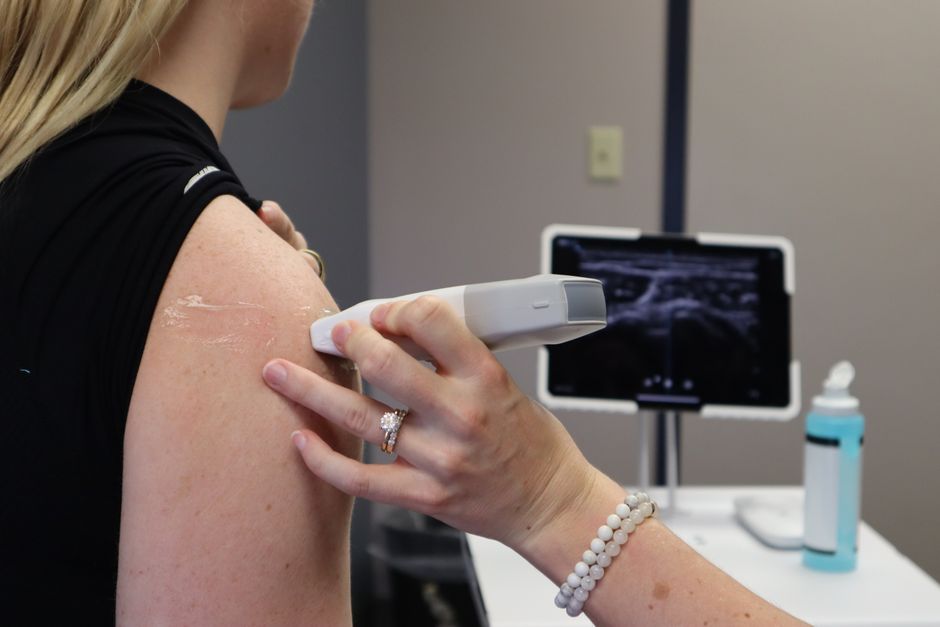
An ultrasound technologist is not a nurse. They are two separate health care roles with different education, licensing, and day-to-day duties. An ultrasound tech is trained specifically to operate imaging equipment and capture diagnostic images, while a nurse is trained to provide direct patient care, give medications, and monitor health conditions. The confusion is common because both work closely with patients in hospitals and clinics, and both may wear scrubs and spend long hours on their feet.
Is an Ultrasound Tech a Nurse? The Short Answer
No. Ultrasound technologists and nurses belong to different professions with separate training paths and separate licenses or credentials.
An ultrasound technologist — also called a diagnostic medical sonographer — uses high-frequency sound waves to create images of organs, tissues, and blood flow inside the body. A nurse provides and coordinates patient care. That includes giving medications, starting IVs, monitoring vital signs, educating patients, and carrying out orders from physicians and other providers.
The two roles sometimes overlap in a hospital setting. A nurse might prepare a patient for an ultrasound, and an ultrasound tech might tell a nurse what they observed so the care team can act. But neither is qualified to do the other’s job. An ultrasound tech cannot give medications or perform nursing assessments. A nurse generally cannot perform and interpret diagnostic ultrasound exams.
One detail worth clarifying: ultrasound techs are not the ones who diagnose. They capture the images. A physician — often a radiologist — reviews those images and makes the diagnosis. This surprises many people who assume the person holding the wand is also reading the results.
What Does an Ultrasound Technologist Actually Do?
An ultrasound technologist operates sonography equipment and produces images that physicians use to evaluate the body.
The work involves far more than pressing a probe against the skin. The tech must know anatomy in detail, position the patient correctly, adjust the machine settings, and recognize when an image is clear enough to be useful. They also decide which views to capture based on what the physician has asked them to look for.
Common duties include:
- Explaining the procedure to patients and positioning them for the exam
- Applying gel and moving the transducer to capture images
- Adjusting equipment settings to get clear pictures
- Recording measurements and documenting findings for the physician
- Recognizing images that need a physician’s immediate attention
Sonographers work in hospitals, outpatient imaging centers, obstetric clinics, emergency departments, and cardiac labs. Some specialize — for example, in abdominal, obstetric, vascular, or cardiac ultrasound.
Because ultrasound does not use ionizing radiation, it is often used during pregnancy and for certain soft-tissue exams where other imaging may be less suitable. That is a practical advantage, not a claim that any single imaging method is always better.
What Does a Nurse Do That an Ultrasound Tech Does Not?
A nurse is licensed to provide clinical care that an ultrasound tech is not trained or authorized to perform.
Nursing practice covers a broad scope. A registered nurse assesses patients, administers medications and treatments, starts and manages IV lines, monitors for changes in condition, and coordinates care with the rest of the team. Nurses also educate patients and families about medications, recovery, and managing conditions at home.
Nurses hold a license granted by a state board of nursing after completing an approved program and passing a national exam. That license carries legal authority to perform specific clinical tasks. An ultrasound tech does not hold that license and does not perform those tasks.
The reverse is also true. Nursing programs do not typically train students to independently perform and interpret diagnostic ultrasound exams. A nurse may use a bedside ultrasound device in some settings after specialized training, but that is a specific skill set, not part of standard nursing education.





How Do the Education and Licensing Paths Differ?
The two careers require different kinds of training, and the credentials are not interchangeable.
Ultrasound technologists usually complete a formal sonography program. These programs may be certificates, associate degrees, or bachelor’s degrees, and many are accredited. After training, many sonographers pursue professional certification in a specialty such as abdominal, obstetric, vascular, or cardiac sonography. Certification is often expected by employers, though specific requirements vary.
Nurses typically complete an associate or bachelor’s degree in nursing, then pass the national licensing exam to become a registered nurse. Some go on to earn advanced degrees and become nurse practitioners or other advanced practice nurses, which expands their scope further.
The key point: a sonography credential does not make someone a nurse, and a nursing license does not make someone a sonographer. Each profession has its own standards for entry and its own oversight.
Can an Ultrasound Tech Do Anything a Nurse Does?
An ultrasound tech can perform some patient-facing tasks, but not the clinical duties that require a nursing license.
Sonographers interact with patients constantly. They explain procedures, help patients get into position, and put people at ease during exams that can feel uncomfortable or stressful. They may assist with patient comfort and safety during the scan. In some settings, they may help move or transfer patients.
What they do not do is give medications, start IVs, perform nursing assessments, or make independent clinical decisions about a patient’s treatment. Those tasks fall under nursing or medical scope of practice.
Scope of practice is set by state law and by the rules of the facility. It can vary somewhat from one place to another. But the general boundary holds: imaging and nursing are distinct fields.
Why Do People Confuse the Two Roles?
The mix-up happens for understandable reasons. Both professions work directly with patients, often in the same rooms, and both are part of the same care team.
In a busy hospital, a patient might meet several people in scrubs during a single visit. A nurse checks their vitals. A tech rolls in a machine and performs a scan. From the patient’s point of view, the roles can blur together. Add in the fact that some nurses and some sonographers work in similar specialty areas — like obstetrics — and the confusion grows.
There is also a language issue. People sometimes use “ultrasound nurse” as shorthand, or a clinic might loosely refer to staff in ways that are not technically accurate. That does not change the underlying credentials.
If you want to know who is who, the safest approach is to ask. Health care workers expect the question and can tell you their role and training.
Does It Matter Which One You See?
It matters for what each person can do for you, and it helps to know who to ask when you have a question.
If you are having an ultrasound, the sonographer performs the exam and captures the images. If you have questions about your diagnosis or results, those are best directed to the physician who interprets the images or to your care team.
If you need medications, wound care, monitoring, or help managing a condition, that is nursing territory. Nurses are often your main point of contact for day-to-day care and for understanding your treatment plan.
Knowing the difference can save you time and get you to the right person faster. It also helps you understand why one person can answer a question and another may need to refer you to someone else.
Both roles are essential. Neither replaces the other. The health care system depends on each profession staying within its training and doing its part.
Frequently Asked Questions
Is an ultrasound tech considered a nurse?
No, an ultrasound tech is not a nurse. They are separate professions with different education, credentials, and job duties.
Can an ultrasound tech give medications or start an IV?
No, those tasks require a nursing license and fall outside an ultrasound tech’s scope of practice. Sonographers focus on performing imaging exams and capturing diagnostic images.
Does an ultrasound tech diagnose conditions?
No, the sonographer captures the images, and a physician such as a radiologist reviews them and makes the diagnosis. The tech’s role is to produce clear, useful images.
How long does it take to become an ultrasound tech compared to a nurse?
Both paths typically take about two to four years depending on the program and degree level. Specific timelines vary by program, so check individual school requirements.
