
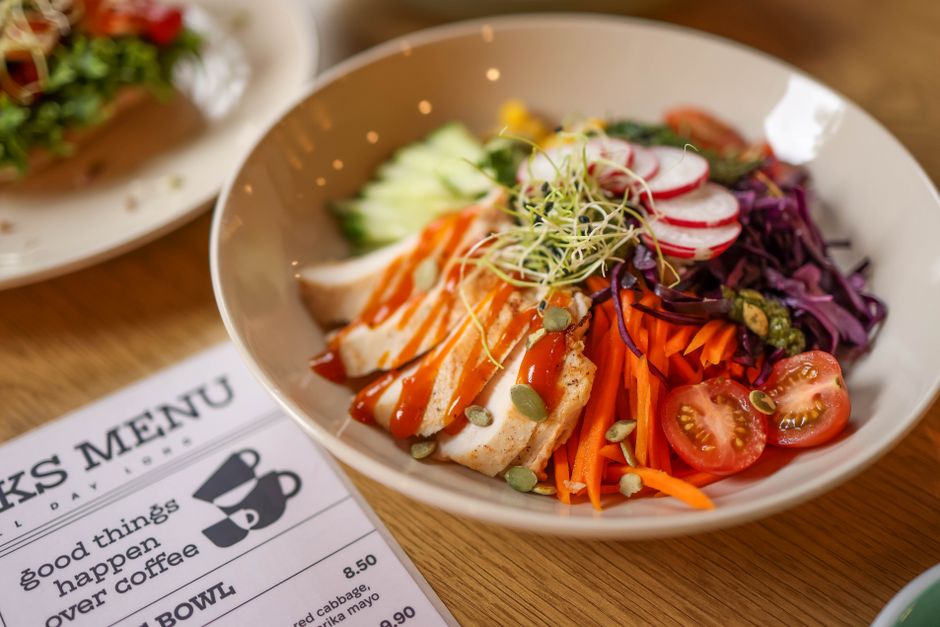
A salad with chicken can be a genuinely healthy meal. It combines lean protein with vegetables, and that pairing supports muscle maintenance, steady blood sugar, and good digestion. Whether any particular salad is healthy depends almost entirely on what else goes into the bowl.
Is A Salad With Chicken Healthy?
Yes, in most cases. Grilled or roasted chicken over a bed of vegetables is one of the more balanced meals you can build. The chicken supplies complete protein. The vegetables supply fiber, vitamins, and minerals. Together they create a meal that keeps you full longer than either would alone.
The catch is that “salad” describes a format, not a nutritional guarantee. A plain chicken salad with olive oil and lemon is a different food from a chicken salad buried under fried toppings, cheese, and creamy dressing. Both are called salad. Only one is what most people picture when they hear the word.
Research consistently shows that diets high in vegetables and lean protein are linked to lower rates of heart disease, type 2 diabetes, and certain cancers. A chicken salad fits that pattern well when it is built with care. The ingredients around the chicken decide whether it stays that way.
What Does Chicken Actually Add to a Salad?
Chicken adds protein, and protein is the part of a salad that most people underrate. A salad made only of vegetables is mostly carbohydrate and water. It can be nutritious and still leave you hungry an hour later.
A 3-ounce portion of skinless, roasted chicken breast contains about 26 grams of protein, according to USDA data. That is a substantial amount for a single meal. Protein slows digestion and helps regulate appetite, which is why a chicken salad tends to hold you longer than a side salad.
Chicken also provides several micronutrients:
- Niacin and vitamin B6, which support energy metabolism
- Selenium, an antioxidant mineral
- Phosphorus and zinc
- Vitamin B12, found almost exclusively in animal foods
Chicken is not the only way to get protein onto a salad. Beans, lentils, tofu, tempeh, eggs, tuna, and shrimp all work. Chicken is simply one of the most common choices because it is lean, mild in flavor, and easy to prepare in advance.
How You Cook the Chicken Matters
Grilled, roasted, poached, or baked chicken keeps the meal lean. Fried chicken, chicken tenders, and breaded cutlets add fat and refined carbohydrates that change the nutritional profile of the entire bowl.
A breaded fried chicken strip can carry more calories and saturated fat than the rest of the salad combined. That does not make the meal worthless. It does mean the salad is no longer the light option people assume it is.
How the chicken is seasoned matters less than how it is cooked. Salt is worth a mention here. Many pre-seasoned, marinated, or rotisserie chickens are high in sodium. For most healthy adults this is not a serious problem. For people managing high blood pressure or heart failure, sodium intake is a real clinical consideration, and pre-cooked chicken is a common hidden source.
If you are watching sodium, plain cooked chicken you season yourself gives you the most control.




What Else Goes Into the Bowl?
The dressing is usually the single biggest factor in whether a chicken salad stays healthy. Creamy dressings like ranch, Caesar, and blue cheese can add significant calories and saturated fat in just a few tablespoons. Oil-based dressings add calories too, but the fat is largely unsaturated, which is a different nutritional picture.
Toppings matter just as much. Here is how common additions tend to sort out:
| Ingredient | What It Adds |
|---|---|
| Leafy greens, tomatoes, cucumber, peppers | Fiber, vitamins, very few calories |
| Olive oil and vinegar | Unsaturated fat, minimal processing |
| Avocado, nuts, seeds | Healthy fats and fiber, but calorie-dense |
| Cheese, bacon, croutons | Saturated fat, sodium, refined carbs |
| Creamy dressings | Calories and saturated fat in small volumes |
None of the items in the lower rows are forbidden. They are simply the ones that shift a light meal toward a heavy one. A salad with chicken, a little cheese, and a creamy dressing is still food — it is just closer to a burger in nutritional terms than most people expect.
Is a Chicken Salad Good for Weight Management?
It can be. Protein and fiber are the two nutrients most consistently linked to feeling full, and a well-built chicken salad delivers both. That combination tends to reduce how much you eat later in the day.
The problem is portion and add-ons. Restaurant chicken salads are a common trap. Many chain restaurant versions contain more calories than a cheeseburger, largely because of dressing volume, fried toppings, and oversized portions. A salad can be a weight-management meal or a high-calorie meal. The name on the menu does not tell you which.
If weight is the goal, the practical levers are the dressing and the toppings, not the chicken or the vegetables. Those two ingredients are doing the work in your favor.
Does a Chicken Salad Fit Specific Health Conditions?
For most people, yes. The meal is flexible enough to adapt to common dietary needs.
For people with type 2 diabetes, a chicken salad is generally a good choice because it is low in refined carbohydrate and the protein and fat slow glucose absorption. The dressing and any sweetened toppings are the parts to watch.
For people managing high cholesterol, skinless chicken and olive-oil-based dressing fit well within most eating patterns. Cheese and bacon are the ingredients that push saturated fat up.
For people with kidney disease, protein intake is often restricted and should be set by a clinician. A chicken salad is not automatically appropriate in that situation, and portion size matters.
For people following a vegetarian or vegan pattern, chicken is simply swapped out. Beans, lentils, tofu, or tempeh can replace the protein, though plant proteins are absorbed somewhat differently and may need a larger portion to match the protein content of chicken.
What About Food Safety?
Cooked chicken is a common source of foodborne illness when it is mishandled. The USDA recommends cooking poultry to an internal temperature of 165°F to kill bacteria such as Salmonella and Campylobacter.
Once cooked, chicken should not sit at room temperature for more than two hours. In warm conditions above 90°F, that window drops to one hour. If you are packing a chicken salad for lunch, keep it cold until you eat it.
Leftover chicken salad stored in the refrigerator is generally safe for three to four days. After that, the risk of bacterial growth rises and it should be discarded.
The Bottom Line
A salad with chicken is healthy when the chicken is lean, the vegetables are plentiful, and the dressing and toppings are kept in reasonable proportion. It stops being a light meal when fried chicken, heavy cheese, bacon, and creamy dressing take over the bowl.
The meal is not complicated. Protein, vegetables, and a sensible dressing is a pattern that nutrition research supports across many eating styles. What you add around the chicken decides whether the salad lives up to its reputation.
Frequently Asked Questions
Is a salad with chicken healthy for weight loss?
It can be, because protein and fiber both help control appetite. Watch the dressing and fried toppings, which are the parts most likely to add significant calories.
How much protein is in a chicken salad?
A 3-ounce portion of skinless chicken breast provides about 26 grams of protein, according to USDA data. The total depends on how much chicken is in the bowl.
Is grilled chicken healthier than fried chicken on a salad?
Yes. Grilled chicken keeps the meal lean, while fried or breaded chicken adds fat and refined carbohydrates that raise the calorie and saturated fat content.
Can I eat a chicken salad every day?
For most healthy adults, yes, as long as the overall diet stays varied. Rotating protein sources and vegetables helps cover a wider range of nutrients.
