
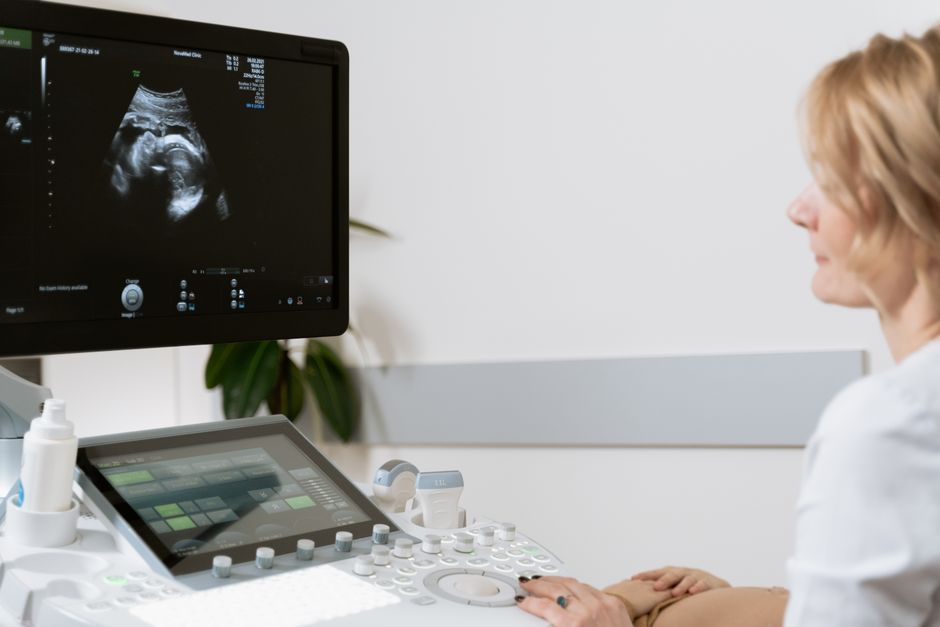
A fetal echocardiogram, or fetal echo, is a detailed ultrasound that looks specifically at your baby’s heart. It is not a routine test for every pregnancy. It is a targeted exam, usually ordered when a standard anatomy scan shows a possible issue, or when you have a known risk factor that makes a heart problem more likely. Whether it is necessary for you depends on those specific factors, not on general pregnancy care.
What Is a Fetal Echo and How Is It Different From a Standard Ultrasound?
A standard pregnancy ultrasound, especially the anatomy scan around 18-22 weeks, includes a basic look at the heart. It checks that the heart has four chambers and that it is beating normally. But a standard scan cannot see everything.
A fetal echo is a much more detailed study. It takes longer, often 30 to 60 minutes. A specialist, usually a maternal-fetal medicine doctor or a pediatric cardiologist, performs it. The ultrasound machine uses the same technology, but the operator examines the heart’s structure in far greater detail.
This includes the heart’s valves, the major blood vessels leaving and entering the heart, and how blood flows through them. The specialist can see the size of the chambers and measure blood flow speed. This level of detail is what allows a fetal echo to identify most major congenital heart defects before birth. The test is safe for both you and your baby. It uses the same sound waves as a standard ultrasound, with no radiation.
Who Should Get a Fetal Echo? The Main Reasons
The decision to order a fetal echo is based on two broad categories: findings on your current ultrasound and your personal or family medical history.
If your routine anatomy scan shows anything unusual about the heart, this is the most common reason for a fetal echo. This includes a heart that looks larger or smaller than expected, an irregular heartbeat, or a structure that the sonographer could not see clearly. It also includes findings outside the heart, such as increased fluid in the baby’s tissues, which can sometimes signal heart strain.
Certain maternal health conditions also increase the risk of fetal heart defects. If you have diabetes that started before pregnancy, especially if it is not well controlled, a fetal echo is usually recommended. Other maternal conditions include phenylketonuria, which is a metabolic disorder, and a history of taking certain medications during pregnancy, such as some anti-seizure drugs.
Family history matters too. If you, your partner, or a previous child has a congenital heart defect, your risk is higher. Some genetic conditions in the family, like Down syndrome or DiGeorge syndrome, are also linked to heart problems.
When a Fetal Echo Is Not Necessary
For many pregnancies, a fetal echo is not needed. If your standard anatomy scan shows a normal heart, and you have none of the risk factors mentioned, your chance of carrying a baby with a major heart defect is low. In this situation, the test is not considered medically necessary.
Some private clinics offer fetal echos as an optional, paid add-on to your ultrasound package. This is a choice, not a medical requirement. The test is safe, but it is also not a perfect guarantee. A normal fetal echo does not rule out every possible heart issue. Some very small defects, or problems that develop later in pregnancy, can still be missed.
If you are considering an optional fetal echo for peace of mind, it is reasonable to do so. But you should understand what the test can and cannot show. It is a detailed look at the heart’s structure, not a complete guarantee of lifelong heart health. Talk to your provider about whether the test adds value for your specific situation.





What Happens During the Test and What Can It Detect?
The procedure is very similar to a standard ultrasound. You lie on an exam table, and a technician or doctor moves a small device called a transducer over your abdomen. It is not painful. The main difference is time. Because the specialist is looking for very specific structures, the exam takes longer than a routine scan.
Fetal echos are highly accurate at detecting major structural heart defects. These are conditions where a part of the heart is missing, is in the wrong place, or has a hole where it should not be. Examples include conditions where the large blood vessels are switched, where a chamber of the heart is underdeveloped, or where there is a large hole between the lower chambers.
The test can also detect abnormal heart rhythms. Some rhythm problems are harmless and resolve on their own. Others need monitoring or treatment during pregnancy. Knowing about a structural problem before birth allows your medical team to plan the delivery at a hospital with a specialized cardiac unit. This planning can be lifesaving, because some heart defects require immediate surgery or medication right after birth.
What Happens If the Fetal Echo Finds a Problem?
Hearing that your baby has a heart problem is frightening. But it is important to know that finding the problem before birth is often the best possible outcome. It gives you and your medical team time.
You will meet with a team that may include a pediatric cardiologist, a high-risk pregnancy specialist, and a neonatologist, which is a doctor who cares for newborns. They will explain the specific defect, what it means for your baby’s health, and what treatments are available after birth. Some defects need no treatment at all. Others need medication. Some need surgery, which may happen days, weeks, or months after birth.
This planning period is the main benefit of a fetal echo. You can tour the neonatal intensive care unit, meet the surgeons, and understand the timeline of care. You can also ask questions about long-term outcomes. For many heart defects, children grow up to live full and active lives.
In some cases, the fetal echo may show a problem that is very severe, or it may be linked to a genetic condition. Your doctor will discuss these findings honestly with you. You may be offered genetic testing, such as an amniocentesis, to understand the full picture. This information helps you make informed decisions about your pregnancy and your baby’s care.
Is A Fetal Echo Necessary For Your Pregnancy? The Bottom Line
Is a fetal echo necessary for your pregnancy? The answer depends entirely on your risk profile. If your standard ultrasound is normal and you have no risk factors, it is not necessary. If you have a suspicious finding on an ultrasound, or you have diabetes, a family history of heart defects, or other specific risk factors, it is strongly recommended.
Do not worry if your provider does not offer you a fetal echo. This is a sign that your pregnancy appears to be low-risk for heart problems. Trust that your routine scans are doing their job.
If you are unsure about your risk level, ask your provider directly. Ask them why they are or are not recommending a fetal echo for you. A clear conversation with your doctor is the best way to understand your specific situation. Do not rely on online forums or anecdotal stories. Your medical history is unique, and your provider is the best person to interpret it.
Frequently Asked Questions
Is a fetal echo covered by insurance?
Most insurance plans cover a fetal echo when a doctor orders it for a medical reason, such as an abnormal ultrasound or a known risk factor. If you are requesting it for optional peace of mind, check with your insurance provider first, as it may not be covered.
How long does a fetal echo take?
A fetal echo typically takes between 30 and 60 minutes. The exact time depends on the baby’s position and how clear the images are.
Can a fetal echo detect all heart problems?
No test can detect every heart problem. A fetal echo is very good at finding major structural defects, but it can miss small holes or conditions that develop later in pregnancy.
Is a fetal echo painful for the baby?
No, a fetal echo is not painful for the baby. It uses the same safe sound wave technology as a standard pregnancy ultrasound, with no radiation.
