
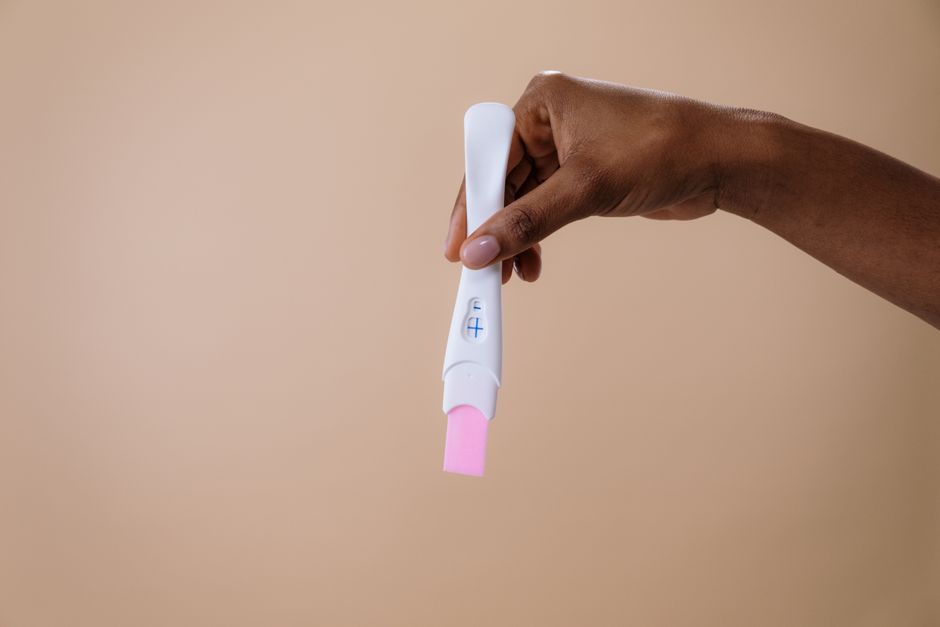
Finding out you are pregnant is a life-changing moment. But the question of how long after pregnancy you can test positive is actually two different questions. One is about how soon a test can detect a new pregnancy. The other is about how long a test stays positive after a pregnancy ends, whether through childbirth, miscarriage, or abortion. This article covers both, so you know exactly what to expect from your test results.
How Soon Can a Pregnancy Test Detect hCG?
A pregnancy test detects a hormone called human chorionic gonadotropin (hCG). Your body only produces this hormone after a fertilized egg implants in the uterus. Implantation usually happens about 6 to 10 days after ovulation. After implantation, hCG levels rise quickly, doubling roughly every 48 to 72 hours in early pregnancy.
Most home pregnancy tests can detect hCG in urine at levels around 20 to 25 mIU/mL. Blood tests done at a doctor’s office can detect much lower levels, often around 5 mIU/mL. Because of this difference, a blood test can confirm pregnancy earlier than a urine test.
For most women, a urine test becomes positive about 12 to 14 days after ovulation. That is roughly the first day of a missed period. Some sensitive tests claim to detect pregnancy up to 5 days before a missed period, but the accuracy at that point is lower. Testing too early often gives a false negative because hCG levels are simply too low to detect.
How Long After a Missed Period Will a Test Stay Positive?
Once you are pregnant, hCG levels continue to rise through the first trimester. They typically peak around 8 to 11 weeks of pregnancy. After that, levels slowly decline but remain detectable throughout the entire pregnancy. A standard home pregnancy test will stay positive for the whole duration of the pregnancy.
This means there is no time limit on testing positive while pregnant. If you are still pregnant, the test will show positive. The only exception is a rare condition called the hook effect, where extremely high hCG levels overwhelm the test and cause a false negative. This is uncommon and usually only happens with very advanced pregnancies or certain medical conditions.
How Long After Miscarriage or Abortion Will a Test Stay Positive?
After a pregnancy ends, hCG does not disappear instantly. It takes time for your body to clear the hormone. The timeline depends on how far along the pregnancy was and how high the hCG levels had risen.
For an early miscarriage or abortion in the first few weeks, hCG levels typically return to zero within 2 to 4 weeks. For a later pregnancy loss, it can take 6 weeks or longer. In some cases, especially after a second-trimester loss, it may take up to 9 weeks for a test to become negative.
Your doctor may monitor hCG levels with blood tests after a miscarriage to confirm they are dropping appropriately. This is standard care, particularly if there are concerns about incomplete miscarriage or retained tissue. If levels do not fall as expected, further evaluation may be needed.



How Long After Giving Birth Will a Test Be Positive?
After a full-term birth, hCG levels fall gradually. Most women will have a negative home pregnancy test within 2 to 4 weeks after delivery. However, some women test positive for up to 6 weeks postpartum. This is normal and does not mean you are pregnant again.
The exact timeline depends on the peak hCG level reached during pregnancy and how quickly your body metabolizes the hormone. Higher levels take longer to clear. If you had a multiple pregnancy, such as twins, your hCG levels were higher and may take longer to return to zero.
If you are breastfeeding and have not yet had a period, you might wonder if a positive test means pregnancy. It could, but it could also just be leftover hCG from the birth. If you get a positive test within the first 6 weeks after delivery, wait a week and test again. If the line is not getting lighter, contact your doctor.
Why Do Some Women Test Positive for Weeks After Pregnancy Ends?
hCG is cleared from the body by the kidneys and liver. The speed of clearance varies from woman to woman. Factors that affect how long hCG remains detectable include how high the levels peaked, your individual metabolism, and whether any pregnancy tissue remains in the uterus.
Sometimes a positive test after a miscarriage or abortion indicates retained products of conception. This means some tissue from the pregnancy is still in the uterus. This condition can cause prolonged bleeding, pain, or infection. If your test stays positive for more than 6 weeks after a pregnancy loss, or if you have symptoms like heavy bleeding or fever, seek medical care.
In rare cases, a persistently positive test can signal a molar pregnancy or gestational trophoblastic disease. These are abnormal growths that produce hCG. They require medical treatment and follow-up. Your doctor can check hCG levels with blood tests and use ultrasound to determine the cause.
How Long After Pregnancy Can You Test Positive? — The Bottom Line
If you are asking about detecting a new pregnancy, test about 12 to 14 days after ovulation or on the first day of your missed period. Testing earlier risks a false negative. If you are asking about a test returning to negative after a pregnancy ends, expect 2 to 6 weeks for most women.
The key point is that a positive test does not always mean you are currently pregnant. After any pregnancy event, hCG takes time to clear. If you are unsure whether a positive test means a new pregnancy or leftover hormone, repeat the test in a few days. A new pregnancy will show hCG levels that rise. Leftover hCG from a previous pregnancy will show levels that fall.
If you have concerns about your test results, bleeding, or symptoms, contact your healthcare provider. They can order blood tests to measure hCG levels precisely and determine what is happening. Blood tests are more sensitive and can track changes over time, giving you a clearer picture than home urine tests.
When to See a Doctor About a Positive Test
See a doctor if you have a positive pregnancy test and experience severe pain, heavy bleeding, or dizziness. These symptoms can indicate an ectopic pregnancy, which is a pregnancy that implants outside the uterus. Ectopic pregnancies are medical emergencies and require prompt treatment.
Also see a doctor if you had a miscarriage or abortion and your test remains positive for more than 6 weeks. Prolonged positive tests can indicate retained tissue or other complications. Your doctor can perform an ultrasound and blood tests to evaluate your situation.
If you are trying to conceive and get a positive test, schedule a prenatal appointment. Early prenatal care is important for monitoring your health and the health of the pregnancy. Most providers will see you between 8 and 10 weeks of pregnancy for your first visit.
Frequently Asked Questions
How many days after conception will a pregnancy test be positive?
A urine test is usually positive about 12 to 14 days after ovulation, which is around the time of your missed period. Blood tests can detect pregnancy a few days earlier.
Can a pregnancy test stay positive after a miscarriage?
Yes, a test can stay positive for 2 to 6 weeks after a miscarriage as your body clears hCG. If it stays positive longer than 6 weeks, see your doctor.
How long after giving birth will a pregnancy test be negative?
Most women get a negative home test within 2 to 4 weeks after delivery. Some women test positive for up to 6 weeks postpartum, which is normal.
What if my pregnancy test is positive but I am not pregnant anymore?
This can happen because hCG remains in your body for weeks after a pregnancy ends. If the test line is getting lighter over several days, it is likely leftover hormone.
