
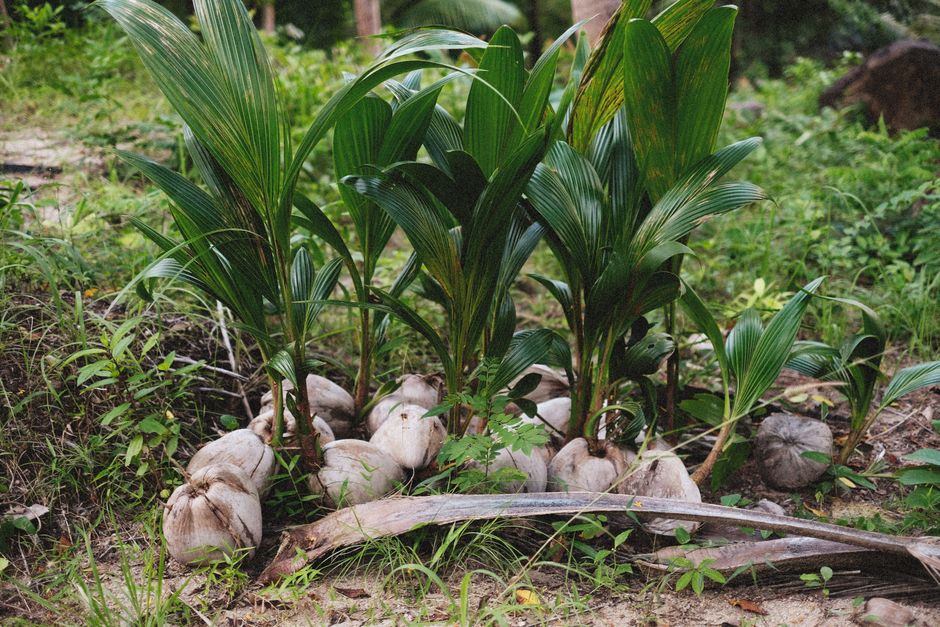
A coconut is a seed. It is also a fruit. More specifically, it is a dry, fibrous fruit called a drupe, and the part people eat is the actual seed. This dual identity confuses many people, but botanically, the coconut we buy in the store is the seed of the coconut palm tree, contained within the fruit’s protective outer layers.
What Exactly Is a Drupe?
To understand the coconut, you first need to understand a drupe. A drupe is a fleshy fruit that has a hard outer shell covering a seed. Common examples include peaches, plums, and cherries. These fruits have three distinct layers: the outer skin, the fleshy middle, and the hard inner pit that holds the seed.
The coconut follows this same structure, but with a twist. The outer skin and the fleshy middle layer of a coconut are not soft like a peach. Instead, they are fibrous and tough. The hard inner shell you crack open is the pit, and inside that pit is the actual seed. So every time you buy a whole coconut, you are holding the seed with its protective fruit layers still attached.
This is why a coconut is both a fruit and a seed. The entire structure is the fruit. The inner part, the white meat and the water, is the seed itself.
Is A Coconut A Seed or a Nut?
People often wonder if a coconut is a nut because of its hard shell and the word “nut” in its name. In botanical terms, a true nut is a dry fruit with a single seed and a hard outer wall that does not split open. Examples include acorns and hazelnuts. A coconut does not fit this definition because its outer layers are fibrous, not woody, and the seed inside is quite large.
Culinarily, the coconut is treated differently from true nuts. The U.S. Food and Drug Administration lists coconut as a tree nut for food labeling purposes. This is a regulatory decision, not a botanical one. It is made to help people with allergies identify ingredients more easily.
This distinction matters for people with nut allergies. Some individuals with tree nut allergies react to coconut, but this is not common. The botanical evidence is clear: a coconut is not a true nut. It is a one-seeded drupe. If you have a nut allergy, you should discuss coconut with your allergist before eating it, because individual reactions vary.
How the Coconut Seed Travels
The coconut seed has a remarkable ability to travel across oceans. This is one of the reasons coconut palms grow on coastlines all over the tropics. The seed is designed for water dispersal.
The outer fibrous husk of the coconut is buoyant. It traps air, allowing the entire fruit to float on seawater for long distances. Coconuts can drift in the ocean for months and still remain viable. When they wash ashore on a sandy beach, they can germinate and grow into a new palm tree.
This ability is not just a curiosity. It explains the natural distribution of coconut palms. While humans have carried coconuts around the world for trade and food, the seeds were traveling across oceans long before ships existed. The seed inside is protected by its hard shell and the fibrous husk, which shields it from saltwater damage during the long journey.



What Is Inside the Coconut Seed?
When you crack open a coconut, you see two main parts: the white meat and the clear liquid. Both of these are part of the seed. The white meat is the endosperm, which is the tissue that provides nutrients to the developing plant embryo. The liquid is the liquid endosperm, which also nourishes the young plant.
In many seeds, the endosperm is dry and starchy. In a coconut, it is thick and oily. This is unusual and is one of the reasons coconuts are so nutritious. The endosperm contains fats, proteins, and carbohydrates that support the seedling as it grows.
If you leave a coconut in a warm, humid place, the seed will eventually germinate. A sprout emerges from one of the three small pores, or “eyes,” at the end of the shell. This sprout grows into the new palm tree. The seed does not need soil to start growing. It has enough stored energy and water inside to begin the process on its own.
Why This Confusion Happens
The confusion about whether a coconut is a seed, fruit, or nut comes from everyday language versus scientific classification. In daily life, people use these words based on how a food looks and how it is used in cooking. In science, these words have precise botanical definitions.
This gap between common language and scientific language creates the problem. A coconut looks like a nut because of its hard shell. It is used in recipes like a nut. But botanically, it is a drupe, and the edible part is the seed. All three labels are correct in different contexts.
Understanding this distinction helps you make better sense of food labeling and nutrition information. When a package says “contains tree nuts” and lists coconut, it is following regulatory rules, not botanical science. Knowing the difference can help you interpret labels with more confidence.
Are Coconut Products Made from the Seed?
Almost every coconut product you buy comes from the seed. Shredded coconut is the grated endosperm. Coconut milk is made by blending the grated meat with water and straining it. Coconut oil is pressed from the dried meat. Coconut water is the liquid endosperm taken directly from the seed.
The only part of the coconut that is not the seed is the fibrous husk. The husk is used to make coir, which is a material used in ropes, mats, and potting soil. The hard shell is sometimes used for charcoal or crafts. But everything edible from a coconut comes from the seed itself.
This means that when you eat any coconut product, you are eating seed tissue. This is not unusual. Many common foods are seeds, including beans, peas, and grains like rice and wheat. The coconut is just a larger and more obvious example of a seed that people eat directly.
Frequently Asked Questions
Can you plant a coconut from the grocery store?
Yes, but only if the coconut still has its outer husk intact and has not been dried or treated. The brown shelled coconuts sold in many stores have often been dried, which can kill the seed inside.
Are coconuts safe for people with tree nut allergies?
Some people with tree nut allergies can eat coconut without problems, but others cannot. The FDA classifies coconut as a tree nut, so you should ask your allergist before trying it.
Is coconut water the same as coconut milk?
No. Coconut water is the clear liquid found inside the seed. Coconut milk is made by grating the white meat and mixing it with water.
How long does a coconut seed take to grow into a tree?
A coconut seed can germinate in a few months and produces its first fruit in about six to ten years. Full production takes longer, and the tree can live for decades.
