
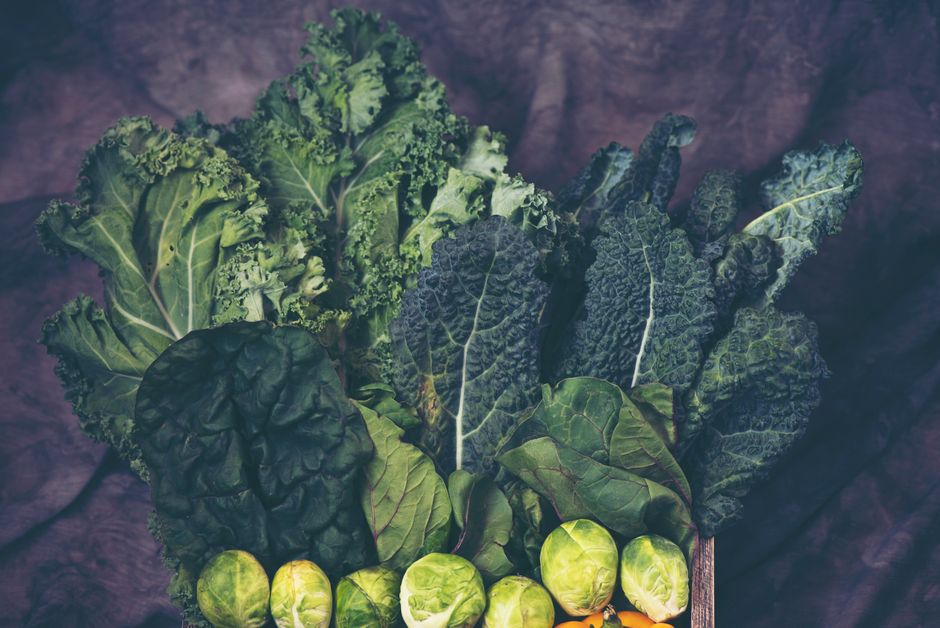
Brussels sprouts grow from seed to harvest in roughly 80 to 110 days, depending on the variety and the weather. The seed goes into the ground in late spring or early summer, the plant grows a thick central stalk with large leaves, and small cabbage-like buds form in the leaf joints along that stalk. Those buds are the part you eat, and they are usually ready to pick from late summer into early winter.
If you have only ever seen Brussels sprouts in a plastic bag at the grocery store, the plant itself is a surprise. It looks like a small palm tree made of cabbage leaves, with dozens of tiny cabbages clinging to its trunk.
Where Do Brussels Sprouts Come From?
Brussels sprouts are a cultivated variety of the same species as cabbage, broccoli, cauliflower, kale, and collard greens. That species is Brassica oleracea. Humans have been selectively breeding it for centuries, steering different lines toward different edible parts. Cabbage breeders selected for a big tight head. Broccoli breeders selected for a thick flowering stalk. Brussels sprouts breeders selected for many small buds along a tall stem.
The plant got its common name because it was widely grown around Brussels, Belgium, starting several centuries ago. It spread through northern Europe partly because it tolerates cold weather better than many garden vegetables.
How Do You Start Brussels Sprouts From Seed?
You can start Brussels sprouts indoors or sow them directly in the garden. Most home gardeners start them indoors because the plants need a long growing season and a head start helps in cooler climates.
Indoor starting typically begins four to six weeks before the last expected spring frost. Sow seeds about a quarter inch deep in a seed-starting mix. They germinate best when the soil stays around 65 to 75 degrees Fahrenheit. Germination usually takes one to two weeks.
Seedlings need strong light once they sprout. A sunny south-facing window often is not enough, and leggy, stretched seedlings tend to perform poorly after transplanting. Once seedlings have a few sets of true leaves and nighttime temperatures stay above roughly 45 degrees Fahrenheit, they can be moved outside.
Direct sowing works too, but timing matters more. Sow seeds about half an inch deep once the soil can be worked and the danger of hard frost has passed. Thin the seedlings so plants end up 18 to 24 inches apart in rows spaced about 30 inches apart. Crowded plants compete for light and nutrients, and they tend to produce smaller sprouts.
What Kind of Soil and Sun Do Brussels Sprouts Need?
Brussels sprouts want full sun and fertile, well-drained soil. They are heavy feeders. A soil pH between 6.0 and 7.5 is generally suitable, and many gardeners aim for the middle of that range.
Because the plants grow tall and heavy, soil preparation matters. Work compost or aged manure into the bed before planting. Good drainage is important because waterlogged roots invite disease.
These plants also benefit from steady moisture. Uneven watering, where the soil swings between bone dry and soaked, tends to stress the plant. A layer of mulch helps hold moisture and keeps soil temperature steadier.



How Long Does It Take Brussels Sprouts to Grow?
From transplant to first harvest, most varieties take about 80 to 110 days. Direct-sown plants often need a bit longer because they spend extra time as seedlings in the garden.
Varieties differ in how fast they mature and how tall they get. Some are bred for earlier harvests, while others are bred to stand in the field through cold weather, which many gardeners consider an advantage for flavor. Check the days-to-maturity number on the seed packet for the specific variety you are growing, since that is the most reliable guide.
How Do the Sprouts Actually Form on the Plant?
This is the part that surprises people. As the main stem grows upward, it produces large leaves on a spiral pattern. In the joint where each leaf meets the stem, a small bud develops. That bud is a miniature cabbage, and it is what you eventually eat.
The plant grows from the bottom up. The lowest buds form first and are usually the first to mature. Buds higher up the stalk develop later. This is why harvest is not a single event but a process that stretches over weeks.
Each plant can produce a surprising number of sprouts. A healthy, well-grown plant may carry dozens of buds along its stem by the end of the season, though the exact number varies widely with the variety, the weather, and how the plant was cared for.
Do You Need to Do Anything to the Plant While It Grows?
Yes, and this step is where many home gardeners go wrong. About three to four weeks before you expect to harvest, some gardeners remove the growing tip at the top of the plant. This is called topping. The idea is to redirect the plant’s energy from growing taller into filling out the buds that have already formed.
Topping is common practice among gardeners, but it is worth being honest about the evidence. It is widely recommended and many growers report better results, but controlled comparisons of topped versus untapped plants are not abundant in the home-gardening literature. If you try it, do it at the right time. Topping too early can reduce your total harvest.
Tall plants can also become top-heavy and lean or fall over, especially in wind. Staking the main stem helps. Some gardeners also remove lower yellowing leaves as the season goes on, which can improve airflow and reduce disease pressure near the soil.
- Water consistently, aiming for about an inch of water per week from rain and irrigation combined.
- Side-dress with nitrogen a few weeks after transplanting, since the plants are heavy feeders.
- Watch for aphids, cabbage worms, and flea beetles, which are common pests on this plant family.
- Keep the bed weeded, because young plants compete poorly with weeds.
When and How Do You Harvest Brussels Sprouts?
Start harvesting when the buds are firm and about one to one and a half inches across. Do not wait for them to get large. Oversized sprouts tend to turn loose, and their flavor often becomes stronger and more bitter.
Twist or cut each sprout from the stalk, working from the bottom up. The lower sprouts mature first. Keep going up the stalk over the following weeks as the upper buds size up.
One clarification that matters: the little buds do not keep growing once picked. If you leave them on the plant too long, they do not get better. They get looser and stronger tasting.
Cold weather changes the flavor. A light frost triggers the plant to convert some of its stored starches into sugars. Many gardeners say sprouts taste sweeter after a frost, and this is a real biochemical change rather than folklore. This is why Brussels sprouts are often described as a cool-season crop that improves late in the year.
Can You Harvest the Whole Stalk at Once?
You can. Some growers cut the entire stalk near the base once most of the sprouts have sized up, then strip the leaves and use the stalk like a skewer of sprouts. This is faster than picking individual buds.
For a longer harvest window, picking from the bottom up over several weeks usually gives you a steadier supply. The trade-off is that you need to keep an eye on the plant and harvest before the buds pass their prime.
What Are the Most Common Problems?
Split or loose sprouts usually trace back to uneven watering or to letting buds stay on the plant too long. Small sprouts often come from crowding, poor soil fertility, or a plant that ran short on water.
Cabbage-family pests are the most frequent complaint. Aphids cluster on the undersides of leaves and inside the buds. Cabbage worms chew holes in leaves. Row covers can help exclude insects early in the season, though they need to be removed if the plants need pollination, which Brussels sprouts do not require for the part you eat.
Disease problems, including various rot and leaf spot issues, are more likely in poorly drained soil or when plants stay wet for long periods. Good spacing and airflow reduce the risk.
How Do You Store What You Harvest?
Fresh-picked sprouts keep best cold and slightly humid. Store them unwashed in a perforated bag in the refrigerator, and wash them just before cooking. They generally hold for several weeks this way, though flavor and texture decline over time.
Brussels sprouts can also be blanched and frozen for longer storage. Blanching first is important because it slows the enzymes that degrade flavor and color during freezing.
Frequently Asked Questions
How long do Brussels sprouts take to grow from seed to harvest?
Most varieties take about 80 to 110 days from transplant to first harvest, with direct-sown plants often needing a bit longer. Check the days-to-maturity figure on your specific seed packet for the most reliable estimate.
Do Brussels sprouts grow back after you harvest them?
The individual buds do not regrow once picked, but the plant keeps producing new buds higher up the stalk over several weeks. If you cut the whole stalk, that plant is done.
Why are my Brussels sprouts small?
Small sprouts usually point to crowding, low soil fertility, or inconsistent watering. Thin plants to 18 to 24 inches apart and keep the soil evenly moist.
Do Brussels sprouts really taste better after a frost?
Yes, cold weather causes the plant to convert some stored starch into sugar, which many people find improves the flavor. This is a real biochemical change, not just a saying.
