
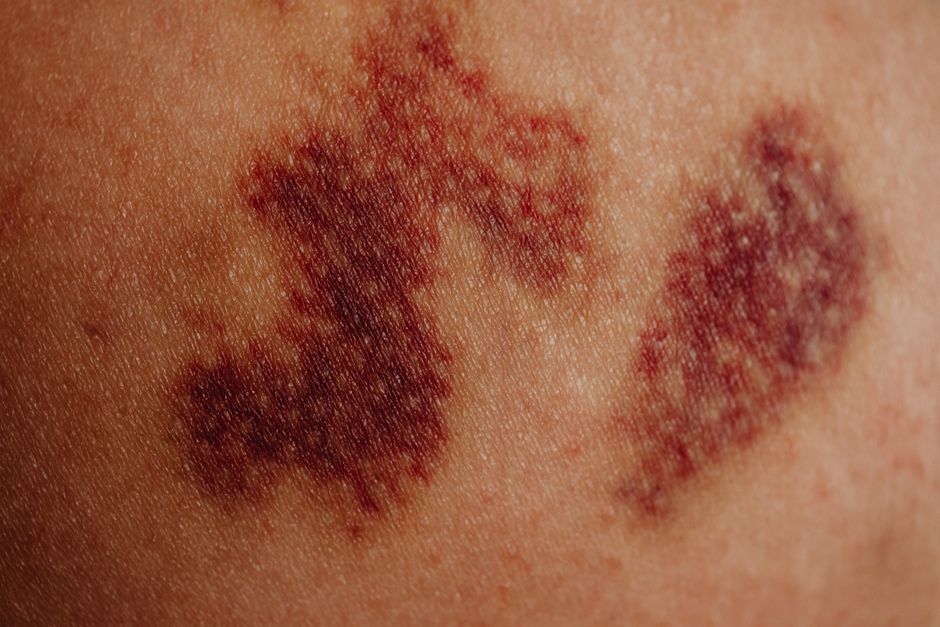
A bruise and a blood clot are both the result of blood collecting outside of your blood vessels, but they are not the same thing. A bruise, also called a contusion, is a shallow pool of blood trapped under the skin after tiny blood vessels break. A blood clot is a gel-like mass of blood that forms inside a vein or artery, often with no visible mark on the skin. While a bruise is usually harmless and heals on its own, a blood clot can be a serious medical condition that requires urgent care.
What Exactly Is A Bruise?
A bruise happens when you bump or hit a part of your body hard enough to break small blood vessels called capillaries. These tiny vessels sit just beneath the surface of your skin. When they break, blood leaks out into the surrounding tissue.
The trapped blood creates a black-and-blue mark. Over time, your body breaks down that blood and reabsorbs it. That is why a bruise changes color — from red or purple to green or yellow — as it heals. Most bruises fade within one to two weeks.
Bruises are common and rarely a cause for concern. However, if you bruise easily or develop bruises without any known injury, it may be worth discussing with a doctor. Frequent unexplained bruising can sometimes signal a bleeding disorder, a vitamin deficiency, or a medication side effect.
What Is A Blood Clot?
A blood clot is a solid mass of blood that forms when platelets and proteins in your blood stick together. Clotting is a normal and vital process. It is how your body stops bleeding after a cut or injury. Without clotting, a small scrape could become a medical emergency.
Problems arise when a clot forms inside a vein or artery where it is not needed. These are called thromboses. A clot that forms in a deep vein, most often in the leg, is called a deep vein thrombosis or DVT. If that clot breaks loose and travels to your lungs, it can block blood flow. This is called a pulmonary embolism and it can be life-threatening.
A blood clot inside a vessel does not always cause a visible bruise. Many people with a DVT have no skin discoloration at all. The danger is internal, not cosmetic.
Is A Bruise A Blood Clot The Key Differences?
The key difference comes down to location and risk. A bruise is blood that has leaked into the tissue under your skin. It sits outside your blood vessels. A blood clot is a mass that forms inside your blood vessel and can block circulation.
Bruises are superficial. They heal on their own and rarely cause complications. Blood clots are internal. They can restrict blood flow to organs, break off and travel through your bloodstream, and cause strokes, heart attacks, or pulmonary embolisms.
Another difference is how they feel. A bruise is typically tender to the touch and visible on the skin. A deep vein clot often causes swelling, warmth, and a cramping pain in the affected limb. The skin may look red or pale, but not always bruised.


How Can You Tell If You Have A Blood Clot?
Blood clots in the leg often produce symptoms that are hard to ignore. You may notice swelling in one leg that does not go down. The leg may feel warm to the touch. You might have a persistent ache or cramp that feels like a charley horse that will not release.
Some people describe the feeling as a pulled muscle that never gets better. The pain may worsen when you walk or stand. If the clot is in the arm, you may see similar symptoms — swelling, warmth, and pain — in that arm.
Not all blood clots cause symptoms. Some are found only during imaging tests done for other reasons. This is why people with known risk factors, such as recent surgery, prolonged bed rest, or a family history of clots, need to stay alert to any new swelling or pain.
If a clot travels to your lungs, symptoms are more alarming. Sudden shortness of breath, chest pain that worsens with deep breaths, a rapid heart rate, or coughing up blood require immediate emergency care. Do not wait to see if these symptoms pass.
When Should You Worry About A Bruise?
Most bruises are harmless, but some deserve medical attention. See a doctor if a bruise does not improve after two weeks. Also seek medical advice if a bruise grows larger while you watch it, becomes increasingly painful, or is accompanied by swelling.
Bruises that appear on your torso, back, or face without a clear cause should be evaluated. So should bruises that keep coming back in the same spot. These patterns can sometimes point to an underlying condition that needs treatment.
If you are taking blood thinners, such as warfarin or apixaban, you may notice that you bruise more easily. This is expected. However, if you develop a bruise that is unusually large or painful, contact your prescribing doctor. It may indicate that your medication dose needs adjustment.
A bruise that forms a hard lump, called a hematoma, is different from a flat bruise. A hematoma is a larger collection of blood that has clotted within the tissue. Most hematomas resolve on their own, but large ones may need drainage by a medical professional.
Risk Factors For Blood Clots
Certain situations increase your risk of developing a dangerous blood clot. Prolonged immobility is a major factor. Long flights, car trips, or bed rest after surgery slow blood flow in your legs, which makes clotting more likely.
Other risk factors include:
- Recent surgery, especially on the hips, knees, or abdomen
- Cancer and some cancer treatments
- Pregnancy and the six weeks after delivery
- Hormone therapy or birth control pills containing estrogen
- Smoking
- Obesity
- A personal or family history of blood clots
- Age over 60
Having one or more of these risk factors does not mean you will develop a clot. It means your baseline risk is higher than average. If you have risk factors and develop unilateral leg swelling or pain, seek medical evaluation promptly.
How Are Bruises And Blood Clots Treated?
Bruises require little to no treatment. Applying ice during the first 24 to 48 hours can reduce swelling and discomfort. After that, gentle heat may help speed the breakdown of the trapped blood. Over-the-counter pain relievers like acetaminophen can help if the bruise is sore.
Avoid aspirin or ibuprofen for bruise pain unless your doctor recommends them. These medications can slow clotting and may make bruising worse. That said, if you take them regularly for another condition, do not stop without talking to your doctor.
Blood clots are treated differently depending on their location and severity. Deep vein clots are typically treated with blood thinners. These medications prevent the clot from growing and reduce the risk of it traveling to your lungs. Treatment usually lasts three to six months, though some people need it longer.
In some cases, doctors use clot-dissolving drugs called thrombolytics. These are reserved for severe clots that threaten life or limb. Surgery or catheter-based procedures may be used to remove a clot in specific situations.
Compression stockings are often recommended for people who have had a DVT. They help prevent a long-term complication called post-thrombotic syndrome, which causes chronic leg pain and swelling. Some clinicians recommend them, though evidence on how well they prevent this condition is mixed.
Can A Bruise Turn Into A Blood Clot?
No. A bruise cannot turn into a deep vein thrombosis or a pulmonary embolism. The two conditions involve different spaces in the body. A bruise is outside the blood vessel. A clot that matters is inside it.
What can happen is that a bruise can form a hard lump, which is a hematoma. A hematoma is technically a clot of blood within the tissue. But it is not the kind of clot that travels to your lungs or causes a stroke. It stays where it formed and eventually dissolves.
If you are concerned that a bump has caused deeper damage, especially if you have significant swelling or loss of function, see a doctor. But the idea that a simple bruise will migrate to your lungs is not supported by medical evidence.
How To Reduce Your Risk Of Blood Clots
Staying active is the single most effective way to reduce your clot risk. If you sit for long periods, stand up and walk every hour or two. During long flights or car rides, flex and extend your ankles regularly. This muscle movement helps pump blood back toward your heart.
Stay hydrated. Dehydration thickens your blood, which can make clotting more likely. Drink water before, during, and after long trips.
Maintain a healthy weight and avoid smoking. Both are well-established risk factors for venous thromboembolism. If you have had a clot before, talk to your doctor about whether long-term prevention measures are appropriate for you.
When To Seek Emergency Care
Some symptoms require immediate attention. Do not wait for an appointment. Call emergency services or go to an emergency department if you experience:
- Sudden shortness of breath
- Chest pain, especially when breathing deeply
- Coughing up blood
- Rapid or irregular heartbeat
- Sudden severe headache or difficulty speaking
- Sudden weakness on one side of your body
These can be signs of a clot in your lungs, brain, or heart. They are medical emergencies. Acting quickly can save your life or prevent permanent damage.
Frequently Asked Questions
Can a bruise be a sign of a blood clot?
A bruise itself is not a blood clot, but a blood clot can sometimes cause skin discoloration that looks like a bruise. More often, a deep vein clot causes swelling and pain without any visible bruising.
What does a blood clot bruise look like?
A blood clot does not typically produce a classic bruise. If skin changes occur, the area may look red or discolored, but the most common signs are swelling, warmth, and pain in one limb.
How long does it take for a bruise to heal?
Most bruises heal within one to two weeks. Larger bruises or hematomas can take longer. If a bruise has not improved after two weeks, have it evaluated by a doctor.
Should I go to the ER for a bruise?
No, not for an ordinary bruise. Go to the emergency room if you have sudden chest pain, trouble breathing, or one-sided leg swelling with pain — these can signal a dangerous blood clot.
