
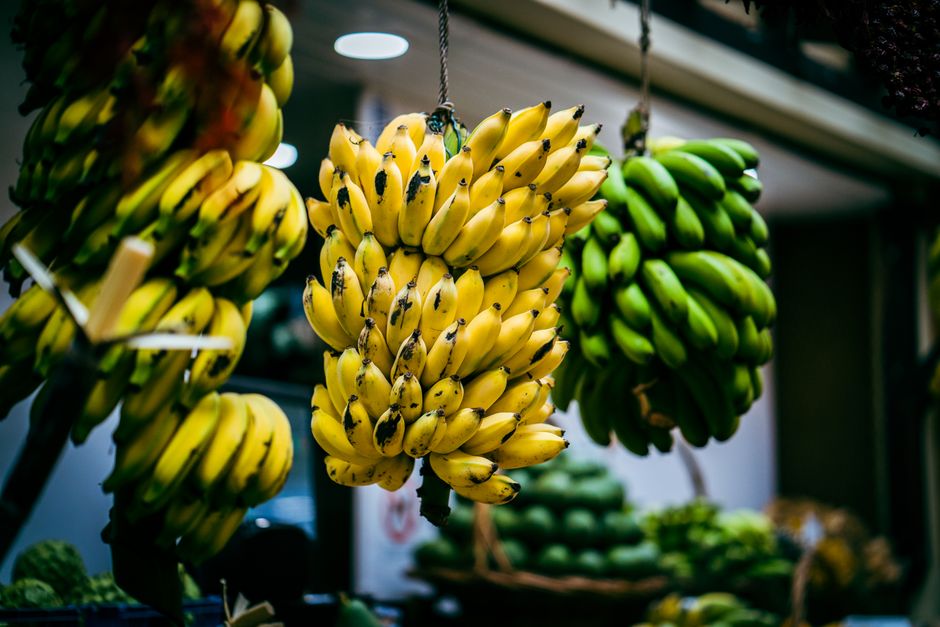
A banana a day is not fattening for most people. One medium banana has about 105 calories, and calories — not any single food — determine whether you gain weight. Bananas can fit into a weight-conscious diet as long as your total calorie intake stays in balance with what your body uses.
The idea that bananas cause weight gain usually comes from their sugar and carbohydrate content. That concern is understandable, but it misses how the body actually handles food. What matters is the whole picture: how many calories you eat, how much you move, and what else is on your plate.
How Many Calories Are in a Banana?
A medium banana has roughly 105 calories, according to USDA nutritional data. That is about the same as a small apple or a single slice of bread. The exact number depends on size — a small banana is closer to 90 calories, and a large one can reach about 120.
Most of those calories come from carbohydrate. A medium banana contains about 27 grams of carbohydrate, 14 grams of which are sugar. The rest is starch and fiber. It also provides around 3 grams of fiber and about 422 milligrams of potassium.
Here is the part people often miss. The sugar in a banana is not added sugar. It comes packaged with fiber, water, and micronutrients. That package behaves differently in the body than a candy bar with a similar sugar count.
| Nutrient | Medium Banana (approx.) |
|---|---|
| Calories | 105 |
| Carbohydrate | 27 g |
| Sugar | 14 g |
| Fiber | 3 g |
| Potassium | 422 mg |
| Protein | 1 g |
Does Banana Sugar Cause Weight Gain?
No. Eating sugar does not automatically cause weight gain. Weight gain happens when you consistently take in more calories than you burn. A single food, including a banana, cannot override that basic balance on its own.
The confusion comes from the glycemic index. Bananas contain natural sugars and starch, and ripe bananas have a higher glycemic index than unripe ones. The glycemic index measures how quickly a food raises blood sugar. A higher number does not mean a food causes fat gain.
What matters more is the glycemic load — the glycemic index combined with how much carbohydrate you actually eat. A medium banana has a modest glycemic load. Eaten with protein or fat, like yogurt or nut butter, the blood sugar rise is even gentler.
For most healthy people, the body manages this rise efficiently. Insulin moves glucose into cells where it is used for energy. Some research suggests that the fiber in bananas may slow digestion and support steadier blood sugar, though the effect of any single food is small compared with your overall diet.
Is a Banana a Day Fattening if You Eat It at Night?
No. The time of day you eat a banana does not change its calories or how your body stores energy. Total daily intake is what matters, not the clock.
A common belief is that eating carbs at night leads to more fat storage. That idea is not supported by strong evidence. Some studies suggest that when calories are matched, the timing of carbohydrate intake has little effect on body weight.
If eating a banana at night helps you avoid reaching for chips or ice cream, it may actually work in your favor. A banana with a spoon of peanut butter can satisfy a sweet craving for far fewer calories than most desserts.
One practical note: if you have acid reflux, eating close to bedtime can make symptoms worse, regardless of what you eat. That is a comfort issue, not a weight issue.





Can Bananas Help With Weight Management?
Bananas can support weight management, mainly because they are filling for relatively few calories. The fiber and water content help you feel full, which can make it easier to eat less overall.
Fiber is one of the more reliable tools for appetite control. Research consistently shows that higher fiber intake is linked to lower body weight and better appetite regulation. At 3 grams per banana, the contribution is modest but real, especially when it adds to fiber from other foods.
Bananas also work well as a replacement for higher-calorie snacks. Swapping a 300-calorie pastry for a banana saves roughly 200 calories. Do that most days and the effect adds up — not because bananas burn fat, but because they crowd out foods with more calories and less nutrition.
What bananas do not do is melt fat or speed up metabolism. No food does that in a meaningful way. Any claim that a specific fruit boosts fat burning is not supported by clinical evidence.
Who Should Be Careful With Bananas?
Bananas are safe and healthy for most people, but a few groups may need to pay attention. The main concern is potassium, not calories.
People with advanced kidney disease often need to limit potassium because their kidneys cannot remove it efficiently. A medium banana has about 422 milligrams. For someone on a potassium-restricted diet, that is a meaningful amount, and a doctor or dietitian should guide intake.
People with type 2 diabetes can usually eat bananas, but portion and ripeness matter. Riper bananas have more sugar and a higher glycemic index. Pairing a banana with protein or fat, and keeping portions moderate, can help keep blood sugar steadier. Anyone managing diabetes should follow their care team’s guidance.
For everyone else, there is no established reason to fear a daily banana. The evidence does not support avoiding it for weight reasons.
What Actually Causes Weight Gain?
Sustained weight gain comes from eating more calories than you burn over time. That is the core mechanism, and it holds regardless of which specific foods are involved.
Many things influence that balance:
- Portion sizes and total daily calories
- Physical activity level
- Sleep quality and duration
- Stress and how it affects eating
- Medications that affect appetite or metabolism
- Genetics and hormones
- Medical conditions such as an underactive thyroid
Blame rarely belongs to one food. A banana is not the reason someone gains weight. A pattern of eating more than the body needs is. That is a less exciting answer than “this fruit makes you fat,” but it is the accurate one.
It is also worth separating weight from health. Someone can be at a stable, healthy weight and still eat poorly. Someone else can carry extra weight while eating well. Bananas contribute nutrients — potassium, vitamin B6, vitamin C, and fiber — that support health independent of the number on the scale.
How to Include Bananas in a Balanced Diet
Treat a banana as one part of a varied diet, not a magic food or a forbidden one. One a day fits comfortably into most eating patterns, including weight-loss plans.
Some practical ways to use them:
- Slice one over oatmeal or yogurt for breakfast
- Pair one with a handful of nuts as a filling snack
- Blend one into a smoothie with protein and greens
- Use one to replace a higher-calorie dessert
If you are tracking calories for weight loss, a banana is easy to account for. At about 105 calories, it is a low-cost addition that adds fiber and nutrients. The trouble, when it appears, usually comes from what you eat alongside it — a banana split is not the same as a banana.
For most adults aged 35 to 65 who are watching their weight, the honest takeaway is simple. A banana a day is not fattening. Your overall diet and activity level decide that, not one piece of fruit.
Frequently Asked Questions
Is eating a banana every day bad for you?
No, a daily banana is not bad for most people and can add fiber, potassium, and vitamins to your diet. People with advanced kidney disease or a potassium-restricted diet should check with their doctor first.
Do bananas make you gain belly fat?
No, bananas do not specifically cause belly fat. Weight gain, including around the belly, comes from eating more calories than you burn over time, not from one food.
How many bananas a day is too many?
There is no official limit for healthy adults, but most people do well with one or two a day as part of a varied diet. Eating many bananas could crowd out other foods and add up in calories.
Can I eat bananas while trying to lose weight?
Yes, bananas can fit into a weight-loss diet because they are filling for about 105 calories each. What matters most is your total daily calorie intake, not whether a banana is on the menu.
