

A blood pressure reading of 124/84 falls into a category called elevated blood pressure. It is not considered high blood pressure, and it is not considered normal either. It sits in a middle zone that doctors pay attention to because it often signals where your numbers are heading.
To understand what 124/84 means, you need to know what the two numbers represent and where they sit on the standard scale. The top number (124) is systolic pressure — the force against your artery walls when your heart beats. The bottom number (84) is diastolic pressure — the pressure between beats when your heart rests.
What Do the Numbers 124 and 84 Mean?
Systolic pressure measures the peak force your heart generates when it pumps blood out. Diastolic pressure measures the resting pressure in your arteries between beats. Both matter, but for adults over 50, systolic pressure tends to be the stronger predictor of cardiovascular problems.
A reading of 124 systolic puts you above the normal range but below the hypertension threshold. A reading of 84 diastolic is still within the normal range — diastolic under 80 is considered normal. So your reading is a split result: one number slightly elevated, one number normal.
This pattern is common. Many adults in their 40s, 50s, and 60s develop rising systolic pressure first while diastolic pressure stays normal or even drops slightly with age. That happens because large arteries stiffen over time, which raises the peak pressure during each heartbeat.
Where Does 124/84 Fall on the Blood Pressure Chart?
The American Heart Association and American College of Cardiology classify blood pressure into these categories for adults:
- Normal: systolic under 120 and diastolic under 80
- Elevated: systolic 120–129 and diastolic under 80
- Stage 1 hypertension: systolic 130–139 or diastolic 80–89
- Stage 2 hypertension: systolic 140 or higher or diastolic 90 or higher
- Hypertensive crisis: systolic over 180 and/or diastolic over 120 — seek emergency care
At 124/84, your systolic number places you in the elevated category. Your diastolic number of 84 is technically in the stage 1 range, since stage 1 starts at 80 for the bottom number. This is where it gets a little tricky. The classification system uses whichever number is higher to assign your category. So 124/84 would technically be classified as stage 1 hypertension based on the diastolic reading of 84.
That may sound alarming, but it is important context: a single reading does not diagnose hypertension. Diagnosis requires multiple readings on separate occasions, ideally averaged.
Does One Reading of 124/84 Mean You Have High Blood Pressure?
No. A single reading of 124/84 does not mean you have high blood pressure. Blood pressure fluctuates throughout the day based on activity, stress, caffeine, sleep, and even the temperature of the room. One elevated reading is a data point, not a diagnosis.
To diagnose hypertension, clinicians typically take two or more readings on separate days. Some use home monitoring over a week or a 24-hour ambulatory monitor to get a clearer picture. This approach exists because individual readings can be misleading in either direction.
If your blood pressure is consistently around 124/84 across multiple readings, that pattern is worth discussing with your doctor. It suggests your blood pressure is trending upward, even if it has not crossed into clearly dangerous territory.


Why Does a 124/84 Reading Matter If It Is Not “High”?
Blood pressure exists on a continuum. There is no sharp line where risk suddenly appears. Cardiovascular risk rises gradually as blood pressure rises, starting from levels well below the hypertension threshold.
Large observational studies have found that people with blood pressure in the 120–129 systolic range tend to have a higher risk of heart disease and stroke over time compared to those with readings below 120. The increase in risk at this level is modest for any one person, but it is measurable across populations.
This is why the category of “elevated” blood pressure exists. It is not a disease label. It is a signal that gives you time to act before a more serious problem develops.
One clarification worth making: elevated blood pressure and stage 1 hypertension are not the same thing, even though they sit next to each other on the chart. Elevated blood pressure (120–129 systolic with diastolic under 80) generally does not call for medication in most people. Stage 1 hypertension may or may not, depending on your overall cardiovascular risk.
What Should You Do About a 124/84 Reading?
Lifestyle changes are the first-line approach for blood pressure in this range for most people. The evidence supporting lifestyle modification for mildly elevated blood pressure is strong and consistent.
Things that have the most reliable evidence behind them:
- Reduce sodium intake. The Dietary Guidelines for Americans recommend limiting sodium to 2,300 mg per day. The American Heart Association suggests an ideal limit of 1,500 mg per day for people with elevated blood pressure.
- Follow a DASH-style eating pattern. This means emphasizing fruits, vegetables, whole grains, lean proteins, and low-fat dairy while limiting saturated fat and added sugar. DASH has been studied extensively and consistently lowers blood pressure.
- Exercise regularly. Aerobic activity like brisk walking, cycling, or swimming most days of the week has a well-documented effect on blood pressure.
- Limit alcohol. Heavy drinking raises blood pressure. Current guidance for those who drink is no more than two drinks per day for men and one per day for women.
- Maintain a healthy weight. Weight loss, even modest amounts, tends to lower blood pressure in people who are overweight.
- Manage stress and prioritize sleep. Chronic stress and poor sleep can contribute to higher readings, though the direct effect on blood pressure is harder to quantify than the effects of diet and exercise.
These steps are widely recommended because they work. How much they lower your blood pressure varies from person to person. Some people see meaningful drops. Others see smaller changes. Genetics, age, and other health conditions all play a role.
When Should You See a Doctor About 124/84?
You should mention a consistent 124/84 pattern at your next routine visit. It does not require an urgent appointment unless you have other risk factors or symptoms.
Your doctor will consider your full picture: age, family history, smoking status, cholesterol, blood sugar, and whether you have conditions like diabetes or kidney disease. These factors determine whether your blood pressure level warrants more aggressive management.
For some people with 124/84 and no other risk factors, the recommendation may be monitoring and lifestyle changes. For others — particularly those with diabetes, existing heart disease, or multiple risk factors — a doctor may consider medication even at this level. That decision is individual and should come from your clinician, not a chart alone.
If your readings are consistently higher than 124/84, or if you notice readings climbing over time, that is a reason to have the conversation sooner.
Can 124/84 Be Normal for Some People?
Blood pressure naturally varies by age and individual physiology. What is normal for a 25-year-old athlete may differ from what is typical for a 60-year-old with a family history of hypertension.
That said, the classification thresholds are based on population-level risk data, not individual exceptions. A reading of 124/84 is classified the same way regardless of who you are. What changes is what that classification means for your personal risk and what your doctor recommends.
Some people have what is called white coat hypertension — blood pressure that reads higher in a medical setting than at home. Others have masked hypertension, where readings look fine in the office but are elevated at home. Both patterns are why home monitoring and repeated measurements matter.
How Accurate Are Home Blood Pressure Readings?
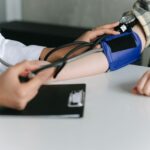
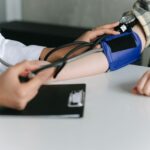
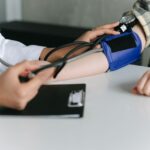
Home monitors can be accurate when used correctly. The key is using a validated upper-arm cuff monitor, not a wrist or finger device, and following proper technique.
Proper technique matters more than most people realize:
- Sit quietly for five minutes before measuring
- Keep your feet flat on the floor and your back supported
- Rest your arm on a table at heart level
- Use the correct cuff size — too small a cuff reads high
- Do not talk or check your phone during the reading
- Take two or three readings a minute apart and average them
Home readings often run slightly lower than office readings for many people. Bringing a log of home readings to your doctor gives a more complete picture than a single office measurement.
Frequently Asked Questions
Is 124/84 blood pressure good or bad?
It is neither clearly good nor clearly bad — it sits in a borderline zone. The systolic number (124) is elevated, and the diastolic number (84) is technically in the stage 1 range, but a single reading does not diagnose hypertension.
Is 124/84 considered high blood pressure?
By strict classification, 124/84 falls under stage 1 hypertension because the diastolic reading of 84 is between 80 and 89. However, diagnosis requires multiple elevated readings over time, not just one.
Should I worry about a 124/84 blood pressure reading?
It is worth paying attention to but not panicking over. If readings stay in this range consistently, talk to your doctor about lifestyle changes and whether any further evaluation is needed.
Can 124/84 blood pressure be lowered without medication?
For many people, yes. Reducing sodium, following a DASH-style diet, exercising regularly, limiting alcohol, and losing excess weight have all been shown to lower blood pressure. Whether these steps are enough depends on your individual situation.
