
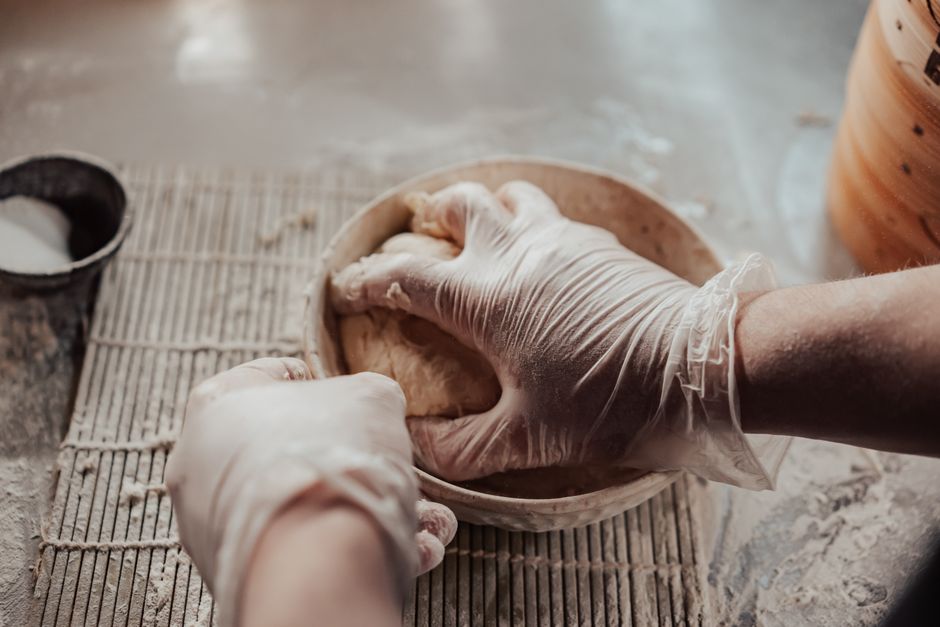
Yeast budding is how a single yeast cell creates a new cell by forming a small bulge, or bud, on its surface that grows and eventually separates into its own cell. This process is controlled by the same cell cycle machinery found in human cells, which is why yeast has become a vital tool in medicine and biotechnology. In industry, this rapid and predictable reproduction is harnessed to bake bread, ferment beer, and produce medicines like insulin.
What Is Yeast Budding and How Does It Start?
Budding is a form of asexual reproduction. A parent cell does not split in half evenly. Instead, it grows a new cell from its own surface. This is different from binary fission, which is how bacteria divide.
The process begins when the yeast cell senses that conditions are good. It needs nutrients and a suitable temperature. When those conditions are met, the cell commits to dividing and enters the cell cycle.
The first visible sign is a small protrusion on the cell wall. This is the bud. It appears at a specific site on the parent cell, often near the previous bud scar. The bud grows larger as the cell cycle progresses, and eventually, it becomes a fully formed daughter cell.
How the Cell Cycle Controls Budding
The yeast cell cycle is divided into phases, much like the cycle in human cells. These phases are G1, S, G2, and M. Each phase has a specific job.
In G1 phase, the cell grows and checks its environment. It decides whether to commit to division. If conditions are right, it passes a checkpoint called START. Once past this point, the cell is committed to making a bud.
In S phase, the cell copies its DNA. The bud begins to emerge during this time. The nucleus also starts to move toward the bud site.
In G2 phase, the cell checks that DNA replication was completed correctly. The bud continues to enlarge.
In M phase, or mitosis, the nucleus divides. One copy of the DNA goes to the parent cell and one goes to the bud. After mitosis, the cell enters a process called cytokinesis, where the new cell wall forms between the parent and the bud.
Research on yeast cell cycle control has been so influential that it earned the 2001 Nobel Prize in Physiology or Medicine. Scientists Leland Hartwell, Tim Hunt, and Paul Nurse identified the key proteins, called cyclins and cyclin-dependent kinases, that drive this cycle.
How Yeast Budding Works From Cell Cycle to Industry
Understanding the cell cycle explains why yeast is so useful in industry. Yeast cells can divide quickly under the right conditions. In a laboratory or industrial fermenter, a single yeast cell can produce millions of descendants in a few days.
Each budding event creates one new cell. But because yeast cells do not all divide at the same time, the population grows exponentially. This fast growth is what makes yeast so efficient for commercial use.
In industrial settings, yeast is grown in large tanks called fermenters. These tanks control temperature, nutrients, and oxygen. The goal is to keep the yeast in its exponential growth phase for as long as possible. This maximizes the number of cells produced.
When yeast buds, it also produces byproducts. The most famous is ethanol. Yeast ferments sugars into ethanol and carbon dioxide. This is the basis of the baking, brewing, and biofuel industries.




What Happens to the Parent Cell After Budding?
A yeast cell does not divide forever. Each budding event leaves a scar on the parent cell’s surface. These bud scars are made of chitin, a tough structural sugar.
Scientists can count these scars under a microscope. Each scar represents one budding event. A typical yeast cell can bud about 20 to 30 times before it stops dividing. This limit is sometimes called the yeast replicative lifespan.
As a yeast cell ages, its buds become less vigorous. The daughter cells may be smaller or grow more slowly. Eventually, the parent cell stops budding altogether and dies.
This aging process is another reason yeast is studied so heavily. The mechanisms of yeast aging share some features with aging in human cells. Research on yeast has helped scientists understand cellular aging and age-related diseases.
Why Is Budding Important in Baking and Brewing?
In baking, the carbon dioxide produced during budding and fermentation is what makes bread rise. The yeast consumes sugars in the dough and releases gas. The gas gets trapped in the gluten network, causing the dough to expand.
In brewing, the ethanol is the desired product. Different strains of yeast produce different flavors and alcohol levels. Brewers select specific yeast strains based on their budding characteristics and fermentation byproducts.
The budding process itself matters in these industries. If yeast cells cannot bud efficiently, fermentation slows down. This can ruin a batch of bread or beer. Maintaining healthy, vigorous yeast cultures is a core part of commercial baking and brewing.
One common practice is reusing yeast from one batch to the next. This works because yeast cells can be harvested and stored. However, each generation of yeast ages slightly. Over many reuses, the population becomes less vigorous. Industrial operations monitor yeast health and replace cultures when budding rates decline.
How Is Yeast Used to Make Medicines?
Yeast budding is not just for food and drink. It is also a platform for producing pharmaceutical proteins. The most famous example is human insulin.
Before the 1980s, insulin for diabetes was extracted from the pancreases of pigs and cows. This worked but had limitations. In 1978, scientists inserted the human insulin gene into bacteria. Later, they developed yeast-based systems that are still used today.
Here is how it works. Scientists modify the yeast’s DNA so that the yeast produces a human protein instead of its own. When the yeast buds and divides, each new cell also carries the modified DNA. This means the entire yeast population becomes a tiny protein factory.
The yeast secretes the protein into the surrounding liquid. Manufacturers then collect the liquid and purify the protein. This process is called recombinant DNA technology.
Yeast offers advantages over bacteria for this purpose. Yeast is a eukaryotic organism, like humans. It can perform many of the same protein modifications that human cells do. Bacterial systems sometimes produce proteins that fold incorrectly or lack necessary modifications. Yeast systems produce more human-like proteins.
Vaccines are another major product. Hepatitis B vaccines have been produced in yeast for decades. More recently, yeast-based systems have been explored for producing other vaccine components, including virus-like particles.
What Are the Limits of Yeast Budding in Industry?
Yeast budding is fast, but it is not unlimited. Several factors constrain how quickly and efficiently yeast can reproduce.
Temperature is one factor. Most industrial yeast strains work best between 25°C and 30°C. Above about 35°C, the yeast becomes stressed and budding slows dramatically. Below about 20°C, growth also slows.
Nutrients are another constraint. Yeast needs a source of nitrogen, phosphorus, and trace minerals, not just sugar. If any nutrient runs low, budding stops.
Oxygen matters too. Yeast can grow with or without oxygen. But without oxygen, it ferments and produces ethanol. With oxygen, it respires and produces more cell mass. Industrial operations choose the oxygen level based on their goal. For beer, they limit oxygen to encourage alcohol production. For yeast biomass production, they supply oxygen to maximize cell growth.
Ethanol itself is toxic to yeast at high concentrations. Most yeast strains stop growing when ethanol levels reach about 10 to 15 percent by volume. This is why standard beer has an alcohol limit and why specialized strains are needed for stronger brews.
Can Yeast Budding Be Controlled or Modified?
Yes. Scientists and industry professionals can influence budding in two main ways: by changing the environment and by changing the genetics.
Environmental control is the simpler method. Adjusting temperature, nutrients, and oxygen can speed up or slow down budding. This is standard practice in every commercial fermentation facility.
Genetic modification offers more precise control. Scientists have created yeast strains that bud faster, tolerate higher ethanol levels, or produce specific compounds. These strains are used widely in industry.
One example is the development of yeast that can ferment a wider range of sugars. Standard brewer’s yeast cannot ferment certain complex sugars found in plant material. Modified strains can, which makes biofuel production more efficient.
Another example is the creation of yeast strains that produce less off-flavor compounds during fermentation. These strains improve the consistency of beer and wine.
Some genetic modifications are made through traditional mutagenesis and selection. Others use modern CRISPR technology. Both approaches rely on the fact that when yeast buds, it faithfully copies its modified DNA to all daughter cells.
Frequently Asked Questions
How long does it take for a yeast cell to bud?
Under ideal conditions, a yeast cell can complete one budding cycle in about 90 to 120 minutes. The exact time depends on the yeast strain, temperature, and available nutrients.
Does yeast budding require two cells to mate?
No. Budding is asexual reproduction and requires only one parent cell. Yeast cells can also mate sexually under certain stress conditions, but budding is the primary way they multiply.
Why do scientists study yeast budding?
Yeast cells share many genes with human cells, including genes that control cell division. Studying yeast budding helps scientists understand cancer, aging, and genetic diseases because the core cell cycle machinery is similar.
Can all yeast species bud the same way?
Most industrially important yeasts bud similarly, but there are differences between species. The brewer’s yeast Saccharomyces cerevisiae is the most studied, and its budding process is the model for understanding yeast reproduction.
