
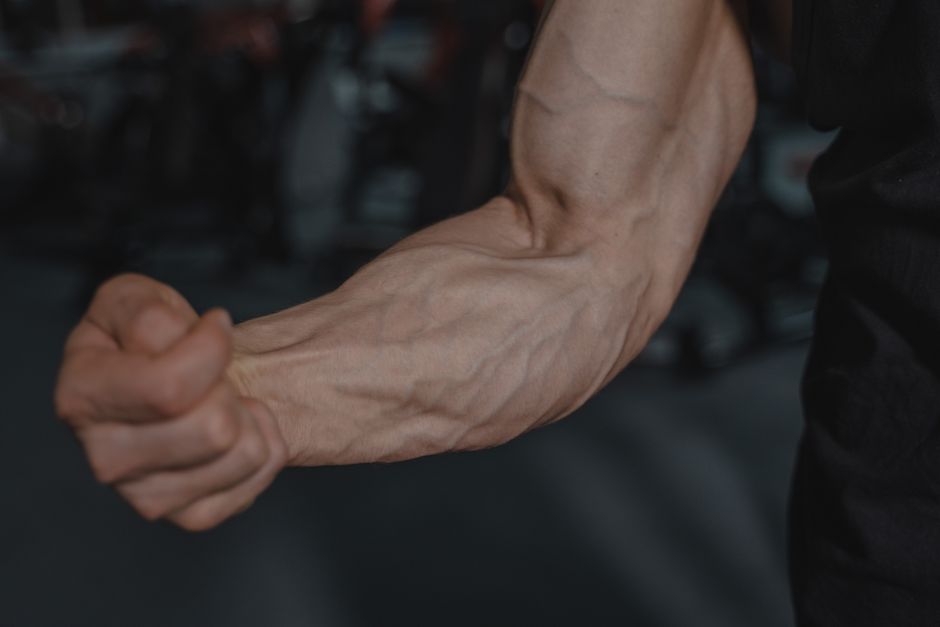
To work out your forearms effectively, focus on exercises that target the flexors (palm side), extensors (back of the arm), and the brachioradialis (top of the forearm near the elbow). The most reliable approach includes wrist curls, reverse wrist curls, and grip-strength work like farmer’s carries or dead hangs. Train your forearms two to three times per week, allowing at least 48 hours of rest between sessions. Progress by gradually increasing the weight, repetitions, or time under tension.
Why Should You Train Your Forearms?
Strong forearms matter for more than just how your arms look. Every time you grip something — a grocery bag, a barbell, a doorknob — your forearm muscles do the work. A weak grip limits your ability to lift heavier weights in other exercises like deadlifts, pull-ups, and rows. Strengthening your forearms also helps prevent common injuries such as wrist strain and tennis elbow. For people over 35, maintaining grip strength is linked to better functional independence and even a lower risk of falls. Research consistently shows that grip strength is a reliable marker of overall health and longevity. So forearm training is not just an aesthetic goal; it is a practical one.
What Muscles Make Up the Forearm?
The forearm contains about 20 muscles, but for training purposes you can group them into three main categories.
- Wrist flexors — These run along the palm side of your forearm. They curl your wrist and hand toward your forearm. You use them when you make a fist or pull something toward you.
- Wrist extensors — These run along the back of your forearm. They straighten your wrist and lift your hand upward. You rely on them for pushing motions and stabilizing the wrist in sports.
- Brachioradialis — This muscle bulges on the top of the forearm, closer to the elbow. It helps bend your elbow, especially when your forearm is in a neutral position (thumb up). It is activated during exercises like hammer curls and reverse curls.
To build balanced forearms, you must train all three of these groups. Neglecting the extensors is a common mistake that can lead to muscle imbalances and wrist pain over time.
How To Workout Forearm: The Best Exercises
This section covers the key exercises that directly target the forearm muscles. Choose two or three per session and rotate them over your weekly routine.
Wrist Curls (Flexors)
Rest your forearm on a bench or your thigh with your palm facing up. Hold a dumbbell and let your wrist hang off the edge. Slowly curl the weight up by bending your wrist, then lower it under control. Use a weight that allows 10–15 reps with good form. Do not let the weight roll into your fingers at the bottom — keep a slight tension throughout the movement. This is the single most direct exercise for building the flexor muscles on the palm side.
Reverse Wrist Curls (Extensors)
Same setup as wrist curls, but now your palm faces down. Your forearm rests on the bench and your hand hangs off the edge. Lift the back of your hand toward the ceiling by extending your wrist. These are harder than wrist curls, so start with a lighter weight. Aim for 10–15 reps. Strong extensors help prevent wrist pain and balance the flexor development.
Farmer’s Carries (Grip Endurance)
Pick up a heavy dumbbell or kettlebell in each hand. Keep your shoulders back and walk for a set distance (like 30–50 feet) or for time (30–60 seconds). The weight should challenge your grip but not so heavy that your shoulders round forward. This exercise builds endurance in both flexors and extensors because your hands must hold on statically. It also strengthens your overal grip, which carries over to many other lifts.
Dead Hangs (Grip Strength)
Hang from a pull-up bar with your arms fully extended. Grip the bar with either a palms-forward or palms-back grip. Hold for as long as you can with good form. Aim for 20–60 seconds. Dead hangs build pure grip strength and also decompress the spine, which can be helpful for back health. If you cannot hold for at least 15 seconds, use an assisted machine or a band to take some weight off.
Reverse Curls (Brachioradialis and Extensors)
Stand holding a barbell or dumbbells with an overhand grip (palms facing down). Keep your elbows close to your sides and curl the weight toward your shoulders. The overhand position shifts the load away from the biceps and onto the forearm muscles, especially the brachioradialis and the wrist extensors. Use a lighter weight than you would for regular curls. Do 8–12 reps per set.



How Often Should You Train Forearms?
Train your forearms two to three times per week. This frequency allows enough stimulus for growth while giving the muscles time to recover. Forearms are small muscles that get fatigued quickly, but they also are used in almost every upper-body exercise. If you are doing heavy pulls or deadlifts two days in a row, your forearms may already be worked. Adjust your direct forearm training on those days to avoid overloading them.
A simple schedule: do forearm exercises on your upper-body days, but not on consecutive days. For example, if you train push on Monday and pull on Tuesday, add forearm work only on the pull day. If you want more volume, add a separate forearm session 48 hours later. Listen to your body — if your wrists feel sore or you notice a loss of grip strength that lasts more than a day, cut back.
Common Mistakes and How to Avoid Them
Many people make these errors, which can stall progress or cause injury.
- Using momentum. If you jerk the weight up instead of using a controlled motion, you take the load off the forearm muscles. Lower the weight and move slowly. Each rep should take about two seconds up and two seconds down.
- Neglecting extensors. It is tempting to only train the flexors because they get bigger when you train them. But the extensors are just as important for wrist stability. Imbalance here can lead to tendonitis. Always include at least one extension exercise in your routine.
- Overtraining. Doing forearm work every day does more harm than good. The muscles need recovery time to grow and repair. Stick to 2–3 sessions per week and never work the same muscle group on consecutive days.
- Ignoring wrist pain. Mild soreness is normal, but sharp pain or pain that persists during rest may signal an overuse injury. Stop the aggravating exercise and let the wrist heal. If pain continues, see a doctor. Do not work through joint pain.
How to Progress Your Forearm Workouts
Progression means making the exercise harder over time so your muscles keep adapting. The same rule applies here as with any muscle group: gradually increase the load, the reps, or the time under tension.
For wrist curls and reverse wrist curls, add 2–5 pounds when you can complete 15 clean reps in each of your three sets. For farmer’s carries, increase the weight you carry or the distance you walk. For dead hangs, add time in small increments — aim for 5–10 seconds more per week. You can also add weight by wearing a vest or holding a dumbbell between your feet.
Be patient. Forearm muscles are dense and respond to training, but they can be slow to grow because they are small. Expect visible changes in strength within four to six weeks, but changes in size may take longer. Consistency matters more than intensity.
Frequently Asked Questions
How long does it take to see results from forearm workouts?
You may notice stronger grip within two to four weeks of consistent training. Visible muscle growth in the forearms typically takes eight to twelve weeks, depending on your genetics, diet, and training volume.
Can I train forearms every day?
No, daily forearm training is not recommended because it does not allow enough recovery time. Train them two to three times per week with at least 48 hours between sessions for best results.
What is the best exercise for forearm size?
Wrist curls are the most direct exercise for building the flexor muscles on the palm side of your forearm. For overall size, combine wrist curls with reverse wrist curls and farmer’s carries.
Do I need special equipment for forearm workouts?
You do not need specialized gear. A dumbbell or barbell plus a pull-up bar are enough to perform all the key exercises. A towel can be used to thicken the grip on farmer’s carries for extra challenge.
