
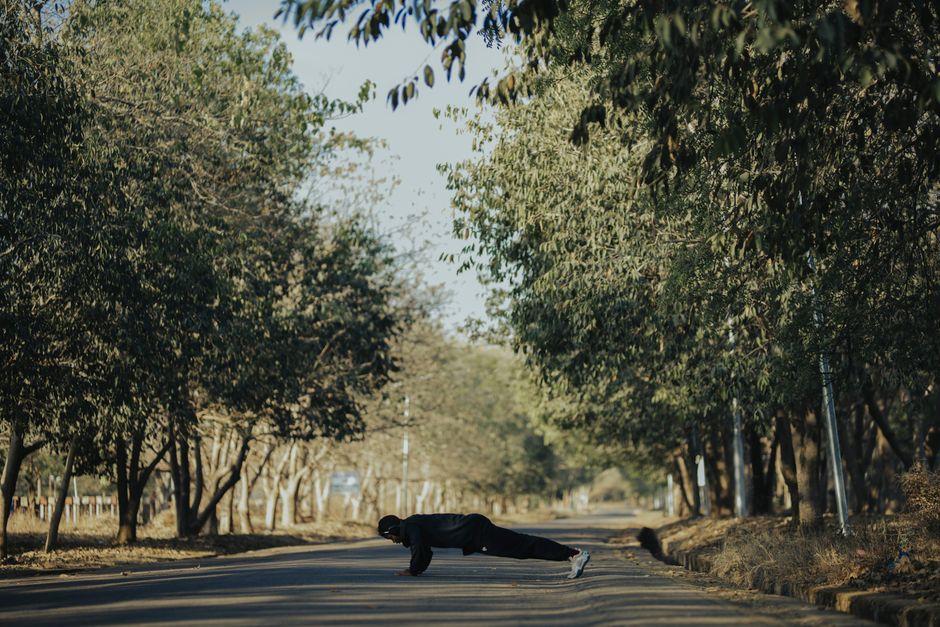
The Murph workout is a famous CrossFit benchmark challenge named after Navy Lieutenant Michael Murphy, who was killed in action in Afghanistan in 2005. It is a high-volume, bodyweight workout that combines a one-mile run, 100 pull-ups, 200 push-ups, 300 air squats, and another one-mile run. The workout is performed for time, often while wearing a weighted vest, and is a standard tribute on Memorial Day in the United States.
What Is A Murph Workout: The Exact Structure
The workout has a specific, non-negotiable order. You start with a one-mile run. You then complete 100 pull-ups, 200 push-ups, and 300 air squats. You finish with another one-mile run.
The middle section is the most challenging part. You must complete 600 total repetitions. The standard rule is that you can partition these reps in any way you like, but you must complete all of them before starting the final mile.
A common partition strategy is “Cindy,” which is a well-known CrossFit benchmark. This means you cycle through 5 pull-ups, 10 push-ups, and 15 air squats, repeating that sequence 20 times. This method breaks the volume into manageable chunks and is the most popular approach.
How Heavy Is the Vest and Who Should Wear It?
The “Rx” standard for the Murph workout requires a 20-pound weighted vest for men and a 14-pound vest for women. This is the prescribed standard for competitive athletes and those who want to complete the workout as originally intended.
Wearing a vest is not mandatory for everyone. The original purpose of the vest was to simulate the gear Lieutenant Murphy wore in combat. For most people, the primary goal is to complete the workout safely, not to mimic military conditions.
If you are new to high-volume training, have any shoulder or back issues, or are simply trying to finish the distance, you should skip the vest. The cardiovascular and muscular demands of 600 repetitions are significant on their own. Adding weight increases the risk of poor form and injury, especially as fatigue sets in.
What Is a “Scaled” Murph Workout?
Scaling means adjusting the workout to match your current fitness level. It is not a failure to scale; it is a smart training decision. The goal is to finish the workout with good form and a high effort level, not to injure yourself trying to hit an arbitrary standard.
There are several ways to scale the Murph. The most common is to reduce the total repetitions. For example, a half-Murph consists of a half-mile run, 50 pull-ups, 100 push-ups, 150 air squats, and another half-mile run.
You can also change the movements themselves. Many people replace pull-ups with ring rows or jumping pull-ups. Push-ups can be done from the knees or against a box. Air squats are usually the easiest to keep as prescribed, but you can reduce the depth if needed.
Another option is to use a resistance band for pull-ups. This allows you to practice the movement pattern while reducing the load. The key is to choose a scale that allows you to keep moving steadily without long breaks.





How Long Does It Take to Finish?
Finish times vary widely based on fitness level, body weight, and whether you wear a vest. A very fit athlete wearing a vest might finish in under 35 minutes. A recreational athlete without a vest might take 45 to 60 minutes. Beginners often take longer than an hour.
The pace matters more than the final time for most people. The run portions should be at a steady, sustainable effort. You should not sprint the first mile and then be unable to move for the middle section. The goal is a consistent effort across the entire workout.
If you are doing the workout for the first time, do not worry about your time. Focus on completing the work with good form. Track your time for future reference, but use the first attempt to learn how your body responds to the volume.
What Muscles Does the Murph Work?
The Murph is a full-body workout, but it emphasizes specific muscle groups. The pull-ups target the back, biceps, and forearms. The push-ups work the chest, shoulders, and triceps. The air squats focus on the quadriceps, glutes, and hamstrings.
The running adds a cardiovascular element and works the legs, hips, and core. The combination of strength work and running creates a high demand on your aerobic and anaerobic systems. Your heart rate will stay elevated for the entire workout.
One often overlooked aspect is the grip strength required. The pull-ups are the limiting factor for many people. If your grip gives out before your back muscles do, you will struggle to complete the required repetitions. Using a hook grip or alternating between overhand and underhand grips can help.
Is the Murph Workout Safe for Beginners?
The Murph is not a beginner workout. The volume of 600 repetitions is extremely high, especially for someone new to strength training. Attempting it without a foundation of basic fitness can lead to severe muscle soreness, injury, or rhabdomyolysis, a rare but serious condition where muscle tissue breaks down and can damage the kidneys.
If you are new to exercise, you should build a base first. You should be able to comfortably run a mile and perform basic bodyweight exercises with good form before attempting a scaled version of the Murph.
Even for experienced athletes, the risk of overuse injuries is real. The sheer volume of push-ups and pull-ups can strain the shoulders and elbows. If you feel sharp pain, stop immediately. Muscle fatigue is expected, but joint pain is a warning sign.
How Should You Prepare for a Murph Workout?
Preparation should start weeks in advance, not days. You need to build up your tolerance to high-volume bodyweight work. If you cannot do 50 pull-ups in a single session, you will struggle with 100.
A simple preparation plan involves doing the “Cindy” workout once or twice a week. This builds your capacity for the pull-up, push-up, and squat cycle. You should also run once or twice a week to prepare your legs and lungs for the mile runs.
In the week leading up to the workout, reduce your training volume. This is called tapering. You want to arrive at the start line fresh, not already fatigued. The day before, eat a normal meal and hydrate well. On the day of the workout, warm up with light jogging and dynamic stretches.
What Are Common Mistakes to Avoid?
The most common mistake is starting the first mile too fast. You will pay for this during the pull-ups. The first mile should feel easy. If you are breathing hard at the end of it, you have gone out too fast.
Another mistake is breaking up the middle section poorly. Trying to do all 100 pull-ups in a row is a recipe for failure. Even elite athletes break the work into smaller sets. Use the 5-10-15 “Cindy” partition or a similar strategy.
Poor form is a third major issue. As fatigue builds, push-ups get shallower and squats get higher. This reduces the effectiveness of the workout and increases injury risk. It is better to do 20 perfect push-ups than 30 sloppy ones. If your form breaks down, take a break or scale the movement.
Frequently Asked Questions
Can I do the Murph workout without a weighted vest?
Yes, you can absolutely do the Murph without a vest. The vest is the prescribed standard, but it is not required for everyone. Most people perform the workout without one, especially on their first attempt.
How many calories does a Murph workout burn?
Most estimates place the calorie burn between 500 and 800 calories for a standard Murph, but this varies greatly by body weight and effort. A heavier person will burn more calories than a lighter person doing the same work.
What is the best way to break up the 100 pull-ups, 200 push-ups, and 300 squats?
The most popular and effective method is the “Cindy” partition of 5 pull-ups, 10 push-ups, and 15 squats repeated 20 times. This keeps you moving steadily and prevents any single muscle group from becoming completely exhausted.
Is the Murph workout harder than a marathon?
They are different types of challenges. A marathon is a longer endurance event, while the Murph is a high-intensity mix of strength and cardio. The Murph is often described as more painful per minute, but a marathon requires much longer sustained effort.
