
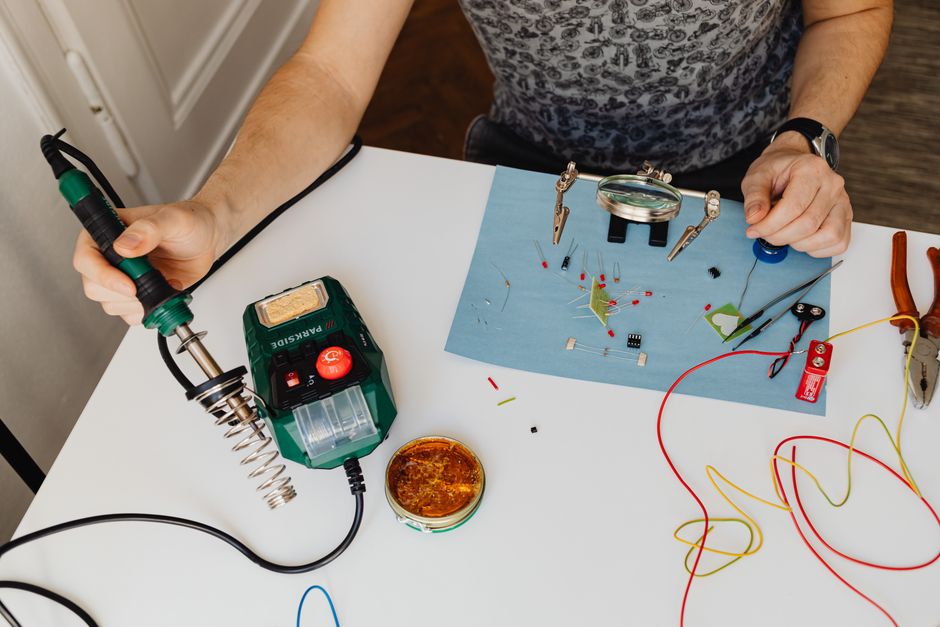
Wiring a fuse inline means placing a fuse directly into a power wire so all the current flowing to a device must pass through it. You cut the positive wire, strip both ends, and connect each end to a fuse holder. If too much current flows, the fuse blows and breaks the circuit before the wire or device can overheat. This is the same basic method for a car accessory and a household appliance, but the fuse size and wire gauge differ.
Why Does an Inline Fuse Need to Be on the Positive Wire?
The fuse must sit on the positive (live) wire, as close to the power source as possible. This protects the entire length of wire running from the battery or power supply to the device. If the fuse were on the negative wire, a short circuit in the positive wire would still carry full current and could melt the insulation or start a fire before the fuse ever blew.
In a car, the positive wire is usually red and connects to the battery positive terminal. In a household appliance, the live wire is typically black or brown, depending on whether you are working with US or international wiring standards. The fuse interrupts this live path, which is the safest and most effective placement.
What Fuse Size Do You Need?
The fuse size is determined by the wire gauge and the device’s current draw, not by guesswork. Every device has a rated amperage, usually printed on a label or in the manual. The fuse should be rated slightly above the normal operating current but well below the wire’s maximum safe current rating.
For example, a car radio that draws 5 amps needs a fuse rated around 7.5 to 10 amps. A refrigerator compressor that draws 6 amps might need a 10-amp fuse. The rule is simple: the fuse protects the wire, not the device. If the wire is rated for 15 amps, you do not put a 20-amp fuse on it, because the wire would melt before the fuse blew.
Wire gauge matters more than most people realize. Thicker wire carries more current safely. A 16-gauge wire typically handles about 10 amps, while a 12-gauge wire handles about 20 amps. Always match the fuse to the smallest wire in the circuit, which is usually the wire you are splicing into.
Step-by-Step: Wiring an Inline Fuse in a Car
Start by disconnecting the negative battery terminal. This is non-negotiable. Working on live car wiring risks short circuits, sparks, and damage to the vehicle’s computer modules.
Choose a location for the fuse holder that is accessible but protected from water and heat. Under the dashboard or inside the engine bay near the battery are common spots. The fuse should be within 18 inches of the battery for maximum protection, though this distance depends on the specific vehicle and installation.
Cut the positive wire at the chosen location. Strip about half an inch of insulation from both cut ends. Insert one end into the fuse holder’s crimp connector and crimp it firmly. Repeat for the other end. If your fuse holder uses set screws instead of crimps, loosen the screw, insert the wire, and tighten securely.
Insert the correct fuse into the holder. Reconnect the negative battery terminal. Test the device. If it does not power on, check the fuse first. A blown fuse has a broken metal strip visible through the clear plastic.





Step-by-Step: Wiring an Inline Fuse in an Appliance
Unplug the appliance first. This is the equivalent of disconnecting the battery and is just as important. Never work on a plugged-in appliance.
Access the power cord where it enters the appliance. Some appliances have a junction box, while others require opening the rear panel. Locate the live wire, which is black in US standard wiring. Cut this wire only. Do not cut the white neutral or the green ground wire.
Strip both ends and connect them to the fuse holder using the same crimp or screw method described above. Place the fuse holder inside the appliance housing if there is room, or secure it to the cord with a cable tie if it is an external installation. The fuse must be protected from physical damage and moisture.
Insert the fuse, close the appliance, and plug it back in. Test the appliance. If it does not work, unplug it and check the fuse.
What Fuse Type Should You Use?
Car applications use blade fuses, commonly ATO or ATC style. These are the small plastic fuses with two metal prongs that push into a socket. They come in standard sizes and are available at any auto parts store.
Household appliances use either glass cartridge fuses or ceramic fuses. Glass fuses are cylindrical with metal caps on each end. Ceramic fuses look similar but handle higher interrupting ratings, meaning they can safely break higher fault currents. For most household appliance repairs, a standard glass cartridge fuse of the correct amperage is acceptable. Always match the fuse type and amperage to what the appliance originally used.
Never substitute a different fuse type just because it fits. A fuse with a higher amperage rating defeats the protection purpose. A fuse with a lower amperage rating will blow constantly and may indicate an underlying problem.
Common Mistakes and How to Avoid Them
The most common mistake is using a fuse that is too large. People assume a bigger fuse means more protection, but the opposite is true. A 30-amp fuse on a 16-gauge wire allows the wire to overheat and melt before the fuse blows. This is a fire hazard, not a safety feature.
Another mistake is poor crimping. A loose connection creates resistance, which generates heat. Heat near a fuse holder can melt the holder or the wire insulation. Crimp connectors must be tight enough that the wire cannot pull out, but not so tight that the wire strands are crushed and broken.
Some people skip the fuse entirely and connect the wire directly. This is dangerous. Without a fuse, a short circuit draws unlimited current until something melts or catches fire. The fuse is not optional protection. It is the only thing standing between a minor wiring fault and a vehicle or house fire.
Finally, never work on wiring while the circuit is live. In a car, disconnect the battery. In an appliance, unplug it. This simple step prevents the vast majority of wiring injuries.
When Should You Call a Professional Instead?
If the appliance is under warranty, opening it to install a fuse will void the warranty. Check the warranty terms before doing any repair. Many manufacturers explicitly prohibit user modifications to the power cord.
If you are unsure about the wire gauge, the fuse rating, or which wire is live, stop and call an electrician or automotive technician. Guessing on electrical work is how fires start. A professional will have the tools to measure current draw and determine the correct fuse size with certainty.
If the device repeatedly blows fuses after you install the correct size, there is an underlying fault. The fuse is doing its job. Do not install a larger fuse to stop the blowing. That masks the problem and creates a fire risk. The device needs repair, not a bigger fuse.
Frequently Asked Questions
Can I wire an inline fuse to the negative wire instead?
No. The fuse must be on the positive wire to protect the circuit. A fuse on the negative wire leaves the entire positive wire unprotected and a short could still cause a fire.
What happens if I use a fuse with too high an amperage?
The wire can overheat and melt before the fuse blows. The fuse is sized to protect the wire, so a larger fuse removes that protection and creates a fire hazard.
Do I need to disconnect the battery before installing a car fuse?
Yes, always disconnect the negative battery terminal first. Working on live wiring risks short circuits, sparks, and damage to the vehicle’s electrical system.
Can I use a car blade fuse in a household appliance?
No. Household appliances use glass or ceramic cartridge fuses designed for their specific voltage and current ratings. Car blade fuses are not rated for household electrical conditions.
