
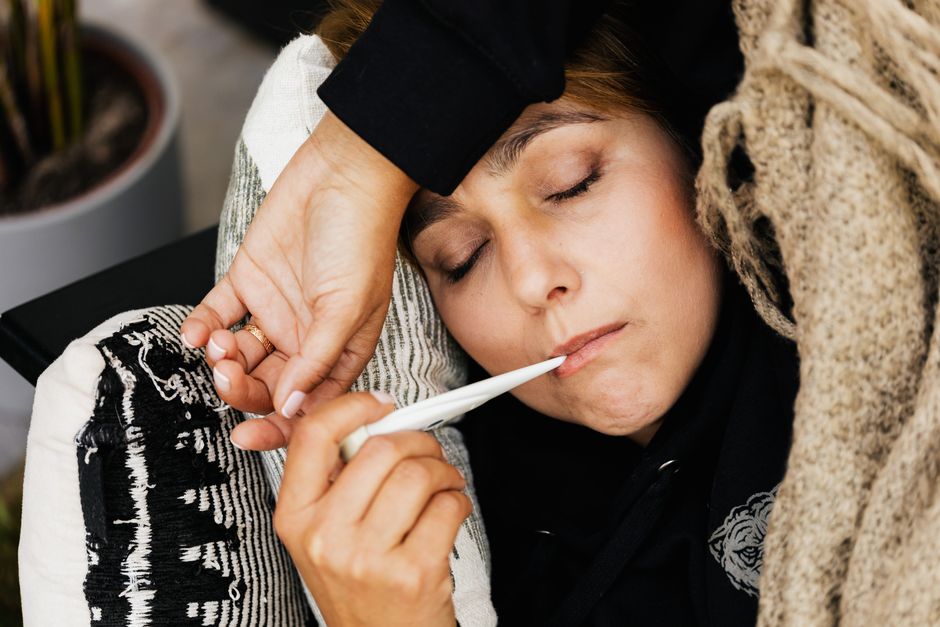
Feeling hot then cold is your body’s thermostat responding to a signal, not a problem with the thermostat itself. Your core temperature sits in a narrow range, and when infection, hormones, or blood flow change that range, your body reacts by either dumping heat or conserving it. That swing is what you feel as hot flashes and chills. The pattern, timing, and what comes with it usually point to the cause.
What Causes the Hot and Cold Swing?
Your body maintains its core temperature around 98.6°F (37°C) through a control center in the brain called the hypothalamus. When the hypothalamus decides your body needs to lose heat, blood vessels near your skin widen and you feel hot. When it decides you need to hold onto heat, those vessels narrow, blood shifts away from your skin, and you feel cold.
That control system responds to real temperature changes. It also responds to chemical signals that make it reset the target itself. During an infection, your immune system releases substances that raise the body’s temperature set point. You feel cold and start shivering because your body is trying to reach that higher number. Once the set point drops back down, you feel hot and start sweating because your body is now trying to shed the extra heat. This is why a fever often comes with chills first and sweating later.
Hormonal shifts can trigger the same kind of swing without any infection. When estrogen levels fluctuate, the hypothalamus can become more sensitive to small changes in core temperature. A tiny rise that would normally go unnoticed can trigger a full heat-loss response. That is the mechanism behind hot flashes during perimenopause and menopause.
Why Do I Feel Hot Then Cold at Night?
Night sweats and chills are common, and the timing often gives clues. Your core body temperature naturally dips in the early morning hours as part of your daily rhythm. If something is already pushing your temperature regulation off balance, that natural dip can amplify the swing.
Hormonal changes are a frequent cause in women approaching menopause. Low blood sugar overnight can also trigger sweating and a feeling of being hot, followed by chills. Anxiety and panic can cause a rush of adrenaline that raises heart rate and skin temperature, then leaves you feeling cold as it wears off.
Some causes at night are worth taking seriously. Drenching night sweats that soak your sheets and clothing, especially with unexplained weight loss, persistent fever, or swollen lymph nodes, need medical evaluation. These can be signs of infection, certain cancers, or other conditions that require diagnosis and treatment. Do not assume it is hormonal without ruling out other causes.
When Is Feeling Hot Then Cold a Sign of Illness?
A fever that swings between chills and sweating is a normal immune response and usually means your body is fighting an infection. Common viral illnesses, flu, and some bacterial infections all follow this pattern. The chills happen as your temperature climbs. The hot feeling and sweating happen as it falls.
Certain patterns point to specific problems:
- Malaria is known for cycles of chills, fever, and sweating that repeat on a schedule. This requires prompt medical care, especially after travel to an area where malaria is common.
- Urinary tract infections and pneumonia can cause fever with chills, particularly in older adults.
- Sepsis, a severe whole-body response to infection, can cause alternating hot and cold feelings along with rapid heart rate, confusion, and low blood pressure. This is a medical emergency.
If the hot and cold feelings come with a high fever that will not come down, trouble breathing, confusion, or a rapid heartbeat, seek medical care right away.
Can Hormones Cause Hot Then Cold Flashes?
Yes, and this is one of the most common reasons women in their 40s and 50s report these symptoms. During perimenopause, estrogen levels rise and fall unevenly. The hypothalamus depends on stable estrogen signaling to regulate temperature properly. When that signaling becomes erratic, the heat-loss response can fire when it should not.
A hot flash typically starts in the chest or face and spreads. It lasts a few minutes and is often followed by sweating and then a cold feeling as the body cools down. Some women have them occasionally. Others have them many times a day and night, which can disrupt sleep and daily life.
Men can also experience hot flashes, usually as a result of testosterone-lowering treatments for prostate cancer or other hormonal changes. The mechanism is similar even though the hormones differ.
What Else Can Make You Feel Hot and Cold?
Several other conditions and situations can produce this swing:
- Anxiety and panic attacks cause surges of adrenaline that raise heart rate, increase sweating, and make you feel hot, followed by chills as the surge passes.
- Low blood sugar (hypoglycemia) can cause sweating, shakiness, and a feeling of being hot, then cold. This is most common in people with diabetes who take insulin or certain medications.
- Thyroid problems can affect temperature regulation. An overactive thyroid tends to make people feel hot and sweaty. An underactive thyroid tends to make people feel cold.
- Medications including some antidepressants, opioids, and blood pressure drugs can affect sweating and temperature control.
- Alcohol and spicy foods can trigger flushing and sweating in some people, followed by a cold feeling.
Some of these are harmless and pass on their own. Others point to a condition that needs treatment. The difference usually comes down to how often it happens, how severe it is, and what other symptoms come with it.
How Do You Tell the Difference Between Causes?
The pattern matters more than any single episode. A few questions can help you and your doctor narrow it down:
- Does it happen at a certain time of day or night?
- Is there a fever, or have you been around someone who is sick?
- Are you in perimenopause or menopause, or have you had hormonal treatment?
- Does it happen after eating, after missing a meal, or during stressful situations?
- Are there other symptoms like weight loss, fatigue, or swollen glands?
Keeping a simple log of when it happens and what else you notice can be genuinely useful at a medical visit. Doctors often use that pattern to decide what to test for.
When Should You See a Doctor?
Occasional hot and cold feelings are usually not a concern. See a doctor if:
- The symptoms are frequent or severe enough to disrupt sleep or daily life.
- You have a fever above 103°F (39.4°C), or any fever that lasts more than a few days.
- You have drenching night sweats.
- You have unexplained weight loss, persistent fatigue, or swollen lymph nodes.
- You have trouble breathing, chest pain, confusion, or a rapid heartbeat.
If you are in perimenopause and hot flashes are affecting your quality of life, that is also a valid reason to talk to a doctor. There are treatments, and the decision about whether to use them depends on your history and preferences.
What Helps With Hot and Cold Flashes?
What helps depends on the cause. For infection-related fever, treating the underlying infection is the priority. For hormonal hot flashes, options include lifestyle adjustments and, for some women, prescription treatments.
General measures that some people find helpful include:
- Dressing in layers so you can adjust quickly.
- Keeping the room cool at night and using breathable bedding.
- Avoiding known triggers like alcohol, caffeine, and spicy foods if they seem to set off episodes.
- Managing stress, since anxiety can trigger or worsen symptoms.
These steps reduce discomfort for some people. They do not treat the underlying cause. If symptoms are severe or getting worse, medical evaluation is the right next step.
Frequently Asked Questions
Why do I feel hot and then cold when I have a fever?
Your body raises its temperature set point to fight infection, which makes you feel cold and shiver until you reach that higher temperature. When the set point drops back down, you feel hot and sweat as your body releases the extra heat.
Can hormonal changes cause hot then cold flashes?
Yes, fluctuating estrogen during perimenopause and menopause can make the hypothalamus overreact to small temperature changes, triggering a hot flash followed by a cold feeling. This is one of the most common causes in women in their 40s and 50s.
When should I worry about feeling hot then cold?
See a doctor if you have drenching night sweats, a fever above 103°F, unexplained weight loss, or symptoms that disrupt your daily life. These can point to conditions that need diagnosis and treatment.
Can anxiety make you feel hot then cold?
Yes, anxiety and panic attacks release adrenaline, which raises heart rate and sweating and makes you feel hot, followed by chills as the adrenaline wears off. This pattern is common and usually passes once the anxiety settles.
