
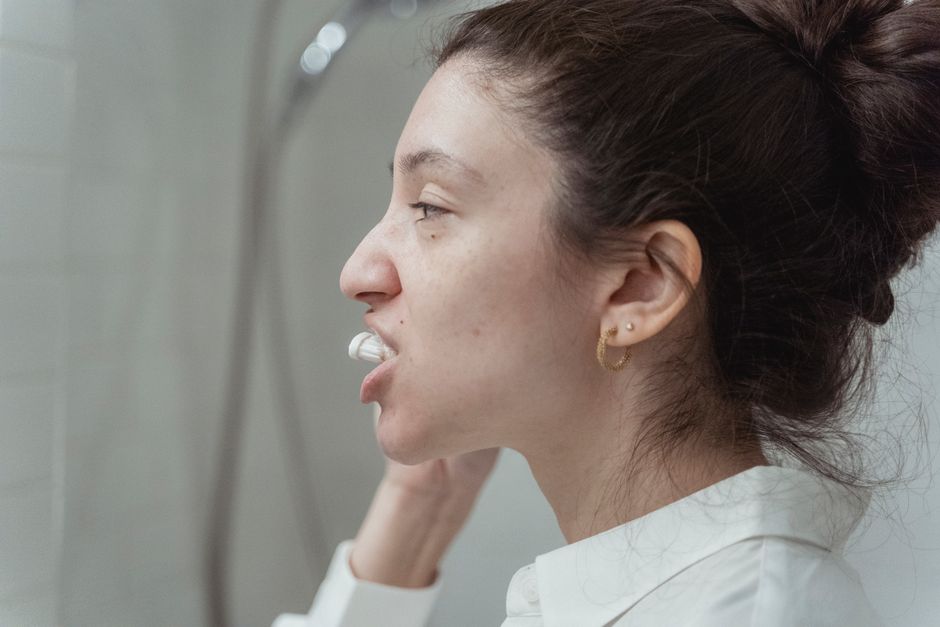
Thin tooth enamel changes the rules for whitening. Standard whitening treatments can make teeth more sensitive and, in some cases, cause real damage. The safe approach is to focus on removing surface stains and improving the appearance of your teeth without using harsh chemicals that penetrate the enamel. You can safely brighten your smile with the right toothpaste, professional guidance, and realistic expectations about what whitening can and cannot do for thin enamel.
What Does Thin Enamel Actually Mean?
Enamel is the hard outer layer of your tooth. It is the hardest tissue in the human body. But it is not living tissue. Once enamel is lost, it does not grow back.
Thin enamel means you have less of this protective layer than normal. This can happen from genetics, aggressive brushing, acid erosion from drinks or reflux, or grinding your teeth. When enamel thins, the yellowish dentin underneath shows through more. That is why teeth with thin enamel often look more yellow or translucent, especially at the edges.
Thin enamel also means the sensitive inner layers of the tooth are closer to the surface. This is why people with thin enamel often feel pain or discomfort with hot, cold, sweet, or acidic foods and drinks.
Why Standard Whitening Is Risky for Thin Enamel
Most whitening products use hydrogen peroxide or carbamide peroxide. These chemicals break down stain molecules inside the tooth. To do that, they must penetrate the enamel and reach the dentin.
When enamel is thin, these chemicals reach the nerve of the tooth faster and in higher concentrations. The result is often significant tooth sensitivity. In some cases, the sensitivity can last for days or weeks.
There is also a question of whether peroxide weakens enamel itself. Research on this is mixed. Some studies suggest that high-concentration peroxide treatments can reduce enamel hardness or change its surface. Other studies find no lasting damage. But when enamel is already thin, even a temporary softening of the surface is a risk most dentists prefer to avoid.
Over-the-counter whitening strips are especially concerning for thin enamel. They hold peroxide against the teeth for a set amount of time. You cannot adjust the concentration or the duration. If your enamel is thin, you do not know how much peroxide is reaching the dentin or the nerve.
How To Whiten Teeth With Thin Enamel Safely: Start With a Dentist
The first step is not a product. It is an examination. A dentist can determine whether your enamel is actually thin and why. What looks like thin enamel could also be erosion, cavities, or simply naturally translucent teeth.
Your dentist can also identify the cause of thinning. If you are grinding your teeth at night, whitening will not help until that is managed. If acid erosion is the cause, addressing your diet or reflux matters before any cosmetic treatment.
Ask your dentist specifically about your enamel thickness and whether any whitening treatment is appropriate for your situation. This is not a question you can answer on your own. Some people assume they have thin enamel when they do not. Others have thin enamel and do not realize it until a whitening treatment causes severe pain.




Safer Whitening Options for Thin Enamel
If your dentist confirms that whitening is safe for you, some options carry less risk than others.
Professional in-office whitening is often the safest choice for thin enamel. The dentist controls the concentration of the peroxide and can use barriers to protect the gums. They can also stop the treatment immediately if you experience significant sensitivity. Many dentists use lower concentrations for patients with sensitive teeth and extend the treatment time rather than using a high-concentration product.
Custom take-home trays from your dentist are another option. These trays fit your teeth precisely, so the whitening gel stays on the teeth and off the gums. Your dentist can give you a lower-concentration gel and instructions to use it for shorter periods. This gives you control that over-the-counter strips do not offer.
Desensitizing toothpaste before and during whitening can help. These toothpastes contain compounds like potassium nitrate or stannous fluoride that block pain signals from the nerve. Using them for two weeks before whitening can reduce sensitivity during the treatment.
Your dentist may also recommend a product that combines whitening with fluoride or other minerals. These products aim to whiten while also strengthening the enamel surface. The evidence for these combination products is limited, but some patients find them gentler.
Whitening Toothpaste and Other Non-Percide Options
Whitening toothpaste works differently from peroxide-based products. It does not change the color of the tooth from the inside. Instead, it removes surface stains using mild abrasives.
For thin enamel, a whitening toothpaste with a low abrasivity score is the safer choice. The Relative Dentin Abrasivity (RDA) score measures how abrasive a toothpaste is. Lower numbers mean less abrasion. Most standard whitening toothpastes have RDA scores in the 100-150 range. Some are higher. Look for toothpastes with lower RDA values, ideally under 100, if you have thin enamel.
Baking soda-based toothpastes are a gentler alternative. Baking soda has a low abrasivity score and can remove surface stains effectively. Some studies suggest baking soda toothpastes are less abrasive than many traditional whitening toothpastes.
Charcoal toothpaste is not a safe option for thin enamel. Charcoal is highly abrasive. Research has shown that some charcoal toothpastes are abrasive enough to wear away enamel. They also do not contain fluoride, which you need to protect the enamel you still have.
There is a difference between removing stains and whitening the tooth itself. Whitening toothpaste can make your teeth look brighter by removing surface stains. It cannot make the underlying tooth color lighter. If your teeth look yellow because of thin enamel showing the dentin underneath, no toothpaste will change that.
What About LED Light Whitening Kits?
Home LED whitening kits are popular. They use a blue light that is supposed to activate the whitening gel. The evidence that the light adds meaningful benefit is weak. Some studies find a small improvement, others find no difference compared to using the gel alone.
For thin enamel, the concern is not the light. It is the peroxide gel that comes with the kit. Many of these kits use high-concentration peroxide without any professional supervision. You have no way to know how your teeth will respond until you are in the middle of the treatment.
If you have thin enamel, home LED kits are not the safest choice. The combination of high-concentration peroxide and no professional oversight creates too much uncertainty about sensitivity and potential enamel damage.
Non-Whitening Ways to Improve the Look of Thin Enamel Teeth
Whitening is not the only way to make teeth with thin enamel look better. In fact, for some people, it is not the best way.
Bonding is a procedure where a tooth-colored resin is applied to the tooth surface. It can cover discoloration, protect exposed dentin, and improve the shape of the tooth. Bonding does not require removing any enamel. In fact, it adds a protective layer. For someone with thin enamel, bonding can address both appearance and sensitivity.
Veneers are thin shells placed over the front of the teeth. Traditional veneers require removing some enamel from the tooth surface. That is not a good option when enamel is already thin. However, some newer veneer systems require minimal or no enamel removal. These are called no-prep veneers. They are not appropriate for everyone, and they are generally not reversible.
Fluoride treatments do not whiten teeth, but they can strengthen the enamel you have. Your dentist can apply a professional fluoride varnish. You can also use a prescription-strength fluoride toothpaste at home. Stronger enamel is less sensitive and more resistant to further wear.
These options do not whiten. They change how your teeth look and protect them. For many people with thin enamel, that combination is more valuable than a slightly lighter shade.
Daily Habits That Protect Thin Enamel
Protecting the enamel you have is more important than whitening it. Every habit that wears enamel away makes the problem worse.
Use a soft-bristled toothbrush. Medium and hard bristles can wear away enamel over time. Brush with gentle pressure. Many people brush too hard without realizing it. If the bristles on your toothbrush flatten out within a few weeks, you are brushing too hard.
Wait at least 30 minutes after eating or drinking something acidic before brushing. Acid softens enamel temporarily. Brushing while the enamel is softened can brush it away. Rinsing with water after acidic foods or drinks can help neutralize the acid faster.
Limit acidic drinks like soda, sports drinks, and citrus juices. When you do drink them, use a straw to reduce contact with your teeth. Do not sip acidic drinks over a long period. Finish them quickly instead.
If you grind your teeth, talk to your dentist about a night guard. Grinding wears enamel down faster than almost anything else. A custom night guard protects your teeth while you sleep.
Use a toothpaste with fluoride. Fluoride helps remineralize early stages of enamel damage. This does not regrow enamel, but it can strengthen the enamel that remains.
Frequently Asked Questions
Can teeth with thin enamel be whitened at all?
Yes, but only with professional supervision and lower-concentration products. A dentist must first confirm that whitening is safe for your specific situation.
Does sensitivity from whitening with thin enamel go away?
Sensitivity usually resolves within a few days to a week after stopping the treatment. If sensitivity lasts longer or is severe, see your dentist.
Are whitening strips safe for thin enamel?
No, whitening strips are generally not recommended for thin enamel because you cannot control the peroxide concentration or treatment duration. They can cause significant sensitivity and potential enamel damage.
Can I use baking soda to whiten teeth with thin enamel?
Baking soda toothpaste can safely remove surface stains because it is mildly abrasive. It cannot whiten the tooth itself, and it will not help if the yellow color comes from dentin showing through thin enamel.
