
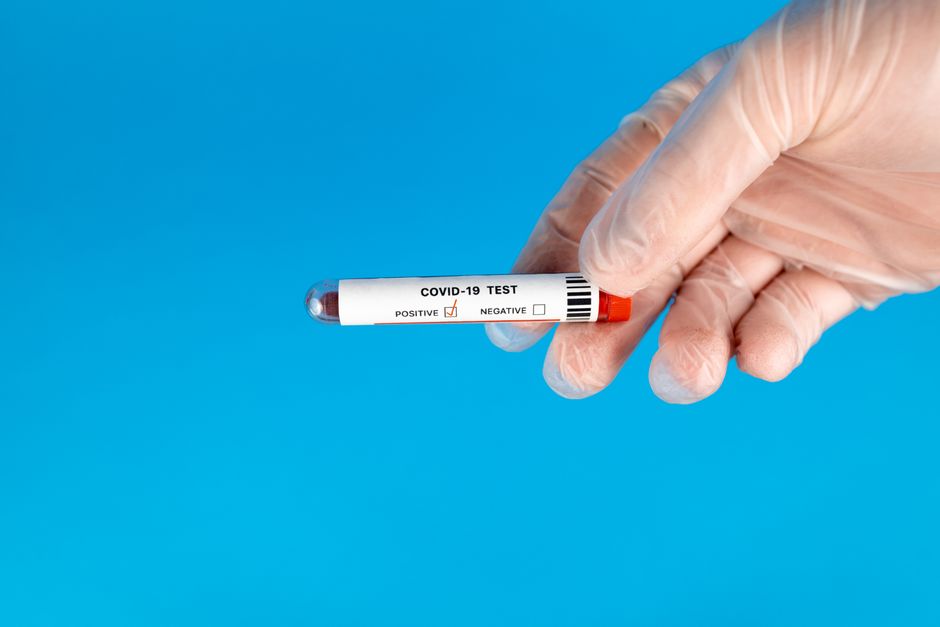
Most people who test positive for COVID-19 stop testing positive within about 5 to 10 days after symptoms start or after their first positive test. A smaller group keeps testing positive for two weeks or longer, and a few people test positive for weeks or even months. How long you stay positive depends on which test you use, how sick you were, and your own immune response.
How Long Do You Test Positive For Covid?
The short answer: it varies, and the range is wide. For most people with a mild illness, a rapid antigen test turns negative somewhere between 5 and 10 days. A PCR test can stay positive longer, often up to two weeks or more, because it detects tiny amounts of viral genetic material even after you are no longer contagious.
The Centers for Disease Control and Prevention has noted that some people can test positive on a PCR test for up to 90 days after they first get sick. That does not mean they are still spreading the virus. It means the test is picking up leftover genetic fragments.
This is the single most misunderstood point about COVID testing. A positive result answers one question: was viral material detected? It does not answer a different question: am I still able to infect someone? Those two things come apart, especially later in an infection.
Why Do Some People Test Positive Longer Than Others?
Several factors stretch out how long a test stays positive. The biggest ones are the type of test, how severe the illness was, and the strength of your immune system.
People who had more severe illness tend to shed detectable virus for longer. People who are immunocompromised — for example, those on certain medications or with conditions that weaken immune function — can test positive for weeks or months. This is a well-documented pattern, and it is one reason clinical guidance treats this group differently.
Vaccination status and prior infection also play a role. People with some existing immunity often clear the virus faster, which can mean a shorter window of positive tests. But this is a general trend, not a rule for any one person.
Age matters too. Older adults and very young children can have different patterns of viral shedding than healthy middle-aged adults.
Rapid Antigen Tests vs. PCR Tests: What’s the Difference?
These two test types measure different things, and that difference explains most of the confusion about how long people stay positive.
A rapid antigen test looks for proteins on the surface of the virus. It needs a fairly large amount of virus present to turn positive. Once your body clears most of the virus, the antigen test usually flips to negative fairly quickly.
A PCR test (polymerase chain reaction) looks for the virus’s genetic material and amplifies it. It can detect extremely small amounts. That sensitivity is why PCR tests can stay positive long after you feel better and long after you can spread the virus to anyone.
| Test Type | What It Detects | Typical Positive Window |
|---|---|---|
| Rapid antigen | Viral proteins | Often 5–10 days |
| PCR (lab) | Viral genetic material | Often up to 2 weeks; sometimes up to 90 days |
Neither test tells you directly whether you are contagious. They tell you whether viral material is present.





Does a Positive Test Mean You Are Still Contagious?
No. A positive test does not automatically mean you can pass the virus to someone else. This is one of the most important distinctions in all of COVID testing, and it is where a lot of unnecessary worry comes from.
Contagiousness depends on whether you are shedding live, replication-competent virus — virus that can still infect cells. PCR tests cannot tell the difference between live virus and dead viral fragments. Antigen tests are a somewhat better proxy for live virus, but they are not perfect either.
Research has generally found that people are most contagious in the couple of days before symptoms appear and during the first several days of illness. After that, the ability to transmit tends to drop, even if a test is still positive.
This is why public health guidance moved away from requiring a negative test to end isolation. The test result and the infectious period are not the same thing.
What Should You Do If You Keep Testing Positive?
If you feel well and your symptoms have clearly improved, a lingering positive test is common and usually not a reason to keep isolating indefinitely. Current public health guidance generally focuses on symptom improvement and a set number of days rather than a negative test.
That said, there are situations where a prolonged positive test deserves attention:
- You are immunocompromised and test positive for weeks or months.
- Your symptoms are getting worse rather than better.
- You test positive again after clearly testing negative, which could suggest reinfection.
- You are unsure whether you are contagious and need to be around high-risk people.
In these cases, talk to a doctor. They can help interpret what your result actually means for your situation.
Can You Test Positive Again After Recovering?
Yes, but the reasons differ. A positive test right after recovery is usually leftover viral material, not a new infection. A positive test weeks or months later, especially with new symptoms, is more likely to be reinfection.
Reinfection became more common as the virus evolved and new variants emerged that could partly evade existing immunity. Prior infection and vaccination both reduce the risk of severe illness, but neither fully blocks reinfection.
If you test positive again after a clear gap and you have symptoms, treat it as a new infection and follow current guidance.
The Bottom Line on Positive Test Duration
Most people test positive for roughly 5 to 10 days. PCR tests can stay positive longer than antigen tests, sometimes up to 90 days, without meaning you are still contagious. The test tells you whether viral material is present — not whether you can infect others.
If you are healthy and your symptoms are improving, a lingering positive result is usually not a concern. If you are immunocompromised, if your symptoms worsen, or if you are unsure, a doctor can help you sort out what your result means.
Frequently Asked Questions
How long do you test positive for COVID on a rapid test?
Most people turn negative on a rapid antigen test within about 5 to 10 days. Some people, especially those with severe illness or weakened immune systems, stay positive longer.
Can you still be contagious if you test positive after 10 days?
It is possible but less likely the further you get from your first positive test. A positive result alone does not prove you can still infect others.
Why does a PCR test stay positive longer than a rapid test?
PCR tests detect tiny amounts of viral genetic material and can stay positive for up to 90 days. That leftover material does not necessarily mean live, infectious virus is present.
Do you need a negative test to stop isolating?
No. Current public health guidance generally bases the end of isolation on symptom improvement and a set number of days, not on a negative test result.
