
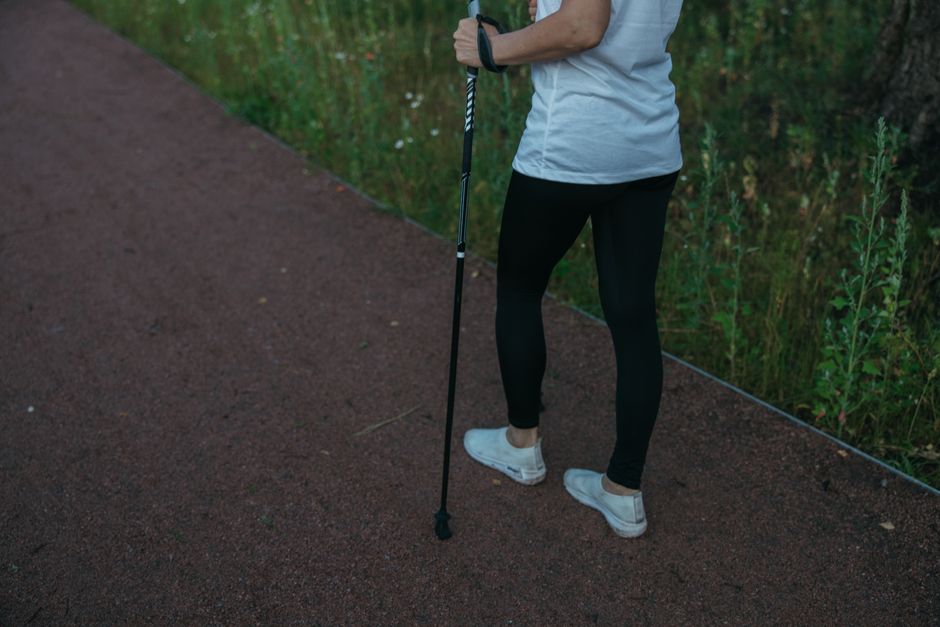
A walking stick is one of the simplest tools in medicine, and one of the most commonly used incorrectly. Done right, it takes load off a painful or weak leg, widens your base of support, and helps you move with more confidence. Done wrong, it can throw off your balance, strain your shoulder, and leave you working harder than you need to.
The core of walking correctly with a stick comes down to three things: hold it in the hand opposite your weaker or more painful leg, move it forward at the same time as that leg, and keep the height set so the handle sits around the crease of your wrist when your arm hangs relaxed at your side. Most people get at least one of these wrong, and the fix is usually simple.
How To Walk With A Walking Stick Correctly: The Basics
The single most common mistake is holding the stick on the same side as the problem. If your right knee hurts, the stick goes in your left hand. This is not a preference. It is biomechanics.
When you step forward with your right leg, your body’s natural counterweight is your left arm swinging forward. Putting the stick in that left hand means the stick plants at the same moment your right foot lands. That timing lets the stick share the load your right leg would otherwise carry alone. Hold the stick on the sore side and it moves out of sync with the painful leg, which does little to unload it and can actually make your gait more uneven.
The basic sequence for a normal walking pattern looks like this:
- Move the stick and your affected leg forward together.
- Plant the stick as your affected foot lands.
- Step through with your stronger leg while bearing down slightly on the stick.
- Repeat, keeping the stick in rhythm with the affected leg, not the strong one.
Your elbow should stay slightly bent — roughly 15 to 20 degrees — when you are standing upright with the tip on the ground. A locked, straight arm means the stick is too tall. A sharply bent elbow usually means it is too short.
Which Hand Should You Hold a Walking Stick In?
The stick goes in the hand opposite the leg that needs support. This is the rule that trips up the most people, because it feels backwards at first.
The reason is simple. Your body already knows how to walk with a natural arm swing: right leg forward, left arm forward. A walking stick works best when it slots into that existing pattern rather than fighting it. If you have pain or weakness in your right hip, knee, or foot, the stick in your left hand plants exactly when your right foot hits the ground, giving that leg a moment of shared support.
There is one main exception. If both legs are equally affected — say, from general balance problems or a condition affecting both sides — many clinicians suggest holding the stick in your dominant hand, since that hand tends to have better control. If you have a specific injury or surgery on one side, follow the opposite-hand rule unless a physical therapist tells you otherwise.
How Tall Should a Walking Stick Be?
Handle height matters more than most people realize. A stick that is too tall pushes your shoulder up and makes you lean. One that is too short curves your spine and puts strain on your wrist and back.
Here is a reliable way to check the height at home:
- Stand up straight in your normal shoes.
- Let your arms hang relaxed at your sides.
- The top of the handle should line up with the crease where your wrist bends.
- Your elbow should have a slight bend — about 15 to 20 degrees — when the tip rests on the floor.
Many adjustable sticks have marked height settings. If you are between settings, choose the one that keeps your elbow slightly bent rather than locked. If you are buying a wooden stick that cannot be adjusted, get measured before you buy. A physical therapist or a medical supply store can help with this.





What Is the Correct Walking Pattern and Posture?
Good posture with a stick is not stiff posture. You want to stand tall, look ahead rather than down at your feet, and keep your shoulders relaxed.
The walking motion itself should feel close to normal walking, just with a third point of contact. Move the stick and your affected leg forward at the same time. As your affected foot lands, press down lightly through the stick. Then step through with your stronger leg. The stick stays in contact with the ground only briefly — it is not a crutch you lean on constantly.
A few things to watch:
- Keep the stick close to your body, not out to the side.
- Place the tip roughly a comfortable step ahead, not far out in front.
- Do not grip the handle tightly. A relaxed grip reduces hand and wrist fatigue.
- Keep your head up and your gaze forward.
If you find yourself leaning heavily on the stick or dragging it, that is a sign the height is wrong or the stick is not giving you enough support for your current needs. A cane may not be the right tool if you need to keep weight completely off a leg — that usually calls for crutches or a walker, and a clinician should guide that choice.
When Should You Use a Walking Stick vs. a Cane or Walker?
A walking stick and a cane are often the same thing, though “cane” usually refers to a shorter, single-point support and “walking stick” can mean a taller, sometimes more hiking-style tool. The choice between a stick, a cane, and a walker comes down to how much support you need.
A single-point cane or stick is best for mild to moderate support: a bit of balance help, or taking some load off one painful leg. A four-point or quad cane offers more stability because it stands on its own and has a wider base, but it is heavier and slower to move.
A walker or rollator gives the most support and is the safer choice when balance is significantly impaired or when you cannot safely bear weight on one leg. If you are unsure which is right for you, that is a decision worth making with a physical therapist or doctor rather than guessing. Using too little support can lead to a fall, and falls are a serious risk, especially as we get older.
Common Mistakes People Make With a Walking Stick
Most errors come down to a handful of habits. Fixing them often makes walking noticeably easier within a day or two.
- Wrong hand. Holding the stick on the painful side instead of the opposite side.
- Wrong height. A stick that is too tall or too short changes your posture and reduces its benefit.
- Wrong timing. Moving the stick with the strong leg instead of the affected one.
- Leaning too much. Using the stick as a prop rather than a support, which strains the shoulder and wrist.
- Looking down. Watching your feet instead of looking ahead throws off your balance.
One detail worth knowing: the tip of the stick matters. A worn or hard plastic tip can slip on smooth floors. Rubber tips grip better on indoor surfaces, while some outdoor or hiking sticks use a metal tip for trails. Replace the tip when it looks worn flat, since a slick tip is a fall risk.
How to Practice and Build Confidence
If the stick feels awkward at first, that is normal. Your body is adjusting to a new walking pattern, and it can take some practice before it feels natural.
Start on a flat, clear surface indoors where you have something to steady yourself nearby. Practice the rhythm slowly: stick and affected leg together, then the strong leg. Once that feels steady, try walking a short distance outdoors on level ground. Take your time. Rushing the adjustment is how people trip.
If you have had a fall, or if your balance has changed recently, it is worth having a healthcare professional watch you walk. They can check your stick height, your hand choice, and whether a cane is even the right tool for you. That kind of assessment is quick and can prevent a lot of trouble down the road.
Frequently Asked Questions
Which hand do you hold a walking stick in?
Hold the walking stick in the hand opposite your weaker or more painful leg. This lets the stick plant at the same time as that leg, sharing the load your leg would otherwise carry alone.
How do I know if my walking stick is the right height?
When you stand up straight with your arm relaxed at your side, the top of the handle should sit at the crease of your wrist, with your elbow bent about 15 to 20 degrees. If your elbow is locked straight, the stick is too tall.
Should I use a walking stick on the same side as my bad knee?
No. Use it in the opposite hand from the affected knee. Holding it on the same side moves it out of sync with the painful leg and does little to reduce the load on that knee.
Can a walking stick help with balance?
A single-point stick can add a bit of stability and a wider base of support for mild balance problems. If your balance is significantly impaired, a walker or rollator usually provides safer support, so it is worth checking with a doctor or physical therapist.
