
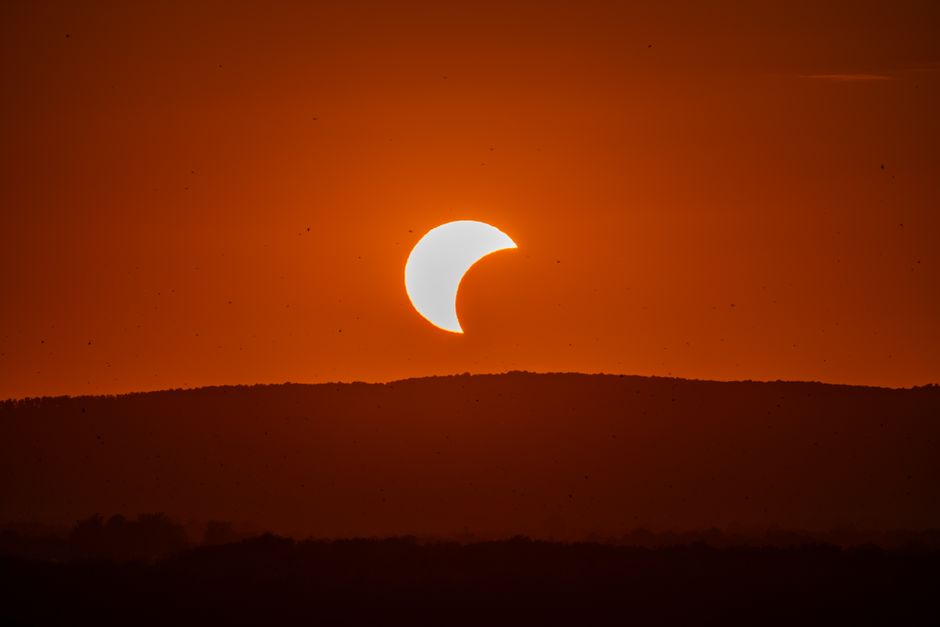
Looking directly at a solar eclipse without proper eye protection can permanently damage your retina. The only safe way to view one is with certified solar viewing glasses that meet the ISO 12312-2 international safety standard, or by using an indirect viewing method like a pinhole projector. Regular sunglasses, camera lenses, or homemade filters are never safe for looking at the sun. You need to protect your eyes before, during, and after the eclipse using equipment designed specifically for solar observation.
Why Is Looking At A Solar Eclipse Dangerous?
The sun emits intense visible light and invisible radiation that can burn the retina — the light-sensitive tissue at the back of your eye. The retina has no pain receptors. You will not feel damage as it happens. You will not notice it immediately either. Symptoms like blurry vision or a blind spot often appear hours later.
During a total eclipse, the brief moments of totality are the only time it is safe to look without glasses. But the transition periods before and after totality are extremely dangerous. The sun is still bright enough to cause permanent injury. Many people injure their eyes during these partial phases because they believe the reduced light is safe. It is not.
The medical term for this injury is solar retinopathy. It occurs when light burns the macula, the central part of the retina responsible for sharp vision. There is no effective treatment for solar retinopathy. Some people recover partial vision over months, but the damage can be permanent.
How To View A Solar Eclipse Safely And Protect Your Eyes
Use eclipse glasses that meet the ISO 12312-2 safety standard. This international standard ensures the filters block harmful ultraviolet, visible, and infrared radiation. Glasses that meet this standard display the ISO number printed on the product. If the glasses do not have this marking, do not use them.
Put your glasses on before looking at the sun. Look away from the sun before removing them. This is especially important for children, who may not understand the risk. Supervise children closely and check that their glasses fit properly and have no scratches or damage.
Do not use eclipse glasses with regular cameras, binoculars, or telescopes. The concentrated sunlight passing through these devices will overwhelm the filter and can reach your eye instantly. If you want to photograph the eclipse, you need a special solar filter designed for your specific camera or telescope. These filters attach to the front of the lens, not the eyepiece.
What Eclipse Glasses Are Safe To Use?
Safe eclipse glasses use a special solar filter material, such as black polymer or aluminized polyester. These materials reduce the sun’s brightness to a safe level — about 1/100,000th of its normal intensity. They also block the invisible radiation that damages the retina.
Check your glasses for the ISO 12312-2 label before use. Inspect them for scratches, punctures, or loose frames. If you see any damage, discard them. Even a small scratch can let in dangerous amounts of light.
Be cautious of counterfeit glasses. After a major eclipse event, fake glasses often appear on the market. They may look identical to real ones but offer no protection. Buy from reputable astronomy suppliers or science museums. If you are unsure whether your glasses are genuine, test them — you should not be able to see anything through them except the sun itself.





How To Make A Pinhole Projector For Indirect Viewing
A pinhole projector is a safe, inexpensive alternative that requires no eye protection at all. You never look at the sun directly. Instead, you project an image of the eclipse onto a surface.
To make one, take a piece of cardboard and poke a small hole in it with a pin. Hold the cardboard so the sun shines through the hole onto a white surface — a piece of paper, the ground, or a wall. The image you see is the sun projected through the hole. During the eclipse, you will see the moon’s shadow slowly cover the sun’s disk.
You can also make a box projector. Cut a hole in one side of a cardboard box and cover it with aluminum foil. Poke a small hole in the foil. Cut a viewing hole in the opposite side of the box. Stand with your back to the sun and look through the viewing hole. The sun’s image will appear on the inside of the box.
Do not look through the pinhole itself. The pinhole is for projecting light, not for viewing. Looking through it directly is just as dangerous as looking at the sun.
What Not To Do When Viewing An Eclipse
- Never use regular sunglasses. Even very dark sunglasses do not block enough light or the invisible radiation that causes retinal damage.
- Never use exposed film, CDs, or smoked glass. These materials do not filter the sun’s harmful rays and are not safe.
- Never look through a camera viewfinder, binoculars, or telescope without a certified solar filter. The magnified sunlight will burn your retina instantly.
- Never use welding glass unless it is shade 14 or darker. Shade 12 or lower does not provide adequate protection. Most welding helmets are not rated for direct solar viewing.
These warnings are not theoretical. Ophthalmologists report cases of permanent vision loss after every major eclipse. The damage is entirely preventable with the right equipment.
What Happens If You Damage Your Eyes?
Solar retinopathy symptoms include blurred vision, a central blind spot, distorted vision, or changes in color perception. These symptoms may appear immediately or develop within a few hours to a day after exposure. If you experience any of these after viewing an eclipse, see an eye doctor as soon as possible.
There is no proven treatment for solar retinopathy. The retina does not regenerate. Some patients improve spontaneously over three to six months as the damaged cells heal partially. Others experience permanent vision loss. The severity depends on how long the exposure lasted and how intense the light was.
Children and young adults are at higher risk because their lenses are clearer and allow more light to reach the retina. Their eyes can sustain damage faster than older adults’ eyes.
Frequently Asked Questions
Can I look at a solar eclipse through my phone camera?
No. Your phone camera does not protect your eyes. You may also accidentally look at the sun while trying to frame the shot. Use a certified solar filter on the lens or project the image instead.
Are eclipse glasses reusable for future eclipses?
Yes, if they are undamaged and meet the ISO 12312-2 standard. Check them before each use for scratches or holes. Discard them if the lenses are damaged or the cardboard frame is bent.
How long can I look at the sun with eclipse glasses?
Look for no more than a few seconds at a time, then look away to rest your eyes. There is no established safe continuous viewing duration, so take regular breaks. During totality, when the moon fully covers the sun, you can look without glasses for the duration of totality only.
