
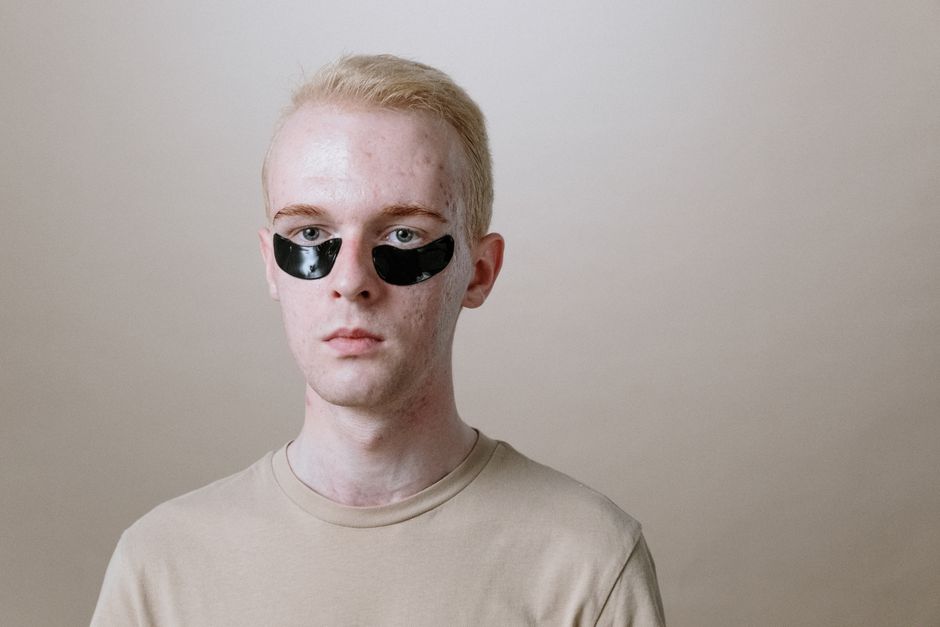
Dermatologists generally advise against popping pimples, but if you are going to do it anyway, the safest approach is to wait until a pimple has formed a visible white head, clean your hands and the area with soap and water, wrap your fingers in clean tissue, and apply gentle pressure on either side of the white head until it drains. Stop immediately if nothing comes out or if you feel sharp pain. Popping a pimple that has not come to a head, squeezing too hard, or using fingernails can push bacteria and debris deeper into the skin, which increases swelling, raises the risk of infection, and can leave a permanent scar or dark mark.
Why Do Dermatologists Say Not To Pop Pimples?
The main reason is mechanical. A pimple forms when a hair follicle gets blocked by excess oil and dead skin cells. Bacteria that normally live on the skin, particularly Cutibacterium acnes, can multiply inside that blocked follicle. The body’s immune system responds with inflammation, which is what creates the redness, swelling, and tenderness.
When you squeeze a pimple, you are applying pressure to an inflamed, pressurized pocket inside the skin. That pressure does not just push contents up and out. It can also push them sideways and downward, rupturing the follicle wall beneath the skin surface. When that happens, bacteria, oil, and cellular debris spill into surrounding tissue. The immune response intensifies. The pimple gets bigger, redder, and more painful than it was before you touched it.
There is also the scar question. A ruptured follicle triggers inflammation that can damage the collagen structure underneath. In some people, that damage heals as a depressed scar. In others, it heals as a raised scar. And in many people with darker skin tones, the inflammation leaves behind post-inflammatory hyperpigmentation — a flat brown or dark mark that can take months to fade.
None of this means popping a pimple always causes damage. Sometimes it drains cleanly and heals without a trace. The problem is that you cannot reliably predict which outcome you will get. The follicle’s depth, the pressure you apply, and your individual skin’s healing response all play a role.
How To Pop Pimples Safely: Steps And Risks To Know
If you decide to pop a pimple, the goal is to minimize tissue damage. That means working only on pimples that are ready and using the least amount of force necessary.
Step 1: Wait for a white head. A pimple that is red and hard with no visible white or yellow center is not ready. It is inflamed but the contents are still below the surface. Squeezing it will almost certainly push material deeper rather than out.
Step 2: Wash your hands and the area. Use soap and warm water. This reduces the bacteria on your fingers and on the skin surface. Dry with a clean towel.
Step 3: Apply warm compress if needed. A warm, damp cloth held against the pimple for a few minutes can help bring a stubborn white head closer to the surface. This is not required if the white head is already clearly visible.
Step 4: Wrap your fingers in clean tissue. This gives you grip without using fingernails. Never use your nails. They concentrate force and tear the skin.
Step 5: Press gently on either side. Use the pads of your fingers, not the tips. Apply slow, steady pressure. If the white head releases its contents easily, let it drain. If nothing comes out after a few gentle attempts, stop.
Step 6: Clean and cover. Wipe the area with a clean tissue. Apply a thin layer of petroleum jelly or an over-the-counter antibiotic ointment if you have one. Cover with a small bandage if the area is open.
The entire process should take less than a minute. If you are spending more time than that, you are causing damage.
What Happens If You Pop a Pimple Wrong?
The consequences range from temporary to permanent. Understanding them helps you decide whether the risk is worth it.
- Increased redness and swelling: The most common outcome. Inflammation worsens for a day or two before settling.
- Infection: Bacteria pushed into the wound can cause a secondary infection. Signs include spreading redness, warmth, and pus that smells bad.
- Scarring: Depressed or raised scars can form when the follicle wall ruptures and collagen is damaged. These are often permanent.
- Dark spots: Post-inflammatory hyperpigmentation is more common in people with medium to dark skin tones. It is not a scar, but it can take months to fade.
- Spread of acne: Pushing bacteria and oil into surrounding pores can trigger new pimples nearby.
There is a rare but serious risk when popping pimples in the “danger triangle” — the area from the corners of your mouth to the bridge of your nose. The veins in this region drain into a network called the cavernous sinus, which sits near the brain. An infection introduced here can, in rare cases, spread to the cavernous sinus. This is a medical emergency. It is uncommon, but it is the reason dermatologists are especially firm about not squeezing pimples in that area.




Which Pimples Should You Never Pop?
Some pimples are never safe to pop, no matter how careful you are.
Deep, painful nodules or cysts. These form deeper in the skin and have no visible head. They are often several millimeters wide and feel like hard lumps under the surface. Squeezing them almost always makes them worse and significantly raises the risk of scarring.
Pimples in the danger triangle. As mentioned above, the infection risk here is low but the potential consequence is severe. Leave these alone.
Pimples that are just red and inflamed with no white head. There is nothing to drain. You will only damage tissue.
Pimples that have already been popped or picked at. Re-popping an open wound disrupts healing and increases infection risk.
Any pimple on someone taking isotretinoin or other acne medications that thin the skin. These medications make the skin more fragile. Popping while on them is more likely to cause scarring.
What Should You Do Instead of Popping?
For most pimples, waiting is the best treatment. A white head that is left alone will often drain on its own within a few days as the body clears the inflammation.
Over-the-counter treatments can speed resolution. Benzoyl peroxide kills bacteria on the skin surface and reduces inflammation. Salicylic acid helps unclog pores. Both are available without a prescription. Neither will make a pimple vanish overnight, but they can shorten its lifespan.
For a pimple that is already white and ready, a hydrocolloid patch can absorb fluid and keep you from touching it. These patches are widely available and do not introduce medication. They simply cover the pimple and draw out some of the fluid.
If you have deep, painful cysts or frequent breakouts that leave marks, a dermatologist can offer treatments that address the underlying cause. Prescription retinoids, antibiotics, and hormonal therapies are options. These are not quick fixes, but they reduce the number of pimples that tempt you to pop in the first place.
Does Popping a Pimple Make It Heal Faster?
No. Popping a pimple does not make it heal faster. It may make it look flatter for a few hours, but the inflammation underneath is often worse. The body still has to clear the infection and repair the tissue. In many cases, popping extends the healing time because it adds a new wound on top of the existing inflammation.
The pimples that seem to heal fastest after popping are the ones that were already at the very surface and drained with minimal pressure. Those are the exception, not the rule. For every pimple that pops cleanly, there is another that becomes a scar.
When Should You See a Doctor?
See a doctor if a pimple becomes unusually painful, spreads redness, feels hot to the touch, or is accompanied by fever. These can be signs of a deeper infection that needs medical treatment.
Also see a doctor if you have frequent deep cysts, if acne is leaving scars or dark marks, or if over-the-counter treatments have not helped after several weeks of consistent use. A dermatologist can prescribe stronger treatments and help prevent the kind of acne that leads to scarring.
If you have a pimple in the danger triangle that becomes swollen, hard, and painful, or if you develop a fever or severe headache after trying to pop it, seek medical care promptly. This is rare, but it is not something to wait out.
Frequently Asked Questions
Can I pop a pimple with a needle?
No. Using a needle at home is not safe. It can introduce bacteria, cause bleeding, and damage the follicle in a way that leads to scarring. Dermatologists sometimes use a sterile instrument in a clinical setting, but that is a different situation with proper sterilization and training.
What happens if I pop a pimple and it bleeds?
Bleeding means you have broken the skin and damaged tissue below the surface. Clean the area gently, apply pressure with a clean tissue until bleeding stops, and cover it with a bandage. Do not squeeze again. The risk of scarring and infection is now higher.
Do pimple patches work better than popping?
Hydrocolloid patches can help a white head drain without squeezing. They also prevent you from touching the pimple. They are not a cure, but they are a safer option than manual popping for surface pimples.
Why do some pimples pop easily and others do not?
Pimples that are close to the surface with a thin layer of skin over the white head tend to pop easily. Deep pimples with thick walls and no visible head do not. The depth and the amount of inflammation determine how easily a pimple drains.
