
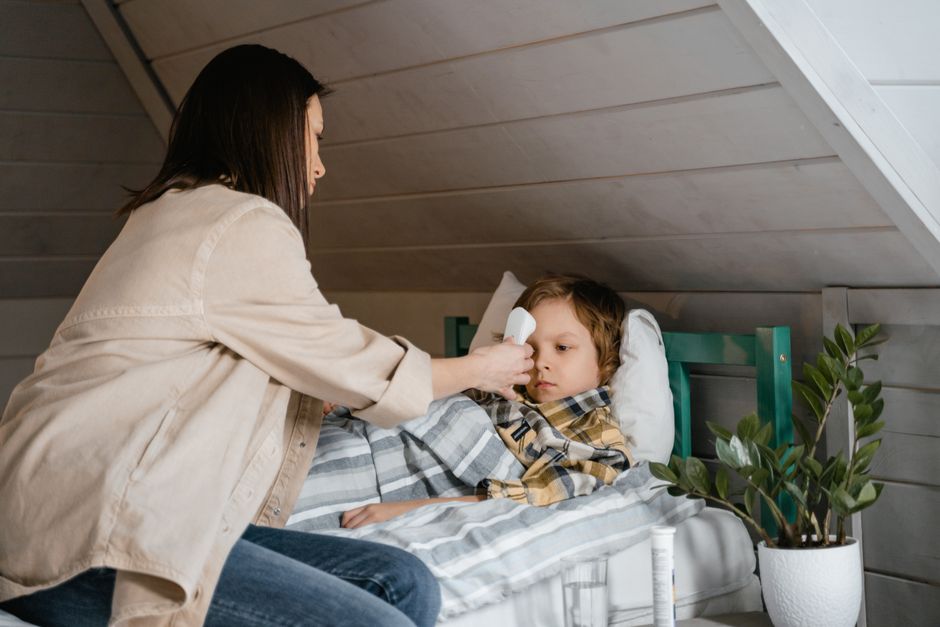
A fever is one of the most common reasons parents call a doctor or lose sleep at night. The good news is that most fevers in children are the body’s normal response to infection and are not dangerous by themselves. You can usually bring a child’s temperature down safely at home with fever-reducing medicine, plenty of fluids, light clothing, and rest. The goal is not always to erase the fever completely — it is to keep your child comfortable and watch for signs that need medical attention.
What Counts As A Fever In A Child?
A fever is generally defined as a body temperature of 100.4°F (38°C) or higher. That number is the standard threshold used in pediatric care, measured with a reliable thermometer.
Temperature can be taken in a few ways, and the reading can differ slightly depending on the method. Rectal temperatures are considered the most accurate in infants and young children. Oral, ear, and forehead readings are common in older kids but can be a little less precise. Armpit readings tend to run lower than the true core temperature.
It helps to remember what a fever actually is. When the immune system detects an infection, it releases chemicals that reset the body’s internal thermostat. The body then works to reach that higher setting. This is why a child with a fever may feel cold and shiver at first, then feel hot later. A fever is a symptom, not a disease. It is a sign the immune system is responding.
How high the number is matters less than how your child looks and acts. A child with a moderate fever who is drinking, alert, and playful is usually in a very different situation than a child with a lower fever who is limp, confused, or struggling to breathe.
How To Reduce A Childs Fever Safely At Home
The core steps are simple, and they work for most children over a few months old who are otherwise healthy.
- Fever-reducing medicine — acetaminophen or ibuprofen, given at the correct dose for your child’s weight.
- Fluids — water, oral rehydration solution, breast milk, or formula to prevent dehydration.
- Light clothing — dress your child in one light layer and use a light blanket.
- Rest — let your child sleep and avoid strenuous activity.
- A comfortable room — keep the space at a normal, comfortable temperature.
Acetaminophen and ibuprofen are the two medicines most often used for fever in children. Both are effective at lowering temperature and easing discomfort. Dosing depends on your child’s weight, not just their age, so check the label or ask a pharmacist or doctor. Ibuprofen is generally not given to infants under 6 months. Acetaminophen is the usual choice for very young infants, but you should confirm the dose with a clinician.
Aspirin should never be given to children or teenagers with a fever. It is linked to Reye syndrome, a rare but serious condition that affects the liver and brain. This is one of the clearest and most important rules in pediatric care.
Do not give fever medicine just to chase a number. If your child is comfortable and drinking well, a mild fever does not always need to be treated. Treat the child, not the thermometer.
What About Sponging, Baths, And Cold Compresses?
Cooling a child with cold water, ice packs, or alcohol rubs is not recommended. These methods can make a child shiver, which actually raises the core temperature and causes distress. Alcohol rubs are especially dangerous because alcohol can be absorbed through the skin.
A lukewarm sponge bath was once a common home remedy. Current guidance is mixed. Some clinicians still suggest a lukewarm sponge bath for comfort when a child is very hot and uncomfortable, but it should not replace fever-reducing medicine, and cold water should be avoided. If a sponge bath makes your child shiver or cry, stop. The evidence does not support sponging as a reliable way to lower fever on its own.
What matters more than any cooling method is keeping your child hydrated and watching how they behave.





How Much Fluid Does A Feverish Child Need?
Fever increases fluid loss through sweating and faster breathing, so dehydration is the main risk to watch for. There is no single number that fits every child, because needs vary with age, weight, and how high the fever is.
Instead of measuring exact amounts, watch for signs that your child is drinking enough:
- Regular urination, with pale or light yellow urine
- Moist mouth and lips
- Some tears when crying
- Alert and reasonably responsive behavior
Signs of dehydration include fewer wet diapers or trips to the bathroom, a dry mouth, no tears, sunken eyes, and unusual sleepiness. In infants, a sunken soft spot on the head can be a sign. If you see these signs, call your doctor.
Offer fluids often in small amounts. For infants, continue breast milk or formula. Oral rehydration solutions can help replace lost salts and water. Avoid sugary sodas and sports drinks for young children, since the sugar can worsen diarrhea if that is part of the illness.
When Should You Call A Doctor About A Fever?
Age is the single most important factor in deciding when to seek care. A fever in a newborn is a medical emergency.
Call your doctor or seek care right away if:
- Your baby is under 3 months old and has a temperature of 100.4°F (38°C) or higher
- Your child is very sleepy, hard to wake, or confused
- Your child has trouble breathing
- Your child has a stiff neck, severe headache, or a rash that does not fade when pressed
- Your child is not drinking or has signs of dehydration
- Your child has a seizure
- The fever lasts more than a few days or keeps returning
- Your child seems to be getting worse instead of better
For children older than 3 months, a fever alone is not usually an emergency. But any fever paired with the warning signs above needs prompt medical attention. Trust your instincts. If your child looks very unwell, that matters more than the number on the thermometer.
Can A Fever Itself Cause Harm?
For most children, a fever from an ordinary infection does not cause harm on its own. Fevers from infection rarely rise high enough to damage the brain. The idea that a moderate fever “cooks” the body or causes brain damage is a myth that causes a lot of unnecessary fear.
The real danger comes from what is causing the fever and from dehydration, not from the temperature itself. This is why watching your child’s behavior and fluid intake matters more than the exact reading.
Febrile seizures are a genuine concern for some parents. These are seizures triggered by a fever, most common in children between 6 months and 5 years old. They can be frightening to watch, but most are brief and do not cause lasting harm. If your child has a febrile seizure, keep them safe from injury, do not put anything in their mouth, and contact a doctor. Any seizure lasting more than a few minutes, or any seizure in an infant, needs emergency care.
Common Mistakes Parents Make With Fever
Some habits are common but not helpful, and a few are genuinely risky.
- Giving aspirin to a child or teen — never do this.
- Alternating acetaminophen and ibuprofen without clear instructions — this can lead to dosing errors.
- Waking a sleeping, comfortable child to give medicine — rest matters.
- Using cold baths or alcohol rubs — these can cause shivering and are unsafe.
- Bundling a child in heavy blankets — this traps heat and can raise the temperature further.
- Doubling up on combination cold medicines that already contain acetaminophen — this can cause an accidental overdose.
If you are unsure about a dose, ask a pharmacist. They can calculate the right amount based on your child’s weight and current medicines.
Frequently Asked Questions
What temperature is considered a fever in a child?
A fever is a temperature of 100.4°F (38°C) or higher. Rectal readings are the most accurate for infants and young children.
Should I give my child fever medicine every time they have a fever?
No, medicine is mainly for comfort, not for hitting a specific number. If your child is drinking well and comfortable, a mild fever may not need treatment.
Is a lukewarm bath good for reducing a fever?
Current guidance is mixed, and cold water or alcohol rubs should be avoided. A lukewarm bath may offer comfort for some children, but it should not replace fever-reducing medicine.
When is a child’s fever an emergency?
A fever of 100.4°F (38°C) or higher in a baby under 3 months old is an emergency. Any fever with trouble breathing, a stiff neck, confusion, a non-fading rash, or a seizure also needs immediate care.
