
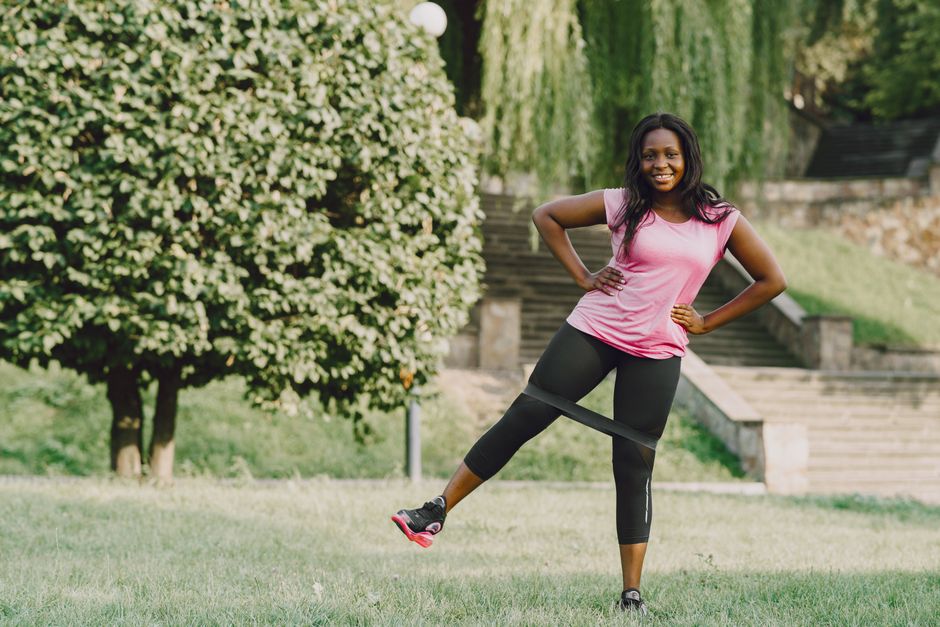
Resistance bands are simple, portable tools that add tension to your exercises. They work for beginners and experienced lifters alike. To use them, you anchor the band, hold the handles or loop, and move against the resistance through a full range of motion. The key is controlled movement — slow on the way out, steady on the way back. Below is a step-by-step guide that covers the basics, common mistakes, and how to build a full workout.
What Do You Need Before You Start?
Check your band for tears or weak spots before every use. A snapped band can whip back and cause injury. Run your fingers along the entire length, especially near the handles and any attachment points.
Choose the right resistance level. Bands come in light, medium, and heavy tensions. A good rule: you should feel clear effort in the last few repetitions of a set, but your form should not break down. If you can complete all reps without strain, go heavier. If your movement becomes jerky or your body compensates, go lighter.
Wear shoes with good grip. Some exercises involve standing on the band, and bare feet or socks increase slipping risk. Clear the area around you — bands can slip or snap, and you need space to move safely.
How To Use Resistance Bands: Step By Step for Basic Exercises
Start with these foundational moves. They teach you the core skills: anchoring, tension control, and steady breathing.
Band Row
Step on the middle of the band with both feet, shoulder-width apart. Hold one handle in each hand. Hinge at your hips, keeping your back flat and knees slightly bent. Pull the handles toward your lower ribs, squeezing your shoulder blades together. Pause for one second. Lower with control until your arms are straight. That is one rep.
Band Chest Press
Wrap the band around a sturdy post at chest height. Face away from the anchor point. Hold one handle in each hand, elbows bent at 90 degrees, fists at chest level. Press both arms forward until they are fully extended but not locked. Return slowly to the start position. Keep your core tight and do not let your lower back arch.
Band Squat
Stand on the band with feet shoulder-width apart. Bring the handles up to your shoulders. Keep your chest up and push your hips back as you lower into a squat. Go as deep as your mobility allows — ideally thighs parallel to the floor. Drive through your heels to stand back up. The band adds resistance at the top of the movement, which is where most people are strongest.
Band Lateral Raise
Stand on the middle of the band. Hold the handles at your sides. With a slight bend in your elbows, raise your arms out to the sides until they reach shoulder height. Lower slowly. Do not shrug your shoulders or swing your body. This exercise targets the side deltoid muscles.
How Do You Anchor Bands Safely?
Anchoring is where most people make mistakes. A poor anchor can cause the band to slip or snap. Always check that the anchor point is stable before you start moving.
For door anchors, close the door fully and place the anchor on the opposite side from where you are pulling. Pull on the band gently first to test it. If the door moves or the anchor slides, reposition it. Never anchor to furniture that can tip, like a chair or a floor lamp.
For standing on the band, make sure it is centered under your feet. If one side is longer than the other, the tension will be uneven, and you risk pulling harder on one side of your body. This can strain your shoulder or lower back over time.
For posts or poles, wrap the band around once or twice to create friction. A single loop can slide down or slip off during a set. Test the wrap with a firm pull before starting your exercise.





What Are the Most Common Mistakes?
Moving too fast. Bands provide the most resistance when they are stretched. If you rush the movement, you lose the tension at the start and end of each rep. Slow down. Aim for two seconds on the way out and three seconds on the way back.
Letting the band go slack. The band should stay under tension throughout the entire movement. If it goes slack at any point, you are not working the muscle through its full range. Adjust your starting position so there is slight tension even when your arms or legs are at rest.
Using only one band for everything. Different exercises need different tensions. A band that works for a chest press may be too light for a squat or too heavy for a lateral raise. Have at least two or three bands available so you can switch as needed.
Ignoring form. Bands do not force your body into a fixed path the way a machine does. This is an advantage — it recruits stabilizing muscles — but it also means poor form is easier to get away with. Keep your core braced, your shoulders down, and your movements controlled.
How Do You Build a Full Workout With Bands?
You can train your entire body with a set of bands. The structure is the same as any resistance workout: pick exercises that cover the major muscle groups, do 8–15 reps per set, and rest 30–60 seconds between sets.
A simple full-body session might look like this:
- Band squat — legs and glutes
- Band row — back and biceps
- Band chest press — chest and triceps
- Band lateral raise — shoulders
- Band deadlift — hamstrings and glutes
- Band plank with row — core and back
Do 2–3 sets of each exercise. Start with one set of each to learn the movements. Add sets as you get comfortable.
For progressive overload, you have three options: use a heavier band, increase your reps, or slow down your tempo. The goal is to make the exercise harder over time so your muscles keep adapting. Research consistently shows that resistance training with bands can increase muscle strength and size comparable to traditional weights when the effort is matched.
Evidence from multiple studies indicates that band training produces meaningful strength gains in both trained and untrained individuals. The key variable is effort — you need to work close to failure, just like with free weights.
How Do You Care for Your Bands?
Store bands away from direct sunlight. UV light breaks down the latex or rubber material over time, making it brittle and more likely to snap. Keep them in a drawer or a cloth bag.
Avoid extreme temperatures. Heat can soften the material, and cold can make it stiff and prone to cracking. Room temperature storage is best.
Clean bands with a damp cloth and mild soap. Do not use alcohol-based cleaners — they can degrade the material. Dry them fully before storing.
Replace bands that show signs of wear. Small nicks, fraying, or sticky spots mean the band is weakening. A band that snaps under tension can cause serious injury, so err on the side of replacement. Most manufacturers recommend replacing bands every 6–12 months with regular use.
Who Should Not Use Resistance Bands?
Most people can use resistance bands safely. But there are exceptions. If you have a condition that affects your skin or circulation — such as severe varicose veins or peripheral neuropathy — check with your doctor first. Bands create pressure where they contact the skin, and this can be uncomfortable or problematic in some cases.
If you have a history of shoulder dislocations or rotator cuff issues, start with very light resistance and focus on controlled movement. The instability that makes bands great for stabilizer muscles can also stress an unstable joint. A physical therapist can guide you on safe exercises.
Pregnant women can generally use bands, but the growing belly changes your center of gravity. Avoid exercises that require lying flat on your back after the first trimester. Check with your prenatal care provider before starting any new exercise program.
Children can use bands under adult supervision. Choose light resistance and focus on technique rather than effort. Bands are not toys — they can snap and cause eye injuries if misused.
Do Resistance Bands Actually Build Muscle?
Yes. The mechanism is the same as with free weights: your muscles contract against resistance, and over time they adapt by getting stronger and larger. The band provides variable resistance — it is easiest at the start of the movement and hardest at the end. This matches your natural strength curve, where you are weakest at the stretched position and strongest at the contracted position.
Some research suggests that bands can produce muscle growth comparable to traditional weights. The catch is that you must push yourself. If you stop at 10 easy reps, you will not grow. If you work to the point where the last few reps are genuinely hard, you will see results.
Bands have a limitation: they cannot provide heavy resistance at the very start of a movement. If you are an advanced lifter who can squat 300 pounds, a band will not replicate that load. For most people — beginners to intermediates — bands offer enough resistance to build and maintain muscle.
Frequently Asked Questions
How many reps should I do with resistance bands?
Do 8–15 reps per set for general strength and muscle growth. Choose a band that makes the last few reps challenging without breaking your form.
Can I use resistance bands every day?
Yes, but give each muscle group at least 48 hours of rest between workouts. Daily band use is fine if you alternate muscle groups or keep sessions light.
Are resistance bands as good as weights?
Research shows bands can build strength and muscle comparable to free weights when effort is matched. Bands are not ideal for very heavy loads that advanced lifters need.
How do I know which resistance band to buy?
Buy a set with at least three tension levels. Start with the lightest for upper body exercises and use heavier bands for lower body movements like squats and deadlifts.
