
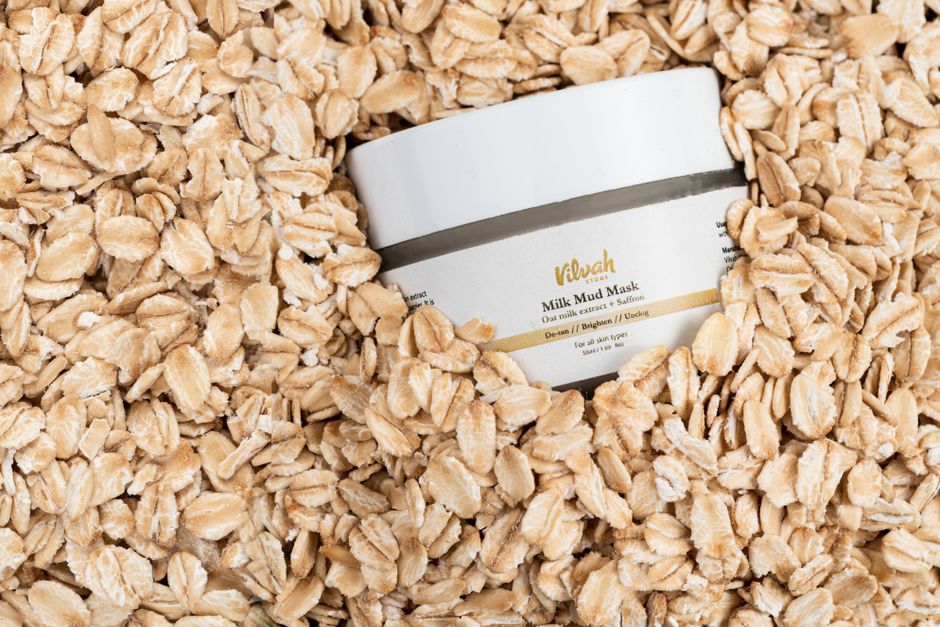
Oats have been used on skin for centuries, and modern dermatology still recommends them for one main reason: they contain compounds that calm irritation and support the skin barrier. You can use them as a face mask, add them to a bath, or mix them into a paste for itchy or dry patches. The key is using the right kind of oats — colloidal oatmeal, not instant breakfast packets — and knowing which skin problems they actually help.
Why Do Oats Help Skin At All?
Oats contain a group of compounds that work on the skin’s surface in several ways at once. The most studied is avenanthramides, which are polyphenols found almost exclusively in oats. Research indicates these compounds reduce the release of inflammatory signaling molecules in skin, which is why oat preparations are associated with less redness and itching.
Oats also contain beta-glucans, a type of soluble fiber that forms a gel-like film when mixed with water. That film holds moisture against the skin and helps temporarily reinforce the outer barrier. This matters because a damaged barrier lets irritants in and moisture out — the underlying problem in most dry, itchy skin conditions.
There is a third mechanism that gets less attention. Colloidal oatmeal — the finely milled form used in skin products — has a slightly acidic pH and can help buffer the skin’s surface. It also contains starches and lipids that contribute to a soothing, slippery texture when wet.
One important clarification: oats are not a drug and do not treat the cause of any skin disease. They reduce symptoms. That distinction matters when deciding what oats can and cannot do for you.
How To Use Oats For Skin Masks Baths And Pastes?
All three methods use the same base ingredient: colloidal oatmeal. This is regular oats ground into an extremely fine powder so the particles stay suspended in water rather than sinking. You can buy colloidal oatmeal as a standalone product or as the active ingredient in over-the-counter bath and skin products.
You can also make it at home by grinding plain rolled oats in a blender or food processor until the powder is very fine. Sift out any coarse pieces. Coarse particles can be physically irritating to inflamed skin, which defeats the purpose.
Face mask
Mix two to three tablespoons of colloidal oatmeal with enough water to form a thick paste. Some people use milk or plain yogurt instead of water for a creamier texture, though there is no strong evidence that either adds a clinical benefit over water. Apply a thin layer to clean skin, leave it on for about 10 to 15 minutes, then rinse gently with lukewarm water. Pat dry — do not rub.
This is best suited to dry, irritated, or reactive skin. It is not a treatment for acne, and it will not clear pores.
Bath
Add about one cup of colloidal oatmeal to a tub of lukewarm water and swirl it until it disperses. Soak for 10 to 15 minutes. Hot water strips oils from skin, so lukewarm is the better choice for anyone with dry or inflamed skin. When you get out, pat dry and apply moisturizer within a few minutes while the skin is still slightly damp.
Colloidal oatmeal is listed as a skin protectant by the FDA, which is why you will see it as an active ingredient on many bath product labels. That designation reflects its established role in temporarily protecting irritated skin.
Paste for targeted areas
For a specific itchy patch — an insect bite, a small area of eczema, or dry shins — mix colloidal oatmeal with a small amount of water to make a thicker paste than you would use on the face. Apply it directly, cover loosely if you like, and leave it for 15 to 20 minutes before rinsing. This is essentially a concentrated version of the bath method.
What Skin Conditions Do Oats Actually Help?
The strongest evidence is for itchy, dry, and irritated skin. Colloidal oatmeal is widely used in dermatology for eczema and atopic dermatitis, and it appears in many prescription-adjacent skin care routines as a supportive measure rather than a primary treatment.
It is also commonly used for contact dermatitis, insect bites, sunburn, and general dry skin. In each case the benefit is symptom relief — less itch, less redness, a temporary feeling of comfort — not resolution of the underlying condition.
What oats do not do is equally important to understand:
- They do not treat bacterial or fungal skin infections.
- They do not clear acne or reduce sebum production.
- They do not replace prescription treatment for moderate to severe eczema or psoriasis.
- They do not remove scars, wrinkles, or pigmentation.
If you have a skin condition that is not improving, or that is spreading, weeping, or painful, oats are not the answer. See a clinician.



Do Homemade Oat Products Work As Well As Store-Bought?
This is where most people get tripped up. The clinical research on oats for skin uses colloidal oatmeal — a standardized, finely milled preparation with defined particle size. Home-ground oats are not the same thing, even if they look similar.
That does not mean homemade preparations are useless. They can still provide the moisturizing and occlusive effects of the beta-glucans and starches. But the avenanthramide content and particle consistency will vary from batch to batch, and there is no clinical evidence confirming that a homemade preparation performs the same as a standardized colloidal product.
If your goal is symptom relief for a known condition like eczema, a standardized colloidal oatmeal product is the more reliable choice. If your goal is a soothing, low-cost addition to a general skin care routine, homemade is reasonable.
What Should You Watch Out For?
Oat allergy is uncommon but real. People with celiac disease or a wheat allergy are sometimes advised to be cautious, though the relationship between oat sensitivity and gluten-related conditions is more about cross-contamination during farming than about oats themselves. If you have never used oats on your skin and you have a known food allergy to oats, test a small area first.
Do not use oats on broken skin, open wounds, or areas with an active infection. The starches and moisture can create conditions that favor bacterial growth. If a patch of skin is weeping or crusted, that is a sign to see a clinician, not to apply a paste.
Also avoid adding essential oils, fragrances, or other additives to your oat preparation if your skin is already irritated. These are common triggers for contact dermatitis and can undo whatever benefit the oats provide.
How Often Can You Use Oats On Your Skin?
For most people, an oat bath or paste can be used daily during a flare of itching or dryness, and less often — a few times a week — as maintenance. There is no established maximum frequency in clinical guidelines, so this is a judgment call based on how your skin responds.
If your skin feels more irritated after using oats, stop. That is not a normal reaction and suggests either an allergy, a reaction to an additive, or mechanical irritation from particles that were too coarse.
Does The Type Of Oat Matter?
Yes, and this is the most common mistake. Instant oatmeal packets contain sugar, flavorings, and preservatives that have no place on irritated skin. Steel-cut oats are too coarse to disperse in water. What you want is plain rolled oats that you grind yourself, or a product specifically labeled as colloidal oatmeal.
Colloidal oatmeal is the only form with a body of clinical research behind it for skin use. Everything else is a reasonable approximation at best.
Frequently Asked Questions
Can I use regular oatmeal for a skin mask?
You can, but you should grind it into a very fine powder first. Coarse oats can irritate skin, and only finely milled colloidal oatmeal has been studied for skin benefits.
How long should I leave an oatmeal mask on my face?
About 10 to 15 minutes is typical. Leaving it on longer does not appear to add benefit and may dry out the skin as the paste dries.
Is colloidal oatmeal safe for babies and young children?
Colloidal oatmeal baths are commonly used for infants and children with eczema, and this is a standard practice in pediatric dermatology. Check with a pediatrician before using any oat product on broken or infected skin.
Can oatmeal baths help with eczema?
They can reduce itching and irritation, which is why they are widely used as a supportive measure in eczema care. They do not treat the underlying condition and do not replace prescribed treatment.
