
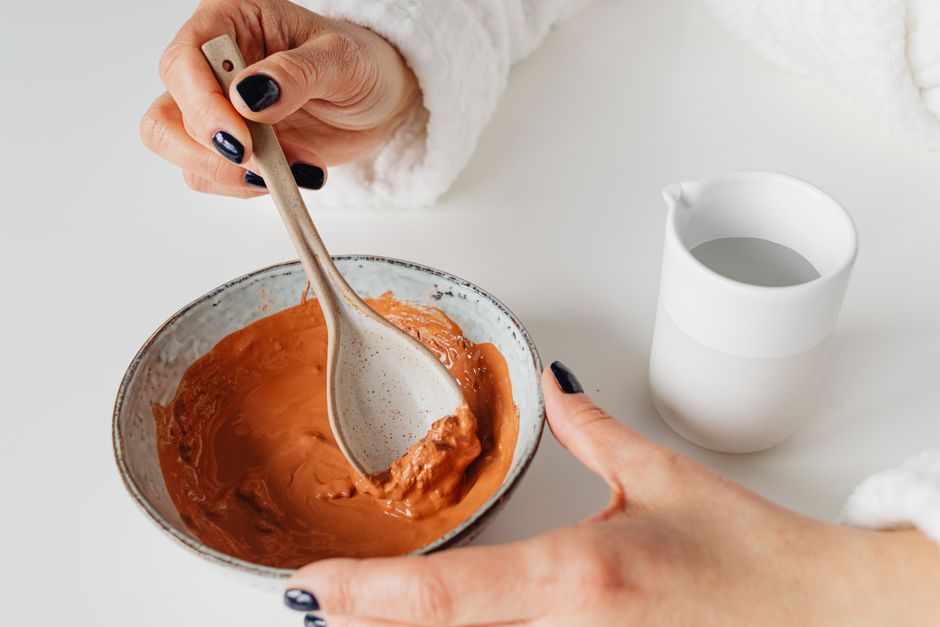
Indian clay masks, often made with bentonite or fuller’s earth, are popular for their deep-cleansing effects. They work by binding to excess oil, dirt, and impurities on the skin’s surface and drawing them out of the pores. When used correctly, they can leave skin feeling cleaner, smoother, and less oily, but they are not a treatment for all skin conditions and can cause dryness if overused.
How Does Indian Clay Actually Work on the Skin?
The main ingredient in most Indian clay masks is a type of clay, usually bentonite or calcium bentonite. This clay has a strong negative electrical charge. Many of the impurities, toxins, and oils on your skin have a positive charge. The clay acts like a magnet, binding to these positively charged particles and pulling them away from the skin when you rinse the mask off.
This process is called adsorption. It is a surface-level chemical reaction, not a deep-tissue detox. The clay does not penetrate your pores. Instead, it sits on top of the skin and pulls oils and debris out of the pore openings. This is why your skin can look cleaner immediately after use, but it does not change the internal health of your skin or body.
What Are the Main Benefits of Using an Indian Clay Mask?
Most of the benefits of Indian clay masks come down to oil control and surface cleaning. For people with oily or combination skin, the mask can visibly reduce shine for a few days. It also helps remove the buildup of dead skin cells, sweat, and daily grime that regular cleansers may miss.
People with acne-prone skin often use clay masks to dry out active pimples. The clay absorbs the excess sebum that feeds acne bacteria. This can make existing breakouts look smaller and less red. However, the mask does not kill the bacteria itself. It only removes the oily environment where that bacteria thrives.
Some users report that their skin feels tighter and looks brighter after a mask. This is because the clay removes the dull layer of oil and dead cells from the surface. The effect is temporary. It does not change your skin tone permanently or erase scars.
Can Indian Clay Masks Help with Acne and Blackheads?
Blackheads are not dirt. They are plugs of oil and dead skin that have oxidized and turned dark. A clay mask can help soften these plugs and pull some of the oil out of the pore. This makes blackheads less visible and can prevent new ones from forming.
For inflammatory acne, the story is more complicated. Clay masks can dry out a pimple and reduce swelling. But they do not address the hormonal or bacterial causes of acne. If your acne is severe, cystic, or widespread, a clay mask alone will not clear it. Dermatologists generally recommend clay masks as an adjunct to proven acne treatments like benzoyl peroxide or salicylic acid, not as a replacement.
There is also a risk of irritation. Drying out active acne too aggressively can damage the skin barrier. This can lead to more inflammation and more breakouts in the long run. If you have active acne, use the mask sparingly and always follow with a moisturizer.





Are There Any Risks or Side Effects?
Yes. The most common side effect is excessive dryness. Indian clay is very absorbent. If you leave the mask on too long or use it too often, it can strip your skin of its natural oils. This can leave your face feeling tight, flaky, and irritated.
People with dry or sensitive skin should be especially careful. The mask can cause redness, stinging, or a burning sensation. If this happens, rinse it off immediately. It is also possible to develop contact dermatitis from the clay or from other ingredients added to the mask, like essential oils or fragrances.
One important safety note: do not let the mask dry completely on your face. As the clay dries, it contracts. This can pull at your skin and cause fine lines or irritation. Most experts recommend removing the mask while it is still slightly damp, usually after 10 to 15 minutes, though you should follow the instructions on the product you are using.
How Often Should You Use an Indian Clay Mask?
There is no single correct frequency that works for everyone. Your skin type determines how often you can safely use it. If you have oily skin, once or twice a week is generally reasonable. If you have dry or sensitive skin, once every two weeks may already be too much.
Start slowly. Apply the mask once and see how your skin reacts over the next few days. If your skin feels tight or flaky, wait longer between uses. If it feels fine, you can gradually increase frequency. No clinical guideline specifies an exact number of uses per week for clay masks, so pay attention to your skin’s response rather than following a fixed schedule.
Always apply the mask to clean, dry skin. Do not scrub your face before applying it. Scrubbing can create micro-tears, and the clay can irritate those areas. After rinsing, apply a gentle moisturizer to restore hydration.
What Does The Indian Clay Mask Do To Your Skin Compared to Other Masks?
Indian clay masks are different from hydrating or sheet masks. A hydrating mask adds moisture to the skin. A clay mask removes oil. These are opposite actions. Using a clay mask when your skin is already dry can make the problem worse.
Compared to chemical exfoliants like salicylic acid or glycolic acid, clay masks work more superficially. Chemical exfoliants dissolve the bonds between dead skin cells and can penetrate into the pore lining. Clay simply absorbs surface oil. For deep exfoliation or for treating clogged pores over time, chemical exfoliants may be more effective.
This does not mean clay masks are useless. They serve a specific purpose: quick oil control and surface purification. They are excellent for a fast cleanup before an event or for managing an oily T-zone. Just know what they can and cannot do.
Do Indian Clay Masks Really “Detox” Your Skin?
The word “detox” is heavily used in marketing for clay masks. The reality is that your skin does not store toxins. Your liver and kidneys handle internal detoxification. A clay mask cannot pull toxins from your bloodstream through your skin.
What the mask does remove is surface-level debris, excess oil, and environmental pollutants that have settled on your skin. This is a real benefit, but it is not the same as detoxification. When you see a darker color on the clay after rinsing, that is not toxins leaving your body. It is the clay reacting with your skin oils and the air.
Be skeptical of any product that claims to remove “impurities from deep within” or “flush toxins.” No clinical evidence supports these claims. The mask cleans your skin surface, and that is a good enough reason to use it.
Who Should Avoid Indian Clay Masks?
If you have eczema, rosacea, or any condition that compromises your skin barrier, you should avoid clay masks. The strong absorbent action can trigger a flare-up. If you are using prescription retinoids or strong acne medications, your skin is already more sensitive. Adding a clay mask can cause severe peeling and irritation.
Pregnant women can generally use clay masks, but check with your healthcare provider if you have concerns. Some clay products contain added herbs or essential oils that may not be safe during pregnancy. Plain bentonite clay is generally considered safe for topical use, but there is limited research on this specific population.
If your skin feels stinging, burning, or becomes red during application, wash it off immediately. This is a sign that the mask is too harsh for your skin. Do not push through the discomfort.
Frequently Asked Questions
Can I use an Indian clay mask every day?
No. Daily use will likely strip your skin of natural oils and cause irritation. Once or twice a week is a safer starting point for most skin types.
Should I use a moisturizer after a clay mask?
Yes. Clay masks remove oil, so your skin needs hydration afterward. Apply a gentle, fragrance-free moisturizer within a few minutes of rinsing off the mask.
Does an Indian clay mask remove blackheads permanently?
No. The mask can temporarily soften and reduce blackheads, but they will return as your skin produces more oil. Consistent skincare is needed to manage them long-term.
Is Indian clay safe for sensitive skin?
It can be too harsh for many people with sensitive skin. Test it on a small area first and leave it on for only a few minutes. If you see redness or feel burning, stop using it.
