
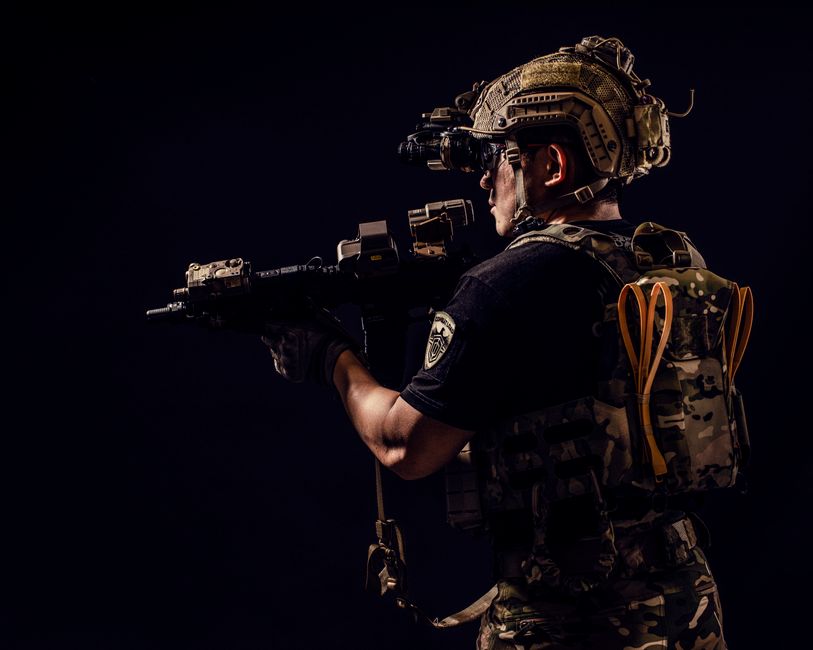
Using night vision goggles for the first time is simpler than most people expect, but a few basic steps make the difference between a frustrating blur and a clear view. Start by mounting the device correctly, adjusting the focus for your eyes, and learning how the controls work in daylight before you ever step outside in the dark. Master those three things first, and the rest falls into place quickly.
What Are Night Vision Goggles Actually Doing?
Night vision goggles do not work like a camera flash or a spotlight. They collect tiny amounts of existing light — moonlight, starlight, distant streetlights — and amplify it thousands of times so your eyes can see it.
The image you see is green for a reason. The human eye is most sensitive to green light, so manufacturers use a green phosphor screen to display the amplified image. That green glow is not a gimmick. It is the most comfortable color for your eyes to view for long periods.
There are two main types of night vision. Digital night vision uses a sensor and a small screen, similar to a camcorder. Analog night vision uses an image intensifier tube, which is what military and law enforcement devices use. Analog units generally produce sharper images but cost more. Digital units are more affordable and often allow you to record video.
Understanding which type you own matters because the controls and limitations differ. Check the manual or the product listing if you are not sure.
How To Set Up Night Vision Goggles Before Dark
Do not wait until you are standing in the dark to figure out the controls. Set up the device in a well-lit room first.
Start by inserting fresh batteries. Most devices use standard AA or CR123 batteries, but check your specific model. Low batteries cause the image to flicker or dim, and some units simply shut off without warning.
Next, attach the goggles to your head mount or helmet mount. The device should sit centered over your eyes, not tilted to one side. If it feels heavy or unbalanced, adjust the straps before you go outside. A loose mount will shift as you walk and ruin your view.
Turn the device on and look through it in the lit room. The image will appear bright, possibly even washed out. That is normal. Most units have an automatic brightness control that adjusts when you step into darkness.
Adjust the eyepiece focus. This is the single most important step. Most goggles have a diopter adjustment ring on each eyepiece. Turn it until the image is sharp. If you wear glasses, you may need to adjust the eyepiece while wearing them, or use the goggles without glasses if the diopter range covers your prescription.
Finally, locate the objective lens focus on the front of the device. This controls the distance focus — near objects versus far objects. Set it to a middle distance for now. You will fine-tune it outside.
How To Adjust Night Vision Goggles Outside
Step outside into the darkest area available. Give your eyes a few minutes to adapt to the darkness before you even look through the goggles. Your natural night vision will help the device perform better.
Look through the goggles and let your eyes settle. The image may appear slightly fuzzy for the first few seconds. This is normal. The intensifier tube needs a moment to stabilize.
Now adjust the objective lens focus. Look at an object about 20 to 30 feet away — a tree, a fence post, a parked car. Turn the objective lens until that object is sharp. Then look at something farther away and adjust again. You will find a middle setting that works for most viewing distances.
Walk slowly at first. Night vision goggles create a slight delay in how you perceive movement, and your depth perception will feel different. Most new users instinctively walk too fast. Take slow, deliberate steps until your brain adjusts.
Keep both eyes open if you can. Many people want to close one eye, but this causes eye strain and reduces your awareness of your surroundings. With practice, your brain will merge the goggle image with your peripheral vision.




Common Mistakes First-Time Night Vision Users Make
The most common mistake is turning the goggles on in bright light. Most analog night vision devices can be damaged by exposure to bright light, including direct sunlight or a nearby flashlight. If you must use the goggles near light, cover the objective lens with the lens cap until you are in darkness.
Another frequent error is focusing on the eyepiece instead of the objective lens. The eyepiece adjusts for your eyesight. The objective lens adjusts for distance. If the image is blurry, check both — but remember which one does which.
Many users also expect night vision to work like daylight vision. It does not. The image is grainy, monochrome, and lacks fine detail. You will see shapes, movement, and general outlines clearly, but you will not read a license plate from across a parking lot. That limitation is not a defect. It is how the technology works.
Finally, do not point the goggles at bright light sources. Streetlights, car headlights, and bright windows will cause the image to wash out temporarily. Some units have automatic shutoff to protect the tube, but not all do.
How Long Do Night Vision Goggles Last?
Night vision tubes have a limited lifespan. Most analog image intensifier tubes are rated for roughly 10,000 hours of use. That sounds like a lot, and it is — about 416 full days of continuous use. But the tube degrades gradually over time, and the image becomes dimmer and grainier as it ages.
Digital night vision units do not have a tube that degrades the same way. Their lifespan depends on the screen and electronics, which typically last longer but are not serviceable. When a digital unit fails, you replace the whole device.
Battery life varies widely by model. Some units run for 8 hours on a set of batteries. Others last only 2 hours. Check your manual and carry spare batteries if you plan to be out for a while. Cold weather drains batteries faster, so keep spares in an inside pocket.
Storage matters. Keep the goggles in a dry, cool place. Moisture is the enemy of night vision equipment. If you use the goggles in rain or high humidity, wipe them down and let them air dry before storing.
How To Use Night Vision Goggles For The First Time Safely
Safety comes down to three things: protecting the device, protecting your eyes, and protecting your footing.
Protect the device by never turning it on in bright light and keeping the lens caps on when not in use. If your model has an automatic brightness control, rely on it, but do not test it by staring at a streetlight.
Protect your eyes by taking breaks. Looking through night vision goggles for extended periods causes eye fatigue and can trigger headaches in some people. Take the goggles off for a few minutes every hour and let your eyes rest in natural darkness.
Protect your footing by moving slowly and scanning the ground in front of you. Night vision goggles narrow your field of view, and you will not see obstacles at your feet as clearly as you think. Use a red flashlight if you need extra light — white light will ruin your dark adaptation and may damage the goggles.
If you are using the goggles while walking on uneven terrain, consider using a walking stick to probe the ground ahead of you. This is common practice among experienced night vision users and prevents falls.
When Night Vision Goggles Are Not the Right Tool
Night vision goggles amplify existing light. If there is no light — such as in a cave, a windowless basement, or a heavily overcast night in deep woods — they will not help. The image will be too dark to use.
Thermal imaging is the alternative for total darkness. Thermal cameras detect heat rather than light, so they work in complete darkness. They also see through light fog and smoke. However, thermal images show heat signatures, not visual details. You will see a person as a bright shape, but you will not recognize their face.
Some devices combine night vision and thermal imaging, but these are expensive and mostly used by professionals. For most recreational uses — camping, hiking, wildlife observation, property security — night vision alone is sufficient.
If you need to read text, identify colors, or see fine detail in the dark, no consumer night vision device will do that. A red flashlight is the honest answer for those tasks.
Frequently Asked Questions
Why is the image in night vision goggles green?
The green phosphor screen is used because the human eye is most sensitive to green light, making the image easier to view for long periods. It is a design choice based on human vision, not a technical limitation.
Can night vision goggles be used in daylight?
No. Most analog night vision devices can be permanently damaged by bright light, including direct sunlight. Digital night vision units may survive daylight, but the image will be washed out and useless.
How far can night vision goggles see?
Most consumer night vision devices can identify a person at 100 to 200 yards under good conditions. Detection range — seeing that something is there — extends further, but identification requires more light and a higher-quality tube.
Do I need a license to own night vision goggles?
No. Consumer night vision devices are legal to own in the United States without a license. Devices with very high specifications are restricted for export, but domestic purchase and use are not regulated.
