
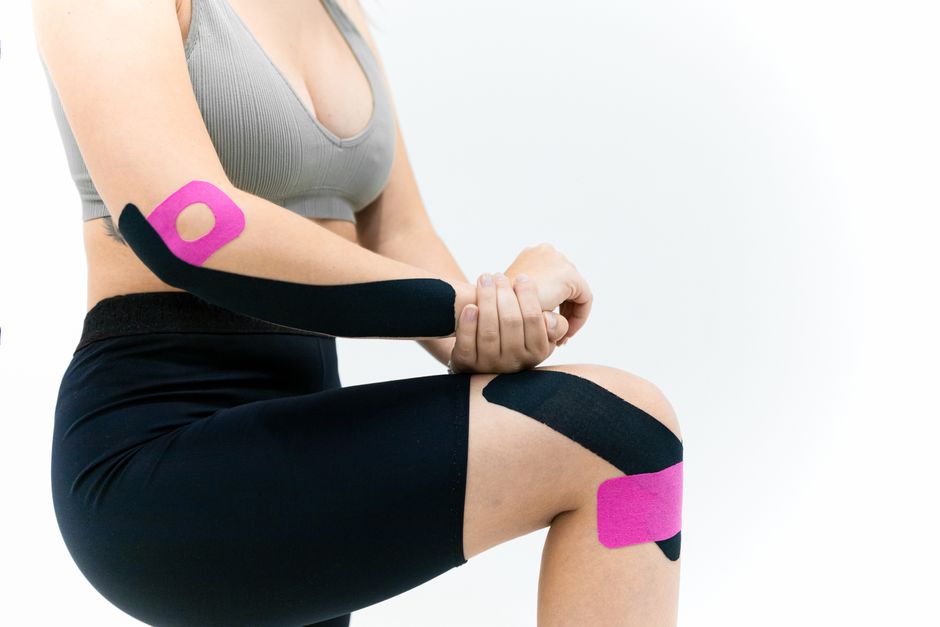
Kinesiology tape is an elastic cotton strip with a stretchy adhesive backing. To use it on a knee, you apply it directly to clean, dry skin along the lines of the muscles or joint you want to support, usually with the knee bent at a slight angle so the tape does not pull when you move. You can apply it yourself in a few minutes with no special tools. What the tape actually does — and does not do — is worth understanding before you buy a roll.
What Is KT Tape and How Does It Differ From Regular Athletic Tape?
KT tape stretches. Regular athletic tape does not.
That single difference shapes everything about how each is used. Traditional white athletic tape is rigid. It is designed to physically limit joint movement — a trainer wraps an ankle to stop it from rolling. KT tape is elastic and stretches roughly along one axis, similar to human skin. It is meant to move with you, not restrict you.
The tape was developed in the 1970s by a Japanese chiropractor, Kenzo Kase. The original idea was that lifting the skin slightly off the tissue below it might improve blood flow and reduce pressure on pain receptors. That mechanism is plausible. Whether it produces meaningful clinical benefit is a separate question, and the research on that is genuinely mixed.
A few things are well established:
- KT tape adheres to skin for several days, including through showers, if applied correctly.
- It is latex-free in most major brands, though you should check the label if you have a latex allergy.
- It does not immobilize a joint the way rigid tape does.
- It is not sterile and is not a wound dressing.
Some clinicians use it as an adjunct to other treatment. Others do not use it at all. Both positions are defensible given the current evidence.
Does KT Tape Actually Work for Knee Pain?
The evidence is mixed, and anyone who tells you otherwise is overselling.
Some studies suggest KT tape can reduce perceived pain in people with knee osteoarthritis or patellofemoral pain (pain around the kneecap) in the short term. Other studies find its effect is similar to placebo tape or no different from sham application. A consistent finding across research is that any benefit tends to be modest and short-lived.
One important complication: it is very hard to design a blinded study of KT tape. Participants usually know whether they are wearing it. That makes placebo effects difficult to separate from real effects. This is a known limitation of the research, not a reason to dismiss it entirely.
What the tape does not do is heal tissue, correct joint alignment permanently, or replace rehabilitation. If you have a structural knee problem, taping over it does not address the underlying issue. Physical therapy, strength work, and in some cases medical or surgical treatment are where the real change happens.
The honest summary: some people feel better with it. Some do not. It is low-risk to try, and if it helps you move more comfortably through a rehab program, that has value. Just do not expect it to be a stand-alone fix.
How To Use KT Tape On Knee: Step-by-Step Application
Application technique matters more than most people realize. A poorly applied strip peels within hours. A well-applied one can last several days.
Before you start
- Clean and dry the knee. Lotions, oils, and sunscreen prevent adhesion.
- Trim hair if the area is very hairy. Hair reduces how well the tape sticks.
- Round the corners of each strip with scissors. Square corners catch on clothing and peel first.
- Have scissors ready. You will need them.
General application for knee support
There are several taping patterns depending on what you are trying to support. Two common approaches:
For general knee support: Bend the knee slightly, around 30 to 45 degrees. Cut two strips long enough to run from mid-thigh to below the kneecap. Apply the first strip down one side of the kneecap, anchoring the ends without stretch. Apply the second strip down the other side, creating a rough U or Y shape around the kneecap. Rub the tape firmly to activate the adhesive — the heat from friction helps it bond.
For patellar (kneecap) support: Cut a shorter strip. Apply it directly over or just below the kneecap with moderate stretch in the middle and no stretch at the ends. The ends should always be applied without tension, or the tape will lift.
A general rule across all applications: never stretch the last inch or two at either end. Those anchor points are what hold the tape in place. Stretch the middle if you want the tape to do anything.
Do not apply tape over an open wound, a rash, or broken skin.




How Long Does KT Tape Last, and How Do You Remove It?
Most KT tape is designed to stay on for three to five days. Some manufacturers state up to a week. Real-world wear depends on how much you sweat, how much you shower, and how well you applied it.
To get the most wear out of it:
- Apply it at least 30 minutes before exercise so the adhesive sets.
- Pat it dry after showering rather than rubbing.
- Avoid pulling at the edges.
To remove it, do not rip it off. The adhesive is strong, and dry removal can irritate or damage skin. The standard approach is to soak the tape in warm water or oil — baby oil or mineral oil work well — wait a few minutes, then peel it back slowly while pressing the skin down with your other hand. Peeling in the direction of hair growth reduces discomfort.
If you notice redness, itching, or a rash under the tape, remove it and let the skin rest. Adhesive reactions are uncommon but they happen, and some people are sensitive to the acrylic adhesives used in most brands.
Who Should Not Use KT Tape?
KT tape is not appropriate for everyone. Skip it, or check with a clinician first, if you have:
- Open wounds, cuts, or active skin infections on the knee
- A known allergy to acrylic adhesives
- Active cellulitis or a skin condition in the area
- Circulation problems in the legs, unless a clinician has cleared it
- Deep vein thrombosis or a history of it in that leg
KT tape is also not a substitute for medical evaluation. If your knee is swollen, unstable, locking, or giving way, or if you cannot bear weight on it, taping over the problem delays the diagnosis you actually need. See a clinician.
Pregnancy is a separate consideration. No clinical guidelines currently exist for KT tape use during pregnancy, though some clinicians recommend it for general musculoskeletal support. If you are pregnant and considering it, ask your healthcare provider.
Does KT Tape Help With Swelling and Recovery?
This is one of the most common claims and one of the least well supported.
The theory is that lifting the skin creates space for lymphatic fluid to move more freely, reducing swelling. Some small studies have looked at this in post-surgical and post-injury settings. Results vary, and the studies are generally small. No large human trials have confirmed that KT tape meaningfully reduces swelling compared to standard care.
What is better supported for swelling is the standard approach: elevation, compression with a proper compression wrap or sleeve, and movement as tolerated. Those are well-established. KT tape is sometimes used alongside them, but it is not a replacement for them.
For recovery after exercise, the evidence is similarly thin. Some athletes report feeling more supported and more aware of the joint while wearing it. That subjective sense of support may be real even when measurable performance effects are not. Proprioception — your sense of where your body is in space — is one area where some researchers think KT tape may have a genuine effect, though the research is not conclusive.
How Much Does KT Tape Cost, and Is It Worth Trying?
A roll typically costs between $10 and $25 depending on brand and length. Pre-cut strips cost more per use. A roll gives you more flexibility if you plan to tape regularly.
Whether it is worth trying depends on what you expect from it. If you are looking for a low-cost, low-risk tool that might make movement more comfortable during rehab or activity, it is reasonable to try. If you are looking for a treatment that will fix a knee problem on its own, it will not do that.
One practical point: technique affects results more than brand. A cheaper roll applied well will outperform an expensive roll applied badly. If you are unsure how to apply it for your specific issue, a physical therapist can show you the pattern that fits your situation.
Frequently Asked Questions
Can I sleep with KT tape on?
Yes, KT tape is designed to stay on for several days, including overnight. Just make sure the skin underneath is clean and dry before you apply it, and check for irritation in the morning.
How do I stop KT tape from peeling off in the shower?
Pat the tape dry with a towel after showering rather than rubbing it, and avoid hot water directly on the tape. Applying it to clean, dry, hair-free skin and rounding the corners also helps it last longer.
Can KT tape replace a knee brace?
No, KT tape and a knee brace do different things. A brace provides structural support and limits certain movements, while KT tape is elastic and does not restrict the joint; which one is appropriate depends on your specific knee issue.
Is KT tape safe to use every day?
It is generally safe for repeated use as long as your skin tolerates it. If you develop redness, itching, or a rash, remove the tape and give your skin a break before reapplying.
