
Helichrysum essential oil is a concentrated plant extract, and that concentration is the whole safety story. It should never go on skin undiluted, it should not be swallowed without a doctor’s supervision, and it should be kept away from infants and young children. Used diluted on intact adult skin, in small amounts, it is generally handled well by most people.
Most of the safety questions people ask about helichrysum come down to four things: how much to dilute, where it can go, who should avoid it, and what to do if something goes wrong. This guide walks through each one using what is actually known, and flags plainly where evidence is thin.
What Is Helichrysum Essential Oil and Why Does Concentration Matter?
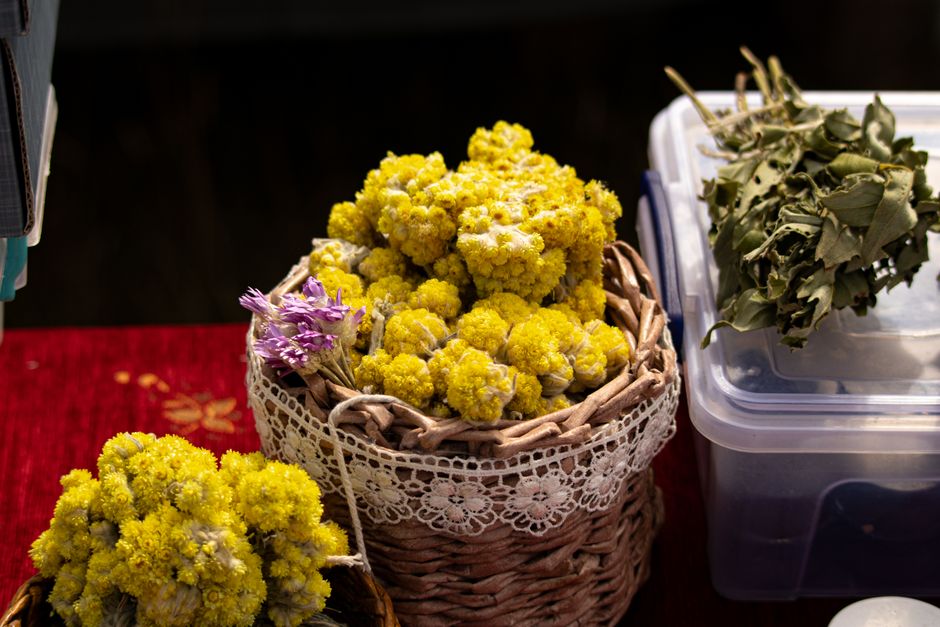
Helichrysum essential oil is steam-distilled from the flowers of Helichrysum italicum, a small shrub often called the curry plant or immortelle. It has a strong, warm, herbal scent and a long history of use in traditional European skin care.
The safety issue is simple chemistry. Essential oils are not oils in the cooking sense. They are volatile aromatic compounds — sometimes hundreds of them in a single bottle. A single drop of helichrysum oil contains a high concentration of these molecules. Applying that directly to skin exposes it to a dose far stronger than the plant itself would ever deliver.
The main compounds identified in helichrysum oil include neryl acetate, alpha-pinene, and several other terpenes. Some of these are known skin irritants at high concentrations. Diluting the oil in a carrier oil lowers the concentration on skin and is the standard way to reduce that risk.
One point worth separating out: the words “pure” and “therapeutic grade” appear on many labels but are not regulated terms. No independent body certifies them. Purity claims are marketing language, not a safety guarantee.
How To Use Helichrysum Essential Oil Safely on Skin
Dilution is the single most important safety step. The general guidance used in aromatherapy and dermatology is to keep essential oils at low concentrations on skin, and helichrysum is no exception.
A widely used starting point for adult skin is around 1% to 2% dilution. That means roughly 6 to 12 drops of essential oil per 30 milliliters (about 1 ounce) of carrier oil. Some sources describe 1% as a conservative level for sensitive areas and 2% as a typical level for general adult use. There is no single official standard, so treat these as common practice rather than a fixed rule.
Carrier oils — such as jojoba, sweet almond, or fractionated coconut oil — spread the essential oil over a larger area and slow its absorption. They do not make the essential oil “safe” in an absolute sense. They lower the concentration that touches your skin.
Practical steps for a first use:
- Do a patch test on a small area of inner forearm and wait 24 hours before wider use.
- Keep the oil away from eyes, eyelids, inside the nose, and broken or irritated skin.
- Wash hands after handling undiluted oil, especially before touching your face.
- Stop using it if you notice redness, itching, or burning.
There is no strong clinical evidence that helichrysum essential oil treats any skin condition. Some laboratory and small studies have looked at its compounds, but these are not the same as proven clinical benefit in people. Treat any skin benefit claims with caution.
Can You Ingest Helichrysum Essential Oil?
No. Do not swallow helichrysum essential oil unless a qualified healthcare provider has specifically directed it, and that is rare.
Essential oils are not food. Swallowing them can irritate the mouth, throat, and stomach lining, and in larger amounts can cause more serious harm. Regulatory and poison-control guidance consistently advises against drinking essential oils. Some social media posts recommend putting drops in water or capsules. That advice is not supported by safety guidance and has caused documented injuries with other essential oils.
If you want helichrysum’s aroma in food or drink, the dried flowers are a different product from the concentrated essential oil. Even so, check with a healthcare provider before using any helichrysum product internally, especially if you take medication.




Who Should Avoid Helichrysum Essential Oil?
Some groups should be more cautious than the general adult population, and a few should avoid it entirely without medical guidance.
Infants and young children. Essential oils are not recommended for infants. Young children have thinner skin and different metabolism, and there are no established safe dilution guidelines for this age group. No clinical guidelines currently exist for using helichrysum essential oil on infants or very young children.
Pregnant and breastfeeding people. There is limited safety data on helichrysum essential oil in pregnancy and breastfeeding. No clinical guidelines establish a safe dose for these groups. The cautious approach is to avoid it or check with an obstetric provider first.
People with sensitive skin or eczema. Damaged skin absorbs more and reacts more easily. Patch testing matters more here, and dilution should stay at the low end.
People with allergies to the Asteraceae (daisy) plant family. Helichrysum belongs to this family. If you react to ragweed, chrysanthemums, or similar plants, you may be more likely to react to helichrysum. This is a reasonable precaution based on plant family relationships, though specific cross-reactivity data for helichrysum oil is limited.
People taking medication or with medical conditions. Essential oils can interact with some drugs, and the evidence on specific interactions with helichrysum is thin. Ask a pharmacist or doctor before regular use if you take prescription medication.
What About Diffusing and Inhaling Helichrysum Oil?
Diffusing is generally considered lower risk than applying oil to skin, but it is not risk-free. Inhaling concentrated aromatic compounds can irritate airways in some people.
Keep diffusing sessions short and in a ventilated room. Do not diffuse in a closed room with infants, pets, or anyone with asthma or respiratory conditions without checking first. Pets, especially cats and birds, can be sensitive to essential oil vapors.
Direct inhalation — sniffing from the bottle — is common practice. It is generally tolerated, but strong, prolonged sniffing can cause headache or nasal irritation in some people. There is no established clinical evidence that inhaling helichrysum oil treats any medical condition.
How Should You Store Helichrysum Essential Oil?
Store it in a dark glass bottle, tightly capped, away from heat and direct sunlight. Essential oils oxidize over time, and oxidized oils are more likely to cause skin reactions.
Check the label for a recommended shelf life, and discard oil that smells sharply different from when you bought it. Keep all essential oils out of reach of children and pets. A small bottle looks like something a child might drink, and accidental ingestion is a real risk.
What Should You Do If a Reaction Happens?
If skin becomes red, itchy, or burning after contact, wash the area with mild soap and water and stop using the oil. For a mild reaction, a cool compress can help. Seek medical care if swelling, blistering, or trouble breathing occurs.
If oil gets in the eyes, rinse with clean water for several minutes and seek medical advice if irritation continues. If someone swallows essential oil, contact poison control right away. Do not wait for symptoms, and do not try to make the person vomit.
These are general first-aid steps. They are not a substitute for professional medical advice, and reactions vary from person to person.
Frequently Asked Questions
Can I put helichrysum essential oil directly on my skin?
No. Undiluted essential oil is too concentrated for skin and can cause irritation. Dilute it in a carrier oil first, typically around 1% to 2% for adult skin.
Is helichrysum essential oil safe during pregnancy?
There is not enough safety data to confirm it is safe in pregnancy, and no clinical guidelines set a safe dose. Check with an obstetric provider before using it.
Can I add helichrysum essential oil to water and drink it?
No. Swallowing essential oils is not recommended and can cause harm. Drink it only if a qualified healthcare provider has specifically directed it, which is rare.
What should I do if helichrysum oil irritates my skin?
Wash the area with mild soap and water and stop using the oil. Seek medical care if you notice swelling, blistering, or trouble breathing.
