
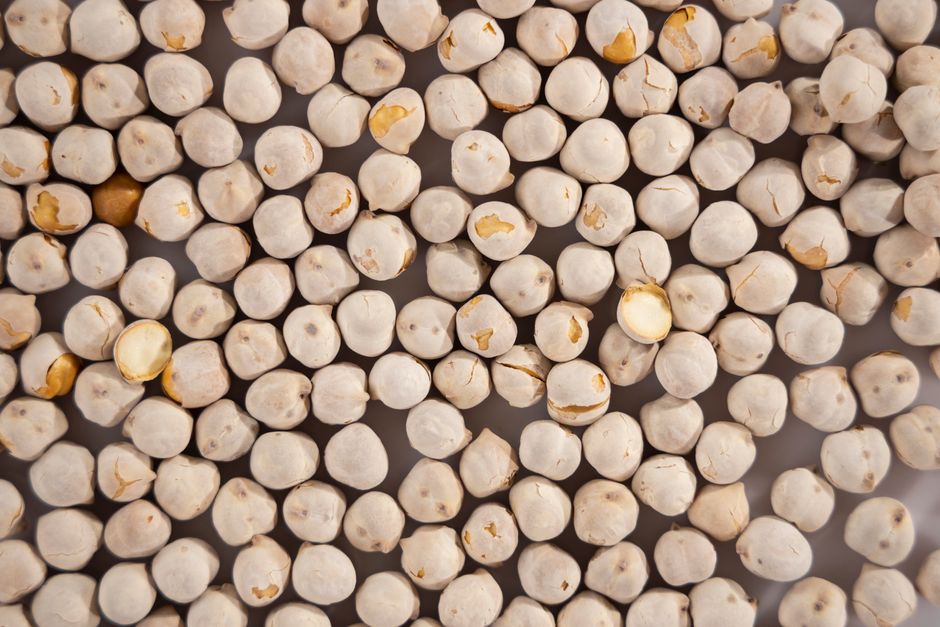
Chickpea water — the liquid drained from a can of chickpeas — can replace eggs in many baking recipes. Use 3 tablespoons of chickpea water to replace one whole egg, or 2 tablespoons to replace one egg white. It works best in recipes that call for egg whites, like meringues, macarons, and some cakes, because it whips into a foam similar to raw egg white.
What Is Chickpea Water and Why Does It Work?
Chickpea water is the starchy liquid that chickpeas are canned or cooked in. In the culinary world, it is often called aquafaba, which is Latin for “bean water.”
The liquid contains proteins, starches, and soluble fiber that give it egg-like properties. When whisked, these components trap air and form a stable foam. This is the same basic principle that allows egg whites to whip into stiff peaks.
This discovery gained attention around 2015 when a French chef named Joël Roessel published videos showing the liquid whipping like egg whites. Since then, it has become a standard ingredient in vegan and egg-free baking.
The science is not fully mapped out, but the evidence is practical: the foam holds, bakes, and binds in ways that closely mimic eggs in many recipes.
How To Use Chickpea Water As An Egg Substitute
The general rule is simple: 3 tablespoons of chickpea water equals one whole egg. For recipes that only need egg whites, use 2 tablespoons per egg white.
Measure the chickpea water straight from the can. You do not need to reduce it, simmer it, or add anything to it for most recipes. Just whisk it lightly before measuring so the liquid is uniform.
For whole egg replacement, add the chickpea water directly to the wet ingredients in your recipe. It will bind ingredients similarly to a beaten egg.
For recipes that require whipping, like meringues or mousses, use a stand mixer or hand mixer. Whip the chickpea water on medium-high speed until soft peaks form. This usually takes 5 to 10 minutes. Add cream of tartar or a pinch of salt to help stabilize the foam, just as you would with egg whites.
You can also add sugar gradually once soft peaks form. This creates a meringue that can be baked into meringue cookies, used as frosting, or folded into other desserts.
Which Recipes Work Best and Which Do Not
Chickpea water performs best in recipes where eggs act as a leavening agent or provide structure through whipping. These include:
- Meringues and pavlovas
- Macarons
- Angel food cake
- Mousses and marshmallows
- Some cakes and cupcakes
- Brownies and quick breads
It works less well in recipes that rely on eggs for rich flavor, custard-like texture, or significant fat content. For example, a classic custard or a rich French toast will not behave the same way with chickpea water.
Recipes that call for many eggs — like a quiche or a dense pound cake — are also difficult to replicate. The chickpea water adds moisture but does not add fat, and it has no thickening power comparable to a cooked egg yolk.
For recipes that need one or two eggs for binding, like veggie burgers or meatballs, chickpea water can work. Use 3 tablespoons per egg and mix it into the mixture. It will help hold ingredients together, though the texture may be slightly softer than with real eggs.





Does Chickpea Water Change the Taste or Texture?
In most baked goods, you cannot taste the chickpea water. The sugar, flour, cocoa, or other flavorings mask it completely.
In neutral-flavored recipes, you may notice a very faint bean-like taste. This is more common in recipes that are not heavily flavored and are not baked, like a plain mousse or an uncooked frosting.
Texture is the bigger consideration. Baked goods made with chickpea water tend to be slightly lighter and airier than those made with eggs. They can also be a bit more delicate, so handle them gently when cooling or frosting.
Some bakers report that items made with chickpea water brown faster. If you notice this, you can lower your oven temperature by about 25 degrees Fahrenheit and extend the baking time slightly.
What About Store-Bought Aquafaba?
You can buy pre-made aquafaba powder or liquid in some stores. The liquid is simply chickpea water that has been packaged separately. The powder is dehydrated chickpea water that you reconstitute with water.
Store-bought versions are convenient, but they are not necessary. The liquid from any can of chickpeas works. Just drain the chickpeas and save the liquid.
One note: the texture of chickpea water varies slightly by brand. Some brands produce thicker, more viscous liquid than others. If your chickpea water seems very thin, whip it a little longer. If it seems very thick, it may whip faster and hold better.
Homemade chickpea water, from cooking dried chickpeas, also works. It tends to be thinner than canned liquid, so you may need to simmer it down to concentrate it before whipping.
Is Chickpea Water Safe for Everyone?
Chickpea water is generally safe for most people. It is simply the liquid from cooked chickpeas, which are a common food.
People with a chickpea or legume allergy should avoid it. If you have a known allergy to chickpeas, do not use chickpea water as an egg substitute.
People on a low-FODMAP diet may also want to avoid it. Chickpeas contain oligosaccharides that can cause gas and bloating in sensitive individuals. The liquid concentrates some of these compounds.
For people who avoid eggs for allergy, ethical, or dietary reasons, chickpea water is a practical option. It is inexpensive, widely available, and works in many recipes.
It is not a complete nutritional replacement for eggs. Eggs provide protein, fat, and several vitamins. Chickpea water provides almost no protein and no fat. Use it for its functional properties in baking, not as a nutrient substitute.
Tips for Getting the Best Results
Start with room-temperature chickpea water. Cold liquid whips more slowly and may not reach full volume.
Use a clean, dry bowl. Any grease or residue will prevent the foam from forming properly.
Whip longer than you think you need to. Chickpea water takes more time to reach stiff peaks than egg whites. Be patient and keep the mixer running.
Add an acid stabilizer. A pinch of cream of tartar or a few drops of lemon juice helps the foam hold its structure. This is the same trick used with egg whites.
Do not overbake. Because chickpea water creates a lighter structure, baked goods can dry out faster. Check for doneness a few minutes earlier than the recipe suggests.
Store leftover chickpea water in the refrigerator for up to five days. You can also freeze it in ice cube trays. Each standard ice cube is about 2 tablespoons, which is convenient for measuring.
Frequently Asked Questions
Can chickpea water replace eggs in any recipe?
No. It works well in recipes that rely on eggs for whipping, binding, or leavening, but it does not work for custards, quiches, or recipes that need the fat and richness of egg yolks.
How much chickpea water replaces one egg?
Use 3 tablespoons of chickpea water to replace one whole egg. Use 2 tablespoons to replace one egg white.
Does chickpea water taste like chickpeas in baked goods?
In most baked goods, no. The flavor is masked by sugar, flour, cocoa, or other ingredients. You may notice a faint bean taste in lightly flavored or unbaked recipes.
Can I use chickpea water instead of eggs in boxed cake mix?
Yes. Replace each egg with 3 tablespoons of chickpea water and add it with the other wet ingredients. The cake may be slightly lighter in texture than one made with eggs.
