
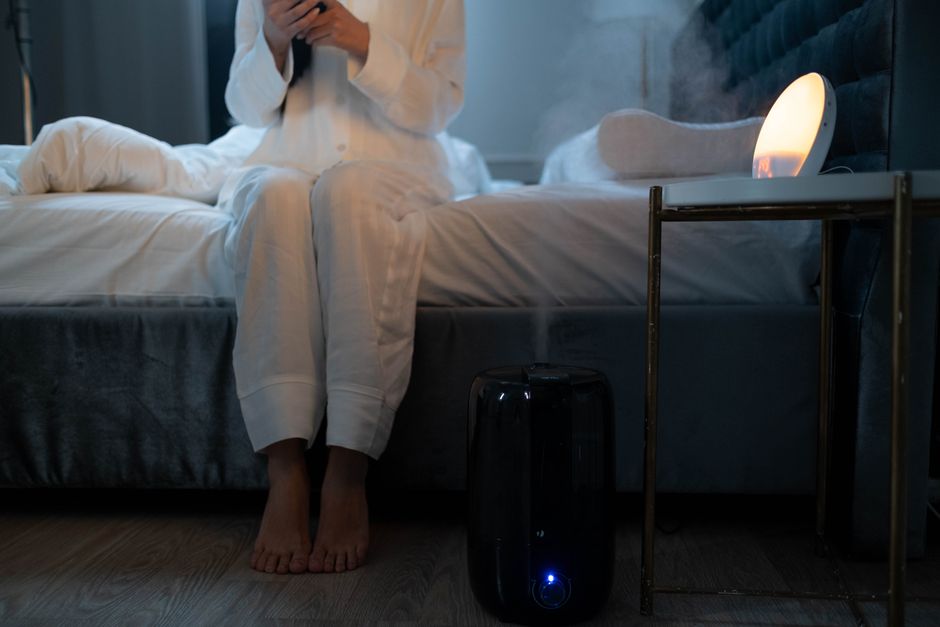
An ultrasonic humidifier adds moisture to dry indoor air using high-frequency vibrations that create a cool mist. To use one the right way, you need to fill it with distilled water, place it on a flat surface a few feet off the floor, and clean it every few days to prevent mold and mineral buildup. The most common mistakes people make are using tap water, skipping cleanings, and letting humidity climb too high — all of which can turn a helpful device into a health problem.
How Does An Ultrasonic Humidifier Work?
Ultrasonic humidifiers use a metal diaphragm that vibrates at a very high frequency — usually over 1.7 million times per second. These vibrations break water into microscopic droplets that are pushed into the air as a cool mist. Unlike steam vaporizers, there is no heating element. The mist leaves the device at room temperature.
Because the droplets are so fine, they evaporate quickly into the air. This raises the relative humidity in the room without raising the temperature. That makes ultrasonic models popular for bedrooms, nurseries, and homes in warm climates.
The trade-off is that whatever is in your water goes into the air. Ultrasonic humidifiers do not boil water, so minerals, bacteria, and other contaminants in the tank can be dispersed directly into your breathing air. This is the single most important thing to understand about using one correctly.
What Water Should You Use In An Ultrasonic Humidifier?
Use distilled or demineralized water. This is not a preference — it is the manufacturer-recommended practice for most ultrasonic models, and it matters for your health.
Tap water contains dissolved minerals like calcium and magnesium. When an ultrasonic humidifier aerosolizes tap water, those minerals are released into the air as fine white dust. This dust can settle on furniture and, more importantly, can be inhaled. Some research has linked this mineral dust to respiratory irritation, especially in children and people with asthma.
Distilled water has had these minerals removed through boiling and condensation. It leaves no white dust and keeps the inside of your humidifier cleaner for longer. If distilled water is not practical, some manufacturers suggest demineralized water or water that has been filtered with a reverse osmosis system. Do not use water softener salts as a substitute — those add sodium to the air.
Change the water daily, even if the tank is not empty. Stagnant water in a humidifier tank becomes a breeding ground for bacteria and mold within 24 to 48 hours. Starting each day with fresh water is one of the cheapest and most effective things you can do.
Where Should You Place The Humidifier?
Place the humidifier on a flat, waterproof surface about 2 to 4 feet off the floor. A sturdy table, dresser, or nightstand works well. The mist needs room to disperse, and the device needs to be out of reach of pets and small children.
Keep it at least 3 feet away from walls, furniture, and electronics. Moisture can damage wood, wallpaper, and sensitive equipment over time. Directing the mist away from walls and toward the center of the room helps distribute humidity evenly.
Do not place the humidifier directly on carpet. Spills and condensation can soak the carpet and create a mold problem. If you must use it on carpet, place a waterproof mat or tray underneath.
Never place the humidifier near a heat source, air vent, or window. Heat and drafts can disrupt the mist pattern and cause the device to work inefficiently. The mist should not blow directly on plants, books, or people.





What Humidity Level Should You Set?
Keep indoor relative humidity between 30 and 50 percent. This is the range recommended by the Environmental Protection Agency for indoor comfort and health. Humidity below 30 percent can dry out skin and nasal passages. Humidity above 50 percent creates conditions where dust mites, mold, and bacteria thrive.
Most ultrasonic humidifiers have a built-in humidistat or allow you to set a target humidity level. If your model does not have this feature, you can buy a separate hygrometer for about $10 to $15. These small devices measure the humidity in the room and are worth the small investment.
If you see condensation forming on windows, that is a clear sign the humidity is too high. Wipe the windows and reduce the output setting. Persistent condensation on windows can lead to mold growth on frames and sills.
In winter, cold air holds less moisture, so you may need to run the humidifier more often. In summer, outdoor humidity is often high, and adding indoor moisture may not be necessary. Pay attention to how the room feels rather than running the device on a fixed schedule.
How Often Should You Clean An Ultrasonic Humidifier?
Clean the tank and base every 3 days during regular use. This is the minimum frequency recommended by most manufacturers and public health agencies. Daily water changes reduce but do not eliminate biofilm buildup.
Biofilm is a slimy layer of bacteria, mold, and mineral deposits that forms on wet surfaces. Once it forms, it can release allergens and irritants into the mist. Cleaning every few days prevents biofilm from establishing.
To clean: unplug the device and empty any remaining water. Wash the tank with a small amount of dish soap and warm water. Rinse thoroughly. For the base, use a soft brush or cloth to wipe away any film. Do not use abrasive scrubbers that can scratch the surface — scratches provide places for bacteria to hide.
Once a week, do a deeper clean with a diluted vinegar solution. Mix one part white vinegar with three parts water and let it sit in the tank for 20 to 30 minutes. This dissolves mineral scale. Rinse completely afterward. Vinegar is effective and safe, but you must rinse thoroughly so no vinegar smell enters the air.
Do not use bleach or harsh chemical cleaners on an ultrasonic humidifier. Residue from these chemicals can be aerosolized into the air you breathe. If you need a stronger disinfectant, check your manufacturer’s manual for approved cleaning products.
What Are The Health Risks Of A Dirty Humidifier?
A poorly maintained humidifier can worsen respiratory problems instead of helping them. The mist from a dirty device can carry mold spores, bacteria, and mineral particles directly into your airways.
Some research has linked dirty humidifiers to a condition called “humidifier lung,” a form of hypersensitivity pneumonitis. This is an inflammatory reaction in the lungs that can cause coughing, shortness of breath, and fever. It is more common in people with repeated exposure to contaminated mist over long periods.
Children, older adults, and people with asthma or allergies are most vulnerable. If you or a family member develops new coughing, wheezing, or throat irritation after using a humidifier, turn it off and clean it thoroughly. If symptoms persist, see a doctor.
This is not a reason to avoid humidifiers entirely. A clean, properly maintained ultrasonic humidifier is generally safe for most people. The risk comes from neglect, not from the technology itself.
When Should You Use An Ultrasonic Humidifier?
Use an ultrasonic humidifier when indoor relative humidity drops below 30 percent. This most often happens in winter when heating systems dry out the air. It can also happen in arid climates or in rooms with heavy air conditioning use.
Many people use humidifiers during cold and flu season. Moist air can soothe irritated nasal passages and throats. Some research suggests that humidity in the 40 to 60 percent range may reduce the survival of some airborne viruses, though this is not a substitute for handwashing or vaccination.
For people with chronic sinus congestion or dry skin, a humidifier can provide meaningful relief. The moisture helps keep mucous membranes hydrated, which can make breathing more comfortable. It does not cure infections or allergies — it only manages symptoms.
Do not run the humidifier all day every day without checking humidity levels. Over-humidifying a room can cause just as many problems as under-humidifying. Check the hygrometer regularly and adjust output as needed.
Ultrasonic vs. Evaporative Humidifiers: Which Is Better?
Ultrasonic humidifiers are quieter and use less electricity than evaporative models. They also produce a cool mist, which can be more comfortable in warm weather. They are generally smaller and easier to move between rooms.
Evaporative humidifiers use a wick filter and a fan to blow moisture into the air. They are self-regulating — they naturally slow down as humidity rises. They also do not produce white dust because minerals stay in the wick. The downsides are that they are noisier, require filter replacements, and can be more expensive to maintain over time.
For most people, the choice comes down to preference. If you want quiet operation and do not mind buying distilled water, an ultrasonic model is a good choice. If you prefer lower maintenance and do not mind fan noise, an evaporative model may serve you better.
Whichever type you choose, the cleaning and water quality rules are the same. Both require regular maintenance to operate safely.
Frequently Asked Questions
Can I use tap water in an ultrasonic humidifier?
Tap water will work, but it releases mineral dust into the air that can irritate lungs and leave white residue on surfaces. Distilled water is the recommended choice for ultrasonic models.
How often should I change the water in my humidifier?
Change the water every day, even if the tank is not empty. Stagnant water can grow bacteria and mold within 24 to 48 hours.
Is it safe to leave a humidifier on all night?
It is safe if the humidity stays below 50 percent and the device is clean. Check the humidistat in the morning and clean the unit regularly to prevent mold growth.
What humidity level is too high for a bedroom?
Humidity above 50 percent encourages dust mites, mold, and bacteria growth. Keep bedroom humidity between 30 and 50 percent for comfort and safety.
