
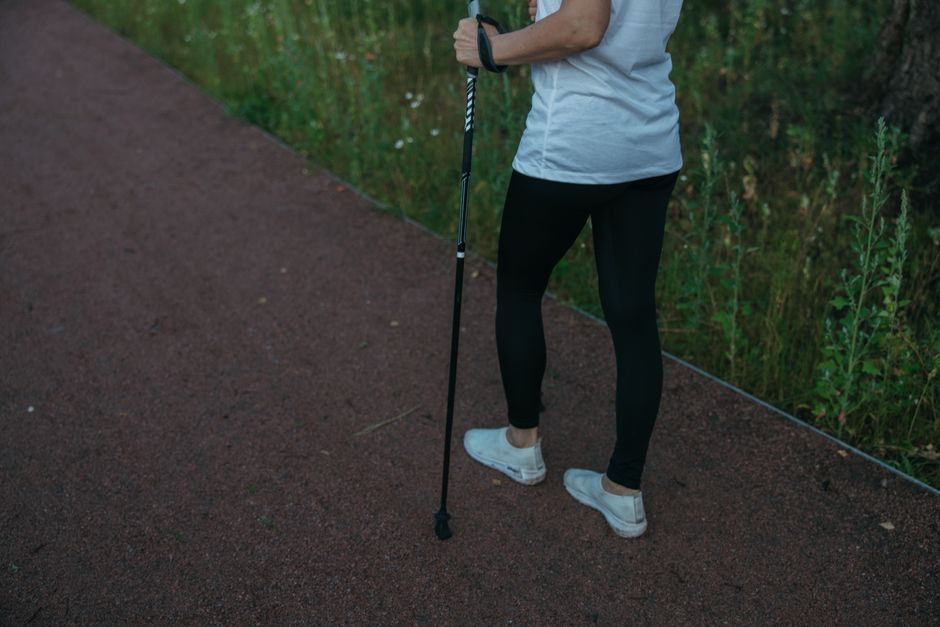
Using a walking stick correctly for balance comes down to a few simple, non-negotiable rules. Hold the cane in the hand opposite your weaker leg, keep the top of the handle at your wrist crease when your arm hangs down, and move the cane forward at the same time as your weak leg. This pattern restores a natural gait and takes pressure off the painful side. Getting these basics right prevents falls and prevents new joint or back pain from developing.
Why Do You Hold the Cane on the Opposite Side?
Most people instinctively grab the cane with the hand on the same side as their painful leg. That is wrong. The cane belongs in the hand opposite the weak leg. So if your right knee hurts, hold the cane in your left hand.
This works because of how your body moves when you walk. When your right leg steps forward, your left arm naturally swings forward with it. Your brain is already wired for this cross-body pattern. Using the cane on the left side lets it share the load with the right leg, exactly where your body expects support to be.
Holding the cane on the same side forces your spine to lean sideways and your shoulder to hike up. That shifts weight unevenly and can cause hip, back, and shoulder pain over time. The opposite-side grip keeps your torso upright and your weight distributed the way it should be.
How Tall Should the Walking Stick Be?
An incorrectly sized cane is a fall risk, not a fall prevention tool. The correct height is measured with you standing in your normal walking shoes, arms relaxed at your sides. The top of the cane handle should line up with the crease on the inside of your wrist.
At this height, your elbow should be bent at about 15 to 20 degrees when you grip the handle. That slight bend lets your arm absorb shock and push off naturally. If your elbow is locked straight, the cane is too tall. If your elbow is bent sharply past 30 degrees, the cane is too short.
Adjustable canes are simple to set. Most use a push-button mechanism on the shaft. If you have a wooden cane without adjustments, a professional at a medical supply store can cut it to the right length. Never guess this measurement. An inch too tall or too short changes your posture and increases fall risk.
How To Use A Walking Stick Correctly For Balance: The Step Pattern
The walking pattern matters more than the grip. For most people, the correct sequence is cane and weak leg together, then strong leg.
Here is the step-by-step pattern:
- Place the cane forward about one small step ahead of you.
- At the same moment, step your weak leg forward to meet the cane.
- Push down on the cane and shift weight through your arm.
- Step your strong leg past the cane to complete the cycle.
This is often described as “cane and bad leg, then good leg.” The cane moves in perfect sync with the weak leg, so your weight is always supported on at least two points of contact. You never have a moment where your full weight lands on the weak leg without support.
Walking up stairs reverses the pattern. The strong leg goes up first, then the cane and weak leg follow together. Going down stairs, the cane and weak leg go down first, then the strong leg follows. The saying to remember is “up with the good, down with the bad.”



What Is the Correct Grip and Posture?
Grip the handle firmly but not with a death grip. Your fingers should wrap around the handle with your thumb on top. Keep your wrist straight. A bent wrist puts strain on the forearm and reduces how much weight you can safely push through the cane.
Stand tall when you walk. Look ahead, not down at your feet. Your shoulders should stay level and relaxed. Many people hunch over a cane, which shifts the center of gravity forward and increases fall risk. The cane is a support tool, not something to lean your whole body weight onto.
Your weight should rest mostly through your strong leg and your hand, not through your armpit. If you are using an adjustable cane, the handle is at wrist height, so your armpit never touches the top. If you are using a taller walking stick that reaches your armpit, that is a different device entirely — a forearm crutch or an underarm crutch — and it requires different positioning and training.
Common Mistakes That Cause Falls
The most common error is holding the cane on the same side as the weak leg. This feels natural to many people, but it is mechanically wrong and increases strain on the hip and lower back.
Another frequent mistake is using a cane that is too short. A short cane forces you to bend forward and to the side. This compresses the spine and shifts your balance forward. A cane that is too tall forces your shoulder up and makes it hard to push down with enough force for real support.
People also tend to place the cane too far to the side instead of slightly forward. The cane should land close to your body, roughly in line with your toes. Placing it far out to the side creates a wide base but makes it harder to push through and can strain the shoulder.
Finally, many people look down at their feet while walking. This is a natural reaction when balance feels uncertain, but it actually makes balance worse. Your inner ear and the proprioceptors in your joints do the balancing work. Looking down tilts your head forward and shifts your weight, which can trigger dizziness or a fall.
Choosing the Right Walking Stick for Your Needs
Not all walking sticks are the same. The right choice depends on how much support you need and where you use it.
A single-point cane is the most common. It has one rubber tip at the base and is fine for people who need light support on uneven ground or for occasional balance. It is the easiest to carry and store.
A quad cane has four small points at the base. It stands on its own and provides a much wider base of support. It is a better choice for people with significant balance problems or weakness on one side. The tradeoff is weight and bulk — quad canes are heavier and harder to maneuver through narrow doorways.
The handle shape matters too. A curved crook handle is classic and comfortable for people with good hand strength. A straight or ergonomic handle distributes pressure more evenly across the palm and is better for people with arthritis or weak grip.
Every cane needs a rubber tip in good condition. The tip is what grips the floor. A worn or cracked tip can slide on wet surfaces. Replace the rubber tip as soon as you see wear. Check it monthly if you use the cane daily.
When a Walking Stick Is Not Enough
A walking stick is a balance aid, not a cure for a balance disorder. If you feel unsteady even with the cane, or if you have had a fall, a walking stick may not be the right level of support.
If your balance problems come from inner ear issues, neurological conditions, or medication side effects, a cane can help but will not fix the underlying problem. A physical therapist can assess your gait, strength, and balance and recommend the right device — whether that is a cane, a walker, or a specific exercise program.
Some people continue using a cane long after their injury has healed. That can create a dependency that weakens the muscles in the weak leg. If you were told to use a cane for a temporary injury, ask your doctor or physical therapist when you can stop. The goal is to regain strength and walk without support, not to rely on a cane forever.
Frequently Asked Questions
Which hand should hold the walking stick?
Hold the cane in the hand opposite your weak or painful leg. This keeps your weight centered and protects your hip and lower back.
How do I know if my walking stick is the right height?
Stand in your normal shoes with your arms relaxed at your sides. The top of the handle should line up with the crease on the inside of your wrist.
What is the correct walking pattern with a cane?
Move the cane forward at the same time as your weak leg, then step your strong leg past it. The sequence is “cane and bad leg, then good leg.”
Should I use a cane if I feel dizzy?
A cane can provide physical support, but dizziness often has a medical cause that needs evaluation. See a doctor to determine why you feel dizzy before relying on a cane for balance.
