
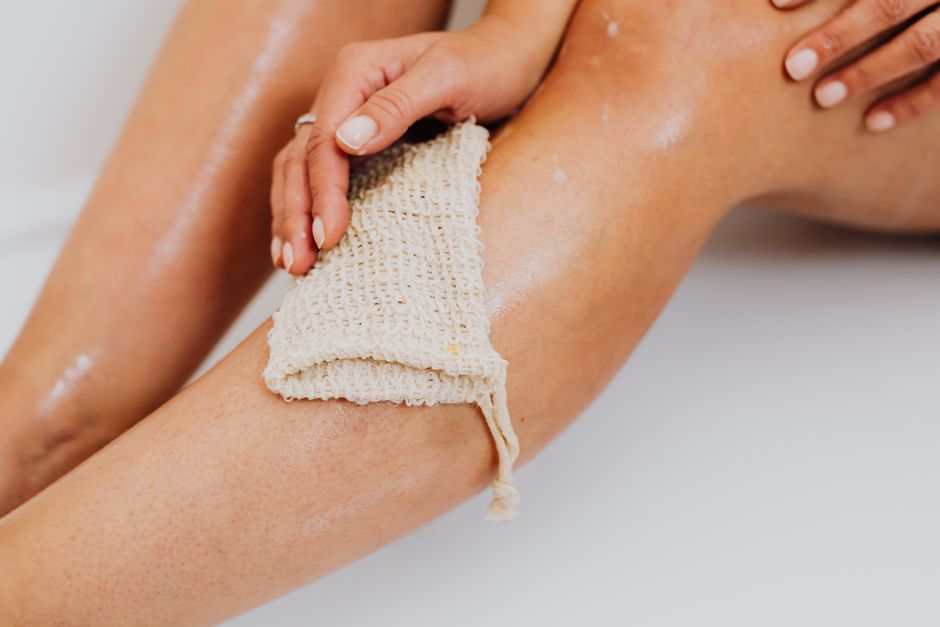
A loofah can feel like a small luxury in the shower. The right one helps lift away dead skin and leaves your body feeling smoother. The wrong one, or the wrong technique, can irritate skin, spread bacteria, and make existing skin problems worse.
Using a loofah well comes down to three things: choosing the right material, using gentle motions on damp skin, and replacing or cleaning it often enough that it does not become a breeding ground for microbes. That last part is where most people slip up.
What Is a Loofah, Exactly?
The word “loofah” gets used for two very different things, and the difference matters for your skin.
A natural loofah is the dried fibrous skeleton of a gourd in the cucumber family. It is a plant product with a rough, woven texture. A synthetic loofah, sometimes called a bath sponge or mesh puff, is made from plastic mesh, usually polyethylene or a similar material. Most drugstore loofahs are the synthetic kind.
Both work by physically exfoliating — rubbing away dead cells from the surface of your skin. That process is called mechanical exfoliation. It is different from chemical exfoliation, which uses acids like glycolic or salicylic acid to loosen dead cells without scrubbing.
Neither type of loofah cleans your skin in a way soap alone cannot. Soap or body wash does the cleaning. The loofah mostly adds friction and lather. That is worth knowing before you spend money on a fancy one.
How To Use A Loofah For Effective Skin Care
Technique matters more than the tool. Rough scrubbing does not exfoliate better — it just damages the skin barrier.
Start by wetting your skin in warm water for a few minutes. Warm water softens the outer layer of skin and makes exfoliation gentler. Apply your body wash to the loofah, work up a lather, and move it over your body in slow, light circles. Let the texture do the work. You should feel mild friction, not scraping.
Spend more time on areas with thicker skin, like the soles of your feet, elbows, and knees. Go lighter on the chest, neck, and anywhere the skin is thin. Skip the face entirely — facial skin is more delicate, and most dermatologists suggest using a separate, gentler method there if you exfoliate at all.
Rinse the loofah thoroughly after each use and squeeze out the water. Hang it somewhere it can air-dry completely. A loofah that stays damp is a loofah that grows things.
How often should you exfoliate? There is no single official number. Many skin care sources suggest once or twice a week for most people. If your skin is sensitive, dry, or you have a condition like eczema or psoriasis, less is more — sometimes none at all. Watch your skin. Redness, stinging, or flaking after use means you are doing too much.
How Often Should You Replace a Loofah?
Natural loofahs should be replaced every three to four weeks. Synthetic mesh puffs can last a bit longer, but replacing them every one to two months is a reasonable habit.
The reason is not just wear and tear. Damp, warm, porous objects in a bathroom are ideal environments for bacteria and mold. Research has found that shower loofahs and sponges can harbor a range of bacteria, including species that can cause skin infections if they get into a break in the skin.
A few practical habits help:
- Never share your loofah with anyone else, including family members.
- Do not store it in the shower where it stays wet. Hang it outside the spray zone.
- If it smells musty, looks discolored, or feels slimy, throw it out — do not try to clean it back to life.
- If you have a cut, scrape, or open sore, use your hands instead until it heals.
Some people wash their loofah in a washing machine on hot with a mild detergent, or soak it in a diluted vinegar solution. These steps may reduce some microbial load, but no method has been shown to sterilize a loofah completely. Replacement is the more reliable option.




Who Should Not Use a Loofah?
A loofah is not right for every skin type, and for some people it can actively cause harm.
Skip loofahs if you have:
- Eczema or psoriasis. Scrubbing can trigger flares and break down an already compromised skin barrier.
- Active acne on the body. Friction can irritate lesions and may spread bacteria across the skin.
- Sensitive or reactive skin. If your skin reddens easily, mechanical exfoliation may be too much.
- Sunburn, rashes, or healing wounds. Let the skin recover first.
- Diabetes or a weakened immune system. Minor skin injuries can become more serious. Talk to your doctor before using any abrasive tool.
If you have a skin condition and are not sure whether exfoliation is safe for you, that is a question for a dermatologist, not a product label.
Loofah vs. Other Exfoliation Methods
Mechanical exfoliation with a loofah is one option among several. Here is how the common methods compare on the basics.
| Method | How it works | Best for | Main drawback |
|---|---|---|---|
| Natural loofah | Rough plant fiber, physical scrubbing | Thicker skin on feet, elbows, knees | Harbors bacteria; needs frequent replacement |
| Synthetic mesh puff | Plastic mesh, lighter friction | General body cleansing with mild exfoliation | Also harbors microbes; less biodegradable |
| Exfoliating gloves or mitts | Fabric texture, even pressure | Full-body use with more control | Same hygiene concerns as loofahs |
| Chemical exfoliants (AHA/BHA) | Acids loosen dead cells without scrubbing | Sensitive skin, acne-prone skin | Can sting; requires sun protection |
| Dry brushing | Stiff bristles on dry skin | Some people find it invigorating | Can be too abrasive; limited evidence for benefits beyond exfoliation |
No method is clearly superior for everyone. The best one is the one your skin tolerates and that you can keep clean.
Does a Loofah Actually Improve Your Skin?
Exfoliation does have real effects. Removing dead cells from the surface can make skin feel smoother and look brighter in the short term. It may also help body moisturizers absorb more evenly.
What a loofah does not do is treat cellulite, “detox” the body, improve circulation in any lasting way, or clear acne. Those claims show up on product packaging and in social media posts, but no clinical evidence supports them. The skin is a barrier, not a drain. Scrubbing it does not pull toxins out of your body.
If smoother-feeling skin is your goal, a loofah can help as part of a simple routine. If you are hoping it will fix a skin condition, it will not — and it may make things worse.
Simple Routine That Works
You do not need a complicated setup. A basic sequence covers it:
- Wet skin in warm water for a few minutes.
- Apply a gentle, fragrance-free body wash to a clean loofah.
- Use light circles, more on thick skin, less on thin skin.
- Rinse your body and the loofah thoroughly.
- Pat skin dry and apply moisturizer within a few minutes while skin is still slightly damp.
- Hang the loofah to dry outside the shower.
- Replace it every three to four weeks.
That is the whole thing. The main risks come from overdoing it, sharing it, or keeping it too long — not from the tool itself.
Frequently Asked Questions
How often should you use a loofah?
Once or twice a week is enough for most people. If your skin is sensitive, dry, or prone to eczema, use it less often or not at all.
Can a loofah spread bacteria or cause infections?
Yes. Damp loofahs can harbor bacteria and mold, and using one on broken skin raises the risk of infection. Replace it every three to four weeks and never share it.
Is a natural loofah better than a plastic one?
Not for your skin. Both exfoliate the same way and both can harbor microbes. Natural loofahs biodegrade, which is an environmental advantage, not a skin care one.
Can you use a loofah on your face?
No. Facial skin is thinner and more delicate than body skin, and a loofah is usually too abrasive for it. Use a gentler method or skip facial exfoliation.
