
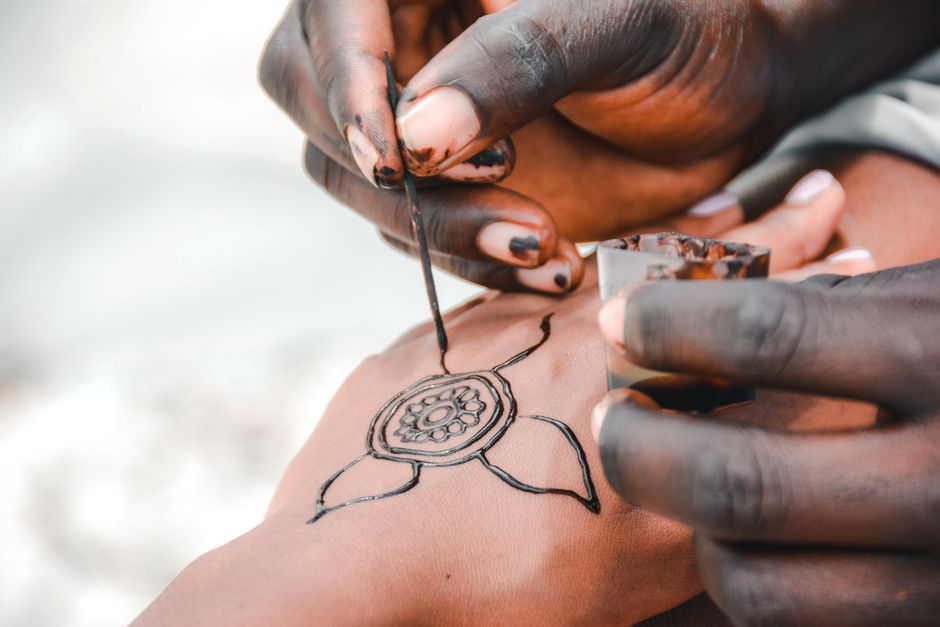
Henna body art can look beautiful and last for weeks, but getting it right takes patience and a few safety steps most people skip. To use henna on skin, you mix pure henna powder with a mildly acidic liquid, apply it in a paste, and let it sit for several hours before scraping it off. The stain then develops over 24 to 48 hours, and it fades on its own as your skin sheds its outer layer.
What matters most is what is in the paste. Pure henna is a plant product with a long history of use, but many commercial “black henna” products contain additives that can cause serious skin reactions. Knowing the difference protects your skin and your results.
How To Use Henna On Skin: Apply, Remove, And Care
Real henna comes from the dried, ground leaves of the Lawsonia inermis plant. The dye molecule, lawsone, binds to proteins in the top layer of your skin. That bond is why the stain sits on the surface and fades gradually rather than washing off.
Here is the basic process from start to finish:
- Mix pure henna powder with lemon juice or another mildly acidic liquid until it forms a thick paste, similar to toothpaste.
- Cover the bowl and let the paste rest for several hours. This allows the dye to release.
- Wash and dry the skin. Do not apply lotion beforehand.
- Apply the paste with a cone, brush, or stick. Thicker lines tend to stain darker.
- Let the paste dry, then keep it on the skin for several hours. Many people leave it overnight.
- Scrape or peel the dried paste off. Do not scrub with soap and water right away.
- Keep the area dry for the first 24 hours while the color deepens.
Temperature matters. Henna stains best on warm skin, and the color often deepens over the first day or two. A stain that looks faint orange at first is usually not finished developing.
What Is Henna Actually Made Of?
Traditional henna is a plant powder. Nothing more. The color it produces ranges from orange to deep reddish-brown depending on the henna’s quality, the mix, and where on the body it is applied.
Pure henna does not produce black. That is the single most important fact in this article. If a product claims to give a black stain, it likely contains added chemicals. This is where the real danger lives.
Some products labeled “black henna” contain para-phenylenediamine, often shortened to PPD. PPD is a chemical used in permanent hair dye. It is not approved for direct application to skin in this way, and it is a well-documented cause of allergic contact dermatitis. Reactions can include intense itching, blistering, and permanent scarring. In some cases, a person becomes sensitized and later reacts to PPD in hair dye or other products.
If you want a darker or longer-lasting stain, the honest answer is that pure henna has limits. No safe additive turns henna black without adding risk.
How Long Should You Leave Henna On?
Longer is generally darker, up to a point. Most people leave henna paste on for several hours, and many leave it on overnight for the deepest stain.
The trade-off is practical. The longer the paste stays on, the more it flakes and the more likely it is to smudge. A paste that stays moist and in contact with the skin transfers more dye. Once it dries and cracks, the dye transfer slows down.
There is no single official duration. The right time depends on the henna’s quality, the mix, and your skin. First-timers often start with a few hours and adjust from there.





How Do You Remove Henna Paste And Care For The Stain?
Remove the dried paste by gently scraping or peeling it off. Do not use soap and water immediately, because the stain is still developing and water can interrupt that process.
After removal, the color usually looks lighter than expected. It deepens over the next 24 to 48 hours as the dye oxidizes. This is normal and not a sign the henna failed.
To help the stain last:
- Keep the area dry for the first day.
- Avoid swimming, long baths, and heavy sweating for the first day or two.
- Moisturize the surrounding skin, but go easy directly on the stain.
- Expect fading in one to three weeks, faster on hands that are washed often.
Henna fades because your skin constantly renews itself. The stained cells on the surface shed over time, and the color goes with them. There is no way to make a henna stain permanent, and no product that claims to do so is telling the truth.
Can Henna Cause Allergic Reactions?
Pure henna is generally well tolerated, but allergic reactions are possible. The bigger risk comes from additives, especially PPD in black henna products.
Signs to watch for include redness, swelling, itching, blistering, or a rash that spreads beyond where the paste was applied. If any of these appear, wash the area gently with mild soap and water and seek medical care if symptoms are severe or spreading.
Anyone can react, but some people are more likely to. Be cautious if you have a history of eczema, psoriasis, or other skin conditions, or if you have reacted to hair dye before. PPD is common in permanent hair dye, so a past reaction is a real warning sign.
A patch test is a reasonable precaution. Apply a small amount of the paste to a small area of skin, wait 24 to 48 hours, and check for a reaction before applying it more widely. A patch test does not guarantee you will never react, but it can catch some sensitivities.
Is Natural Henna Always Safe?
The word “natural” on a label does not guarantee safety. Henna is natural, but so are plenty of plants that cause reactions.
One real concern is a condition sometimes called G6PD deficiency, an inherited enzyme problem. People with this condition can develop hemolytic anemia after exposure to certain substances, and henna has been linked to cases in this group. This is a serious medical issue, and anyone with G6PD deficiency should talk to a doctor before using henna.
Another point of confusion is the difference between henna for skin and henna for hair. Hair henna is often mixed with other plant dyes like indigo, and the formulations differ. Do not assume a hair product is suitable for skin.
What About Henna On Children And During Pregnancy?
Henna is not recommended for infants or young children. Their skin is thinner and more sensitive, and the risk of a reaction is higher.
For pregnancy, the evidence is limited. Some sources suggest avoiding henna during pregnancy out of caution, but there is no strong clinical consensus that pure henna poses a specific risk. Black henna with PPD is a different matter and should be avoided by everyone, pregnant or not.
No clinical guidelines currently exist for using henna specifically during pregnancy or breastfeeding. If you are pregnant or breastfeeding and want to use henna, ask your doctor first.
How Do You Spot Fake Or Dangerous Henna?
A few simple checks can help you avoid the worst products. The most reliable rule is this: real henna is never black.
- Be suspicious of any product promising a black stain.
- Ask what is in the paste. A vendor who cannot say is a risk.
- Notice the smell. Pure henna smells earthy and plant-like. A chemical or gasoline smell is a red flag.
- Watch how fast it stains. Pure henna takes hours. A paste that stains in minutes is not pure henna.
- Avoid products with no ingredient list.
Some henna artists mix their own paste from powder they can identify. That is generally a safer path than a mystery tube. If you are buying prepared cones, ask about the ingredients and the source.
How Long Does A Henna Stain Last?
A henna stain typically lasts one to three weeks. It fades faster on hands and other areas that are washed and rubbed often, and lasts longer on areas like the back or upper arm.
The initial color is often orange, deepening to reddish-brown over the first day or two. After that, it gradually lightens. There is no way to stop the fading, because it follows your skin’s natural renewal cycle.
If you want to refresh a design, wait until the old stain has faded enough that a new layer will look even. Applying fresh henna over a fading stain rarely produces a clean result.
Frequently Asked Questions
How long should I leave henna on my skin?
Most people leave henna paste on for several hours, and many leave it overnight for a deeper stain. The longer it stays moist against the skin, the more dye transfers, though results vary with the henna and your skin.
Is black henna safe?
No. Products that produce a black stain often contain para-phenylenediamine (PPD), a chemical linked to serious allergic reactions and scarring. Pure henna never stains black, so any black result is a warning sign.
How long does a henna tattoo last?
A henna stain usually lasts one to three weeks, fading faster on hands and areas that are washed often. The color deepens over the first 24 to 48 hours before it begins to fade.
Can I use henna while pregnant?
The evidence is limited, and no clinical guidelines currently exist for using henna during pregnancy or breastfeeding. Ask your doctor first, and avoid black henna with PPD entirely.
