
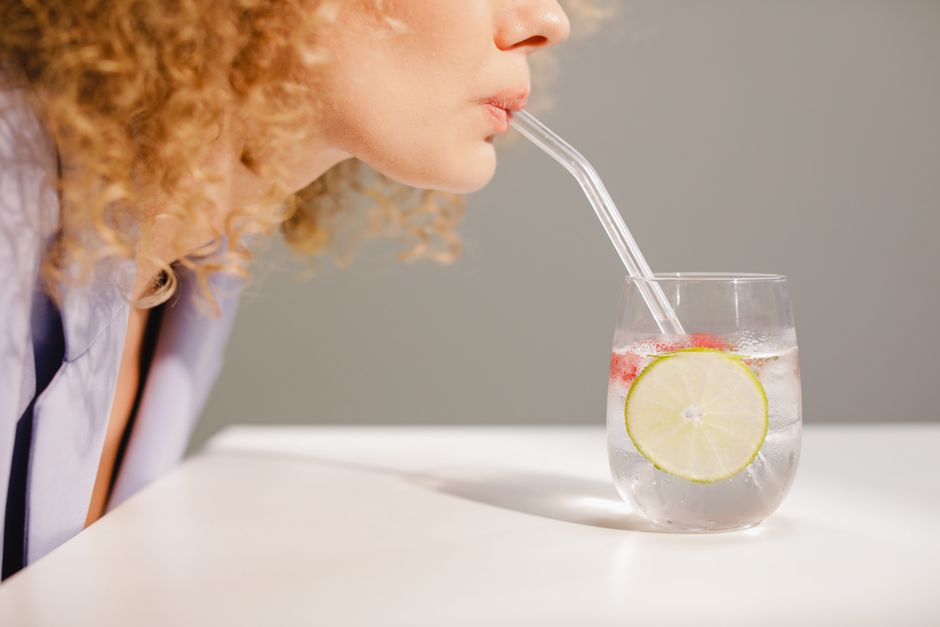
A hiccup straw is a drinking tool with a specially shaped mouthpiece. Some versions have a bent or stepped internal channel. Others are sold as “anti-hiccup” straws with a small valve or a narrowed tip. The idea is that sipping through the straw forces you to swallow in a slow, controlled way. That swallowing pattern may interrupt the nerve signal that keeps a hiccup bout going. The evidence that these straws work better than any other slow-drinking method is thin. No large controlled trial has confirmed they stop hiccups faster than plain water or breath-holding.
What Actually Happens During a Hiccup?
A hiccup starts when the diaphragm contracts suddenly and without your control. The diaphragm is the dome-shaped muscle under your lungs that does most of the work of breathing. When it jerks, you pull air in fast. A fraction of a second later, your vocal cords snap shut. That closure is what makes the “hic” sound.
The signal travels along the phrenic nerve, which runs from the neck down to the diaphragm, and the vagus nerve, which connects the brain to the gut and chest. Anything that irritates either nerve can set off a bout. That includes a full stomach, a sudden change in temperature, carbonated drinks, alcohol, or swallowing air.
Most bouts last a few minutes. Some last hours. A hiccup that continues past 48 hours is called persistent, and one that lasts more than a month is called intractable. Those longer cases are uncommon and can point to an underlying issue, so they are worth a medical evaluation.
How To Use A Hiccup Straw To Stop Hiccups Fast
You sip slowly through the straw while holding your breath for a few seconds before each swallow. The slow sip and the swallow that follows are the active parts. The straw is mostly a way to control your drinking speed.
Here is the basic method people use:
- Fill a glass with cold water.
- Place the straw in the glass and seal your lips around the mouthpiece.
- Take a slow, steady sip. Do not gulp.
- Hold the water in your mouth for a moment, then swallow.
- Repeat several times without rushing.
The reasoning is straightforward. Swallowing uses muscles in the throat and upper esophagus that share nerve pathways with the diaphragm. A deliberate, repeated swallow may reset the reflex loop that is firing during a hiccup bout. Cold water may add a mild sensory jolt that helps interrupt the pattern.
What the evidence shows is limited. There is no large randomized trial comparing hiccup straws to other home remedies. The mechanism is plausible, and many people report it helps. Plausible is not the same as proven. Treat the straw as one option among several, not a guaranteed fix.
Does the Straw Work Better Than Other Home Remedies?
No study has shown that a hiccup straw outperforms other common methods. Most home remedies for hiccups work on the same general principle: interrupt the nerve reflex long enough for it to stop firing on its own.
Common approaches include:
- Holding your breath for as long as is comfortable.
- Drinking a glass of cold water quickly.
- Biting into a lemon or tasting something sour.
- Swallowing a teaspoon of sugar, which is sometimes suggested for children over age one.
- Breathing into a paper bag, done carefully and never with the bag sealed over the head.
The paper bag method deserves a caution. Breathing into a bag raises carbon dioxide in the blood. Done briefly and loosely it is usually harmless. Done with the bag tight around the face, or for too long, it can be dangerous. Skip it if you have heart or lung problems.
If the straw helps you slow down and swallow deliberately, it is doing the same job as these other methods. There is nothing special about the plastic itself.




Why Do Hiccups Sometimes Not Stop?
Most bouts end on their own within minutes. When they do not, the cause is often something irritating the phrenic or vagus nerve. A very full stomach, acid reflux, or a large meal can press on the diaphragm. So can bloating or gas.
Longer bouts have been linked to a range of conditions, though these are uncommon causes:
- Gastroesophageal reflux disease
- Irritation of the ear or throat
- Certain medications, including some steroids and chemotherapy drugs
- Electrolyte imbalances
- Kidney or liver problems
- Central nervous system conditions affecting the brainstem
A hiccup straw will not fix a bout caused by an underlying condition. If hiccups keep returning or last more than two days, see a doctor. That timeline is a widely used clinical cutoff, not a hard rule, but it is a reasonable point to get checked.
When Should You See a Doctor for Hiccups?
See a doctor if hiccups last longer than 48 hours, keep coming back, or interfere with eating, sleeping, or breathing. Those are the situations where a cause needs to be ruled out.
Seek care sooner if hiccups come with any of these:
- Chest pain or pressure
- Shortness of breath
- Difficulty swallowing
- Vomiting or severe abdominal pain
- Weakness, numbness, or trouble speaking
Those symptoms can point to problems that have nothing to do with a simple hiccup bout. They need prompt medical attention, not a home remedy.
Do Hiccup Straws Actually Work?
The honest position is that the evidence is weak. No controlled study has confirmed that hiccup straws stop hiccups faster than other methods. The device relies on a plausible mechanism, and some users find it helpful. That is not the same as proof.
What is well established is that most hiccups stop on their own. Any remedy used during a short bout will often appear to work, because the bout was going to end anyway. That is why anecdotes about hiccup remedies are hard to trust. It is also why a straw can feel effective even when it is doing nothing specific.
If you already own one, using it is low risk. If you are deciding whether to buy one, know that you are paying for a convenient way to sip slowly, not for a proven treatment.
Are There Risks to Using a Hiccup Straw?
For most healthy adults, using a hiccup straw carries little risk. The main concerns are practical, not medical.
- Drinking too much water too fast can cause bloating or nausea.
- Children should use straws with adult supervision, especially if the straw has small parts.
- People with swallowing problems should talk to a doctor before trying any method that involves controlled swallowing.
There are no clinical guidelines for using hiccup straws in infants, young children, or pregnant women. If you are considering one for a child or during pregnancy, ask a clinician first. No reliable dosing or usage standard exists for these groups.
Frequently Asked Questions
How fast does a hiccup straw stop hiccups?
There is no reliable timeline, because no controlled study has measured it. Most hiccup bouts end on their own within a few minutes, so any method used during a short bout can appear to work.
Is a hiccup straw better than holding your breath?
No study has shown that a hiccup straw works better than breath-holding or other home remedies. Both approaches aim to interrupt the same nerve reflex.
Can hiccup straws stop long-lasting hiccups?
They are unlikely to help hiccups that last more than 48 hours, which often have an underlying cause. See a doctor if hiccups persist that long or keep returning.
Are hiccup straws safe for children?
No clinical guidelines exist for using hiccup straws in children or infants. If you want to try one with a child, ask a pediatrician first and supervise use closely.
