
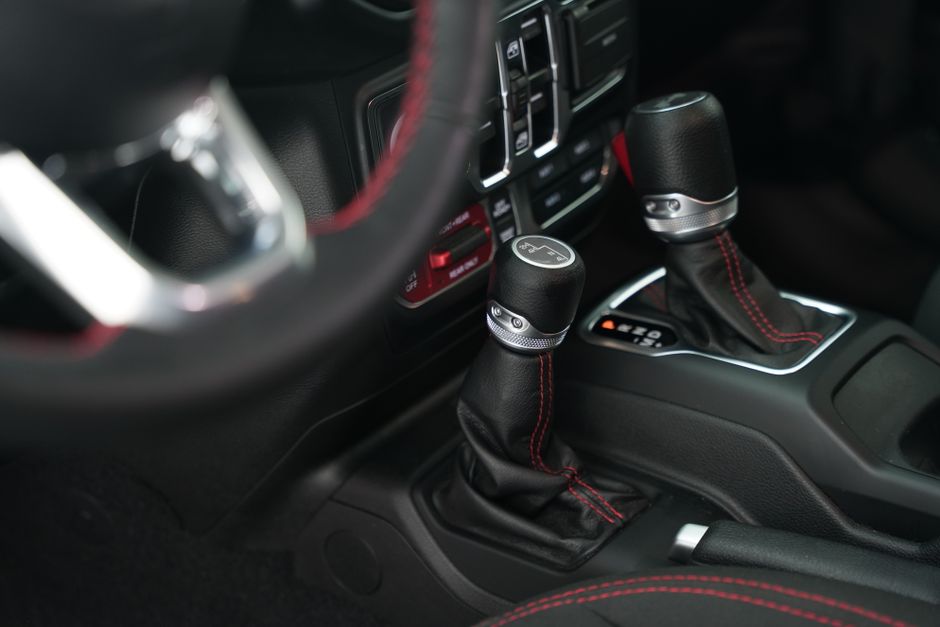
Driving a car with a dual clutch transmission (DCT) is not the same as driving a traditional automatic. To use one effectively, treat it like a manual gearbox that shifts itself: keep your foot firmly on the brake when stopped, let the clutches engage smoothly from a standstill, and avoid creeping forward repeatedly at low speeds in stop-and-go traffic. These habits reduce clutch wear and make the transmission last longer.
A dual clutch transmission uses two separate clutches to handle odd and even gears. One clutch manages first, third, and fifth gear. The other handles second, fourth, and sixth. While you are driving in one gear, the next gear is already selected and waiting. That is why shifts feel almost instant.
Understanding how to work with that design, rather than against it, is the key to smooth driving and long transmission life.
What Is a Dual Clutch Transmission and How Does It Work?
A DCT is an automated manual transmission. It has the internal parts of a manual gearbox but uses computer-controlled clutches instead of a clutch pedal. The driver never shifts manually unless the car offers a manual mode.
The two clutches alternate. When you accelerate from a stop, the first clutch engages first gear. As engine speed rises, the computer pre-selects second gear on the second clutch. When the shift point arrives, one clutch disengages while the other engages almost simultaneously. Power delivery is briefly interrupted, but the gap is so short most drivers barely notice it.
There are two main types:
- Wet clutch DCT: The clutches sit in oil, which cools and lubricates them. These tend to handle heat and low-speed maneuvering better.
- Dry clutch DCT: The clutches run without an oil bath. They are lighter and more efficient but can heat up faster in stop-and-go driving.
This distinction matters for how you drive. A dry clutch DCT is more sensitive to the slow, repeated clutch slipping that happens when you inch forward in traffic.
How To Use A Dual Clutch Transmission Effectively in Daily Driving
The single most important habit is to treat a stop as a full stop. When you come to a halt, press the brake firmly and keep it pressed. Do not hold the car on a slight incline using only the accelerator. That forces the clutch to slip against a load, which creates heat and wear.
Here is how to handle the most common situations:
- From a standstill: Release the brake and apply steady, moderate throttle. Let the car roll and build speed. Avoid stabbing the gas.
- In slow traffic: Let the car come to a complete stop rather than creeping forward a few feet at a time. Each partial engagement adds wear.
- On hills: Use the brake or the parking brake to hold the car, then move off. Do not balance the car with the throttle alone.
- When parking: Come to a full stop before shifting between drive and reverse. Shifting while still rolling can confuse the transmission logic.
Many DCT-equipped cars have a “creep” function that mimics a traditional automatic. It works, but using it constantly in heavy traffic is where heat builds. If you spend most of your driving in gridlock, a DCT may not be the most comfortable choice, and that is worth knowing before you buy.
Should You Use Manual Mode or Paddle Shifters?
Manual mode and paddle shifters give you control over when gears change. In most daily driving, the computer does a better job than a human at picking shift points for efficiency and smoothness. Use manual mode when you have a specific reason.
Good reasons include:
- Holding a lower gear on a long downhill stretch to use engine braking
- Keeping the engine in its power band for a pass or a merge
- Driving on a track or in spirited conditions where you want control
Some DCTs will override your manual choice if you ask for a gear that would damage the engine, such as downshifting at too high a speed. The computer protects the hardware. That is a feature, not a limitation.
One thing to avoid: shifting into neutral at stoplights to “save” the clutch. It does not help, and it removes your ability to move quickly if needed.





What Causes Dual Clutch Transmission Problems?
Most DCT complaints trace back to heat and low-speed clutch slip. When the clutch packs overheat, the transmission control unit can limit torque or refuse certain shifts to protect itself. Drivers often describe this as shuddering, hesitation, or a jerky takeoff.
Common contributors include:
- Repeated creeping in stop-and-go traffic
- Holding the car on a hill with the throttle instead of the brake
- Ignoring the transmission fluid service schedule on wet clutch units
- Stop-and-go driving in a car with a dry clutch DCT
Some early DCT designs had well-documented reliability issues, and some automakers issued software updates or extended warranties to address them. Later generations improved, but the fundamental sensitivity to low-speed slip remains in dry clutch designs.
If your DCT shudders, hesitates, or slips, have it checked. These symptoms can point to clutch wear, a software issue, or a fluid problem, and the cause is not always obvious from the symptom alone. A qualified technician with the right diagnostic tools is the right call.
Does a Dual Clutch Transmission Need Special Maintenance?
Yes, and the requirements vary by design. Wet clutch DCTs typically need periodic transmission fluid changes, similar to a conventional automatic. The fluid cools the clutches and carries away debris, so it degrades over time.
Dry clutch DCTs generally do not have a fluid service for the clutch itself, though the gearbox may still have gear oil that needs attention. Follow the maintenance schedule in your owner’s manual. Those intervals are set by the manufacturer and are the most reliable guide you have.
No clinical or mechanical guideline lets you skip this. Transmission fluid service is one of the few things that genuinely extends the life of an automatic or dual clutch gearbox. Ignoring it is a common and avoidable mistake.
Is a Dual Clutch Transmission Right for Your Driving?
A DCT shines when you drive at speed with varied throttle. It delivers fast shifts and strong efficiency. It is less happy in constant stop-and-go traffic, especially with a dry clutch design.
If most of your driving is highway or open road, a DCT can be a great match. If you spend hours each week in bumper-to-bumper congestion, a traditional torque converter automatic or a continuously variable transmission may be smoother and less demanding to live with.
That is not a knock on DCTs. It is a matter of matching the tool to the job. Knowing how the transmission works helps you drive it in a way that keeps it healthy, whatever your commute looks like.
Frequently Asked Questions
Can you creep in a dual clutch transmission?
Yes, but doing it repeatedly in traffic causes clutch slip and heat. Let the car come to a full stop instead of inching forward when you can.
Should you put a dual clutch transmission in neutral at a stoplight?
No. Keep your foot on the brake and leave it in drive. Shifting to neutral does not reduce wear and removes your ability to move quickly.
How do you drive a DCT smoothly from a stop?
Release the brake and apply steady, moderate throttle rather than stabbing the gas. Let the car roll and build speed for a smoother engagement.
Do dual clutch transmissions need fluid changes?
Wet clutch DCTs typically do, similar to a conventional automatic. Follow the interval in your owner’s manual, since requirements vary by design.
