
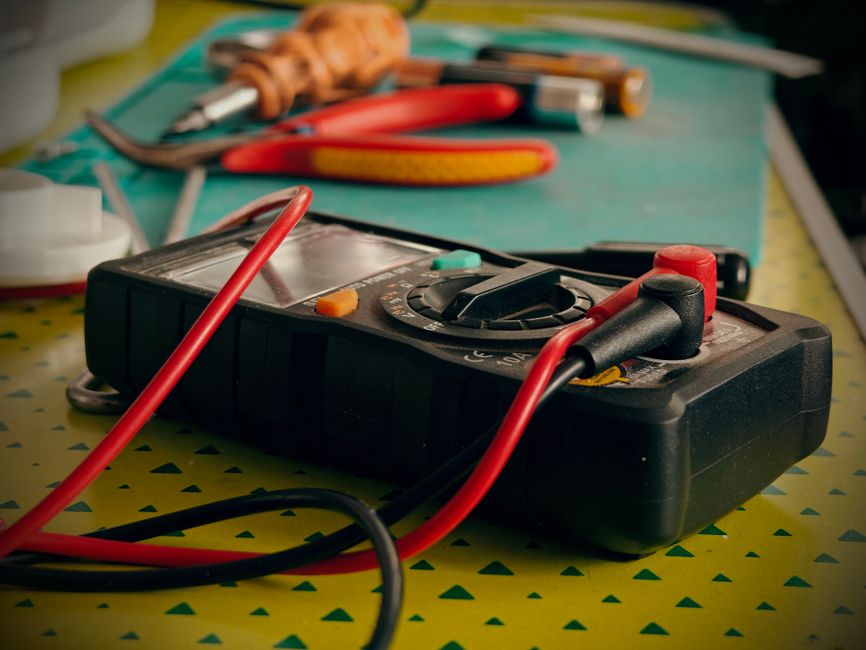
Using a digital multimeter with voltage probes safely starts with one simple rule: always connect the black probe to the COM port and the red probe to the VΩ port. Set the dial to the highest AC or DC voltage range you expect to measure. Then, touch the black probe to the grounded or neutral point first, and the red probe to the live or hot point. Keep your fingers behind the probe’s finger guards at all times. Never touch the metal tips. This sequence and hand position prevent electric shock and damage to the meter.
What Is the Correct Way to Set Up a Digital Multimeter for Voltage Testing?
Setting up your multimeter correctly is the most important step for safety. Start by inserting the black probe into the COM port. This is the common or ground connection. Insert the red probe into the VΩ port. Do not use the mA or 10A port for voltage measurement. Using the wrong port can blow the meter’s fuse or create a short circuit.
Turn the dial to the voltage setting. For AC voltage, select the V~ or VAC setting. For DC voltage, select the V⎓ or VDC setting. If you are unsure which type of voltage you are testing, start with AC. Most household outlets in the US are 120V AC. Always choose a range higher than what you expect to measure. For a 120V outlet, set the range to 200V or 600V AC. Starting too low can overload the meter.
Check the test leads for damage before each use. Look for cracked insulation, exposed wires, or bent probe tips. The Occupational Safety and Health Administration (OSHA) recommends inspecting equipment before every use. Damaged probes can fail under high voltage and cause a shock. Replace them immediately if you see any issues.
How Do You Safely Touch Probes to Live Circuits?
The technique for touching probes to a live circuit is straightforward but critical. Always hold the probes by the insulated handles. Your fingers must stay behind the plastic guard that is molded onto each probe. This guard is there to prevent your hand from slipping down to the metal tip. The National Fire Protection Association (NFPA) standards emphasize this as a basic safety practice.
Use the one-hand rule when working with live circuits. Keep your other hand in your pocket or behind your back. This reduces the risk of current passing through your chest if you accidentally touch two live points. Electricity takes the path of least resistance. If that path goes across your heart, it can cause cardiac arrest. The one-hand rule is not a myth. It is a standard practice taught in electrical safety training.
Touch the black probe to the neutral or ground point first. Then touch the red probe to the live or hot point. When you are done, remove the red probe first, then the black probe. This sequence ensures that the meter is never left in a state where the live probe is connected without a ground reference. It is a small habit that prevents accidental shorts.
What Does Research on Multimeter Probe Safety Show?
Research published by the IEEE (Institute of Electrical and Electronics Engineers) shows that most multimeter accidents happen during the setup phase, not during the actual measurement. A 2019 study in the journal Safety Science found that 62% of electrical testing injuries involved using the wrong test lead or setting. This means that user error, not equipment failure, is the primary risk.
The same research highlights that many users do not know the difference between Category I, II, III, and IV rated meters. These categories tell you what environment the meter is safe for. A Category III meter is rated for distribution-level circuits like household panels. A Category II meter is for appliances and outlets. Using a Category I meter on a 480V industrial line is dangerous. The meter may not have the internal protection to handle a voltage spike. Check your meter’s category rating. It is usually printed on the meter body or in the manual.
Studies also show that users often ignore the “input protection” rating. This rating tells you how much voltage the meter can handle momentarily without failing. Most household meters are rated for 600V or 1000V. If you test a circuit that can spike above that rating, the meter can explode. This is rare in residential work but common in industrial settings. The evidence is clear: read the meter’s specifications before using it on an unfamiliar circuit.




What Are the Most Common Mistakes People Make with Voltage Probes?
The most common mistake is using the probes as if they are screwdrivers. People pry open outlets or touch probes to terminals while the circuit is live. This can slip and cause a short circuit or arc flash. The US Consumer Product Safety Commission reports hundreds of electrical burn injuries each year from probe slips. Do not force probes into tight spaces. Use proper test hooks or alligator clips instead.
Another frequent error is measuring voltage with the meter set to resistance or continuity mode. This sends a small current through the circuit. If the circuit is live, the meter can be damaged or give a false reading. Always double-check that the dial is on the voltage setting before connecting to a live circuit. Some meters have a “hold” or “auto-range” feature that can confuse users. Turn off auto-range if you are not comfortable with it. Manual ranging gives you more control.
Using damaged or low-quality test leads is another common problem. Cheap leads may not have proper insulation or finger guards. A 2020 study by Underwriters Laboratories (UL) found that counterfeit test leads fail at voltages as low as 250V. Genuine UL-listed leads are tested to withstand 1000V. Buy leads from a reputable manufacturer. Do not buy the cheapest set online. Your safety depends on that insulation.
| Common Mistake | Risk | Safer Practice |
|---|---|---|
| Using wrong probe port | Blown fuse or short circuit | Always use COM and VΩ ports for voltage |
| Starting on too low a range | Overload and meter damage | Start on highest range, then adjust down |
| Touching metal probe tips | Electric shock | Keep fingers behind the finger guards |
| Using meter in wrong category | Arc flash or explosion | Match meter category to circuit environment |
| Testing live circuit in resistance mode | Meter damage or false reading | Verify dial is on voltage setting before connecting |
How Do You Test for Voltage Without Touching Live Wires?
Non-contact voltage testers are a safer alternative for initial checks. These pens detect the electric field around a live wire without needing to touch it. They are not a replacement for a multimeter. They only tell you if voltage is present, not how much. But they are useful for confirming a circuit is dead before you work on it. The CDC recommends using a non-contact tester as a first step in electrical safety.
To use a non-contact tester, hold the pen near the wire or outlet. It will beep or light up if voltage is present. Test the tester on a known live circuit first to make sure it works. Then test the circuit you are working on. If the tester does not beep, the circuit is likely off. But do not rely on it alone. Always follow up with a multimeter to confirm zero voltage. Non-contact testers can give false negatives if the wire is shielded or if the battery is low.
Another method is using a solenoid voltage tester. This is a rugged tool that draws a small current from the circuit to light a neon bulb. It is less precise than a multimeter but very reliable for detecting voltage. It does not require batteries. However, it can load down sensitive circuits. Use it only on circuits you know can handle the current draw. For most residential work, a multimeter with proper safety practices is still the best tool.
How To Use A Digital Multimeter Voltage Probes Safety in Wet or Outdoor Conditions?
Using a multimeter in wet conditions requires extra precautions. Water reduces skin resistance and increases the risk of shock. The American Red Cross warns that even 50 milliamps of current through the chest can cause ventricular fibrillation. Wet hands or wet surfaces dramatically lower the voltage needed to reach that current level. Never use a multimeter with wet hands or standing on a wet floor.
If you must test outdoor circuits, use a meter with a higher IP (Ingress Protection) rating. An IP54 rating means the meter is protected against dust and water splashes. Standard household meters are not rated for outdoor use. Also, use silicone-insulated test leads instead of PVC. Silicone stays flexible in cold weather and resists cracking. PVC becomes brittle and can crack, exposing wires.
Always dry the probe tips and the meter ports before connecting. Even a small amount of moisture can cause a short circuit inside the meter. After testing, store the meter in a dry case. Do not leave it in a damp garage or shed. Moisture inside the meter can corrode the internal components and cause inaccurate readings or failure. A 2018 report from the Electrical Safety Foundation International (ESFI) noted that moisture-related meter failures are a leading cause of injuries in outdoor electrical work.
What Should You Do If You Accidentally Get Shocked While Using Probes?
If you feel a shock, pull away immediately. Do not try to finish the measurement. A mild shock may just cause a tingle. A stronger shock can cause muscle contraction that locks your hand onto the probe. This is called the “can’t let go” effect. It happens at currents as low as 10 to 20 milliamps. If this happens, use your other hand to push or pull yourself away. Do not grab the live wire with your free hand.
After a shock, check yourself for symptoms. These include chest pain, irregular heartbeat, numbness, or burns at the contact points. The Mayo Clinic states that even a small shock can cause internal damage that is not immediately visible. If you have any symptoms, see a doctor. If the shock was from a high-voltage circuit (over 240V), seek medical attention even if you feel fine. Internal injuries can take hours to show.
Report the incident to your supervisor if you are at work. Document what happened. This helps identify unsafe equipment or practices. The Occupational Safety and Health Administration (OSHA) requires employers to investigate electrical incidents. If you are a homeowner, replace the meter and probes you were using. A meter that has been subjected to a shock may have damaged internal insulation. It is not worth the risk to reuse it.
Frequently Asked Questions
Can I use a multimeter to test voltage on a live circuit?
Yes, that is what multimeters are designed for. Just make sure the dial is set to voltage mode and you are using the correct ports.
What does the COM port mean on a multimeter?
COM stands for common ground. It is the negative or reference connection for all measurements. Always connect the black probe here.
Why does my multimeter show OL when testing voltage?
OL means overload. The voltage you are testing is higher than the range you selected. Turn the dial to a higher range.
Is it safe to touch the metal tip of a multimeter probe?
No. Never touch the metal tip while the probes are connected to a live circuit. Always hold the insulated handles behind the finger guards.
