
Losing a key or dealing with a broken lock is frustrating, but you have options before resorting to a drill. The path from picking to drilling is a progression of force: start with the least destructive methods like bumping or picking, move to bypass tools, and only drill as a last resort because it destroys the lock permanently. Understanding when each method works—and when it doesn’t—saves you time, money, and the headache of replacing a damaged cylinder.
What Is A Cylinder Lock And How Does It Work?
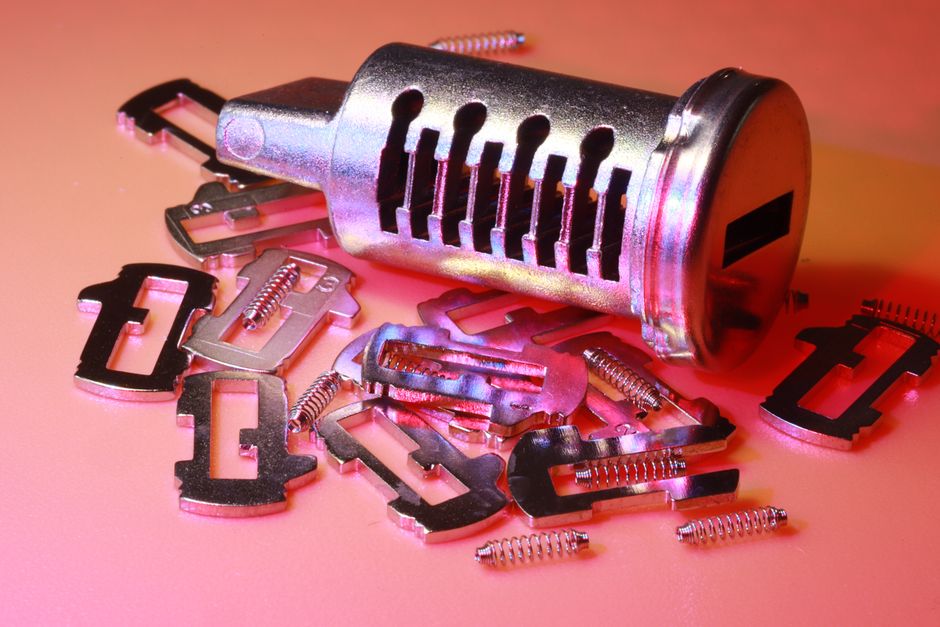
A cylinder lock uses spring-loaded pins that align at a shear line when the correct key is inserted. The plug sits inside the housing, and when all pins break at that shear line, the plug rotates and opens the lock.
Standard pin-tumbler cylinders have five or six pins. Each pin is split into two parts—a driver pin and a key pin. Without the key, the driver pins sit in the plug and the housing, preventing rotation. A lock pick lifts each key pin to the correct height so the driver pin rests entirely in the housing.
Understanding this mechanism matters because every unlocking method below works by manipulating those pins or by bypassing them entirely. Drilling is the only method that ignores the pins and physically destroys the mechanism.
What Tools Do You Need To Pick A Cylinder Lock?
Picking requires two basic tools: a tension wrench and a pick. The tension wrench applies rotational pressure to the plug. The pick lifts the pins individually.
For beginners, a standard hook pick and a flat tension wrench work on most pin-tumbler locks. A rake pick—like a snake or Bogota—can open simple locks faster by scrubbing all pins at once, but it takes practice to feel the pins.
You can improvise tools in an emergency. Paperclips bent into a pick and a small Allen wrench work on cheap or worn locks, but they rarely work on quality cylinders with security pins. If you are locked out of your own home, call a locksmith before you damage the lock with improvised tools.
Owning lock picks is legal in most US states, but some states restrict them. Check your local laws. Using them on locks you do not own is illegal in every state.
How Do You Pick A Cylinder Lock Step By Step?
Insert the tension wrench into the bottom of the keyway and apply light pressure in the direction the key turns. Too much tension binds the pins and makes picking impossible. Too little tension lets the pins fall back down.
Insert the pick and find the pins. You will feel them as distinct springy clicks as you move the pick along the top of the keyway. Work from the back to the front, lifting each pin until you feel it set—a slight give or click that feels different from the others.
As each pin sets, the plug gains a tiny amount of rotation. When the last pin sets, the plug turns freely and the lock opens.
Common mistakes include using too much tension, lifting pins too high, and rushing. A good picker spends more time feeling than moving. On a standard five-pin lock, a practiced hand opens it in under a minute. Beginners should expect to spend several minutes on their first successful pick.





What Are Bumping And Raking And Do They Work?
Bumping uses a specially cut key—called a bump key—and a mallet or screwdriver handle. You insert the bump key fully, apply light tension, and strike the key sharply. The impact transfers energy to the driver pins, which jump above the shear line momentarily. With tension applied, the plug rotates before the pins fall back.
Bumping works on many standard locks, especially older ones. It fails against locks with anti-bump features like spool pins or mushroom pins. It also requires the correct bump key blank for the lock brand.
Raking is a picking technique using a rake tool that scrubs all pins simultaneously. You insert the rake to the back of the keyway, apply tension, and pull the rake out in a sweeping motion. Repeat several times. Raking opens low-security locks quickly but rarely works on locks with security pins.
Both methods are faster than single-pin picking but less reliable. They work best on standard pin-tumbler cylinders without security features.
When Should You Bypass The Pins Instead Of Picking?
Some locks have weaknesses that let you skip pin manipulation entirely. A bypass tool attacks the locking mechanism rather than the pins.
Wafer locks and disc-detainer locks have different internal designs and respond to different tools. A wafer lock uses flat wafers instead of pins. A jiggler key or a wafer rake can open them quickly. Disc-detainer locks require specialized tools that rotate each disc to its correct position.
Many padlocks have a bypass in the shackle mechanism rather than the cylinder. Shimming the shackle with a thin piece of metal opens some padlocks without touching the cylinder at all.
Bypass techniques are lock-specific. They require knowing the lock model and its known vulnerabilities. For a homeowner facing a locked door, bypassing is rarely practical. For a locksmith, it is often the fastest professional approach.
How To Unlock A Cylinder Lock Picking To Drilling?
Drilling is the destructive final option. You drill when picking fails, when the lock is too damaged to pick, or when you lack the skill and time to pick it. Drilling permanently destroys the cylinder, so only do it if you are prepared to replace the entire lock.
The goal of drilling is to destroy the pins so the plug spins freely. Drill into the keyway at the pin locations, about three-quarters of an inch from the face of the cylinder. Use a 1/8-inch or 3/16-inch drill bit and drill straight through the pins.
After drilling through the pin stack, insert a flathead screwdriver into the keyway and turn. If the pins are destroyed, the plug rotates and the lock opens. If it does not turn, drill deeper or drill at a slightly different angle to catch any remaining pins.
Some locks have hardened steel pins or anti-drill plates that stop standard drill bits. You need a carbide or diamond-tipped bit for these. Even then, drilling may not work, and you may need to drill out the entire cylinder housing—a job best left to a professional.
Drilling works but destroys the lock. A new cylinder costs anywhere from $15 to $60 for standard residential locks. A locksmith visit costs more but saves the lock and your time.
What Should You Do If You Are Locked Out Right Now?
Assess the lock type first. Look at the keyway. Standard pin-tumbler locks have a small wavy keyway. Wafer locks have a simpler flat keyway. High-security locks have complex keyways with additional features.
If you have picking tools and experience, try single-pin picking or raking for five minutes. If you make no progress, stop. Continuing increases the risk of breaking a pick inside the lock.
Call a locksmith if you cannot pick the lock. A professional can open most residential locks in minutes without damage. The cost of a locksmith is usually less than the cost of replacing a drilled lock plus the time and frustration.
If you are locked out of your car, do not attempt to pick it. Modern car locks have additional security features, and airbags and side-impact beams make traditional entry methods risky. Call a professional auto locksmith.
If you are locked out due to an emergency—a child inside, a medical issue, or a gas leak—call 911 first. Emergency responders can force entry safely and quickly.
How Do You Prevent Lockouts And Future Lock Failures?
Keep a spare key with a trusted neighbor or family member. A magnetic hide-a-key box works for some people, but burglars know the common hiding spots. Choose an inconspicuous location or skip hiding keys entirely.
Lubricate your locks twice a year with a graphite powder or a PTFE-based lubricant. Do not use oil-based lubricants like WD-40, which attract dust and gum up the pins over time.
If your lock is stiff, difficult to turn, or your key sticks, address it early. These symptoms indicate worn pins or a misaligned cylinder. A locksmith can rekey or replace the cylinder before it fails completely.
High-security locks with anti-pick pins, anti-bump features, and drill-resistant plates make unauthorized entry significantly harder. They cost more but provide real protection against the techniques described above.
Frequently Asked Questions
Is picking a cylinder lock illegal?
Owning lock picks is legal in most states, but using them on locks you do not own is illegal everywhere.
How long does it take to pick a standard cylinder lock?
A practiced picker can open a standard five-pin lock in under a minute, but beginners should expect several minutes of practice before their first success.
Can any cylinder lock be picked?
No. High-security locks with security pins, sidebar mechanisms, or magnetic elements resist traditional picking techniques.
Does drilling a lock always work?
No. Anti-drill plates and hardened pins can stop standard drill bits, and drilling destroys the cylinder so replacement is required regardless.
