
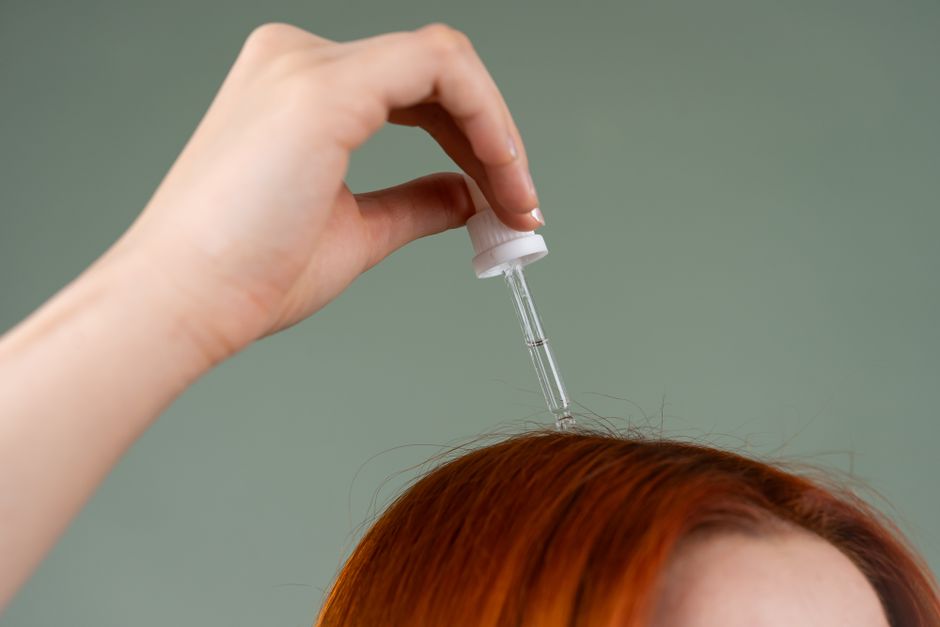
Scalp psoriasis is a chronic immune condition that speeds up skin cell turnover on the scalp, producing thick, silvery scales and raised red or pink patches that can itch intensely and sometimes bleed when scratched. It is not contagious, it is not caused by poor hygiene, and it cannot be cured. Treatment focuses on controlling flares, calming inflammation, and loosening scale so the skin can heal. Most people manage it with medicated shampoos, topical corticosteroids, and vitamin D analog products, sometimes combined with light therapy or systemic medication for stubborn cases.
What Actually Causes Scalp Psoriasis?
Scalp psoriasis happens when the immune system mistakenly attacks healthy skin cells, triggering them to multiply far faster than normal.
Normal skin cells mature and shed over roughly a month. In psoriasis, that cycle compresses to a few days. Cells pile up on the surface before they can shed, forming the thick silvery scale that defines the condition. The underlying mechanism involves T cells — a type of white blood cell — releasing inflammatory signals that keep the skin in a state of accelerated turnover.
Genetics play a real role. Psoriasis tends to run in families, and researchers have identified multiple gene variants associated with it. Having those genes does not guarantee you will develop psoriasis. Something has to trigger it — and triggers vary widely between people.
Common triggers include:
- Stress, both physical and emotional
- Skin injury, including scratching, sunburn, or irritation from harsh products
- Infections, particularly streptococcal infections
- Certain medications, including some beta-blockers, lithium, and antimalarial drugs
- Cold, dry weather
- Smoking and heavy alcohol use
Scalp psoriasis affects roughly half of all people who have psoriasis anywhere on their body. For some, the scalp is the only place it appears. That pattern is common enough that scalp-only psoriasis is recognized as a distinct clinical presentation.
How Do You Know It Is Scalp Psoriasis and Not Dandruff?
Scalp psoriasis and seborrheic dermatitis — the medical term for most dandruff — look similar at a glance but behave differently.
Seborrheic dermatitis produces greasy, yellowish flakes that brush off relatively easily. It tends to concentrate along the hairline, behind the ears, and in the eyebrows. Scalp psoriasis produces dry, silvery-white scale that sits on top of raised, inflamed patches. The scale is thicker and more adherent. Trying to remove it can cause pinpoint bleeding — a sign called the Auspitz sign.
Psoriasis patches also tend to extend beyond the hairline onto the forehead, neck, or behind the ears. Seborrheic dermatitis usually stays within oilier areas.
Here is where it gets tricky — the two conditions can occur together. Some people have what dermatologists call sebopsoriasis, a overlap condition with features of both. That is one reason self-diagnosis is unreliable and why a dermatologist’s evaluation matters.
Other conditions that can mimic scalp psoriasis include:
- Tinea capitis, a fungal infection of the scalp
- Lichen planus, an inflammatory condition affecting skin and mucous membranes
- Contact dermatitis from hair dyes, shampoos, or styling products
- Cutaneous lupus, which can cause scalp plaques and hair loss
A dermatologist can usually distinguish these by examining the scalp, sometimes with a dermoscope, and occasionally by taking a small skin sample. Getting the diagnosis right matters because treatments differ. A steroid that helps psoriasis will not cure a fungal infection.
How To Treat Scalp Psoriasis: First-Line Options That Work
Treatment for scalp psoriasis typically starts with topical medications applied directly to the scalp, because they deliver medication where it is needed with limited systemic exposure.
Medicated shampoos are often the first step. They are easy to use and can help loosen scale before other treatments are applied. Common active ingredients include:
- Coal tar — reduces scaling, itching, and inflammation. It can stain light-colored hair and has a strong odor, which limits use for some people.
- Salicylic acid — breaks down scale so other medications can penetrate. It does not treat inflammation itself.
- Ketoconazole — an antifungal that also has some anti-inflammatory effect. It is more specifically useful when seborrheic dermatitis is also present.
- Zinc pyrithione — slows skin cell turnover and has antimicrobial properties.
Topical corticosteroids are the most commonly prescribed treatment for scalp psoriasis. They reduce inflammation, itching, and scaling. Potent formulations are often needed because the scalp skin is thicker than skin elsewhere. They come as solutions, foams, gels, lotions, and shampoos. Foams and solutions are easier to apply through hair than creams or ointments.
Vitamin D analogs, such as calcipotriene, slow down skin cell growth and are a standard non-steroid option. They are often combined with a corticosteroid to improve results and reduce steroid exposure over time. A two-compound gel containing both calcipotriene and betamethasone is widely used and well studied.
How these treatments are used matters as much as which one is chosen. Applying medication directly to the scalp — not just the hair — and leaving it on for the recommended time improves results. Rotating products and taking breaks from steroids can reduce side effects with long-term use.




What If Topical Treatments Are Not Enough?
When topicals fail to control scalp psoriasis, or when the affected area is extensive, other approaches are considered.
Phototherapy uses ultraviolet light to slow skin cell turnover and reduce inflammation. For scalp psoriasis, a specialized comb or brush device can deliver UV light directly to the scalp while parting the hair. This is typically done in a dermatologist’s office. It requires multiple sessions per week and results build over time.
Systemic medications affect the whole body and are reserved for moderate to severe psoriasis, including cases that do not respond to topical treatment. Options include:
- Methotrexate — an immunosuppressant that has been used for psoriasis for decades
- Cyclosporine — another immunosuppressant, typically used for short periods
- Oral retinoids — derived from vitamin A, effective but with significant side effects, including birth defects
- Biologics — injectable or intravenous drugs that target specific immune pathways involved in psoriasis
Biologics have changed psoriasis treatment substantially over the past two decades. They target specific proteins involved in the inflammatory cascade, such as TNF-alpha or interleukin-17 and interleukin-23. Some biologics are approved specifically for scalp psoriasis or have shown strong scalp-clearing results in trials. They are generally used after other treatments have failed, and they require monitoring for infection risk and other side effects.
These are not casual options. They require blood tests, regular monitoring, and a clear conversation with a dermatologist about risks and benefits.
What Makes Scalp Psoriasis Harder to Treat Than Body Psoriasis?
The scalp presents specific challenges that make treatment more difficult than psoriasis on other parts of the body.
Hair gets in the way. Medications that work well on smooth skin — thick creams and ointments — are impractical to apply through hair. They leave hair greasy and are hard to distribute evenly. That is why solutions, foams, and gels are preferred for the scalp.
The scalp also has a dense blood supply and a thick layer of skin, which can affect how much medication is absorbed and how quickly. And because the scalp is highly visible, the cosmetic burden of psoriasis there is often significant. Scale on clothing, visible flakes, and itching in public can affect quality of life in ways that are not captured by simply measuring the size of the affected area.
Scratching is another problem. Scalp psoriasis itches, and scratching damages the skin barrier, which can trigger new lesions — a phenomenon called the Koebner response. Breaking the itch-scratch cycle is part of treatment, not separate from it.
Can Scalp Psoriasis Be Prevented?
Scalp psoriasis cannot be prevented because the underlying immune dysfunction is not something you can eliminate through lifestyle alone.
What you can do is reduce the frequency and severity of flares by managing known triggers. That is not the same as prevention, and it is worth being clear about the difference.
Steps that may help reduce flares include:
- Managing stress through techniques that work for you — the evidence for stress reduction specifically reducing psoriasis flares is limited but plausible given the known stress-psoriasis connection
- Avoiding scratching, picking, and harsh scalp treatments
- Using gentle, fragrance-free hair products
- Limiting alcohol and not smoking
- Keeping the scalp moisturized — dry, cracked skin is more easily irritated
- Getting consistent treatment rather than stopping when symptoms improve
Stopping treatment when the scalp looks clear is one of the most common reasons psoriasis returns. Psoriasis is a chronic condition. Even when the skin looks normal, the underlying immune activity does not disappear. Maintenance treatment — sometimes with less frequent application — is often part of long-term management.
When Should You See a Dermatologist?
See a dermatologist if you have not been diagnosed and your scalp symptoms are persistent, worsening, or not responding to over-the-counter dandruff shampoos.
Also seek evaluation if you experience:
- Joint pain, swelling, or stiffness alongside scalp symptoms — this may indicate psoriatic arthritis, which affects a significant proportion of people with psoriasis and needs separate treatment
- Sudden hair loss in affected areas
- Signs of infection, such as pus, warmth, or fever
- Widespread skin involvement beyond the scalp
- Severe itching that disrupts sleep or daily life
Psoriatic arthritis is worth knowing about because it can cause permanent joint damage if untreated. It does not always appear at the same time as skin symptoms. Some people develop joint symptoms years before or after skin plaques appear. If you have psoriasis and notice joint pain, tell your doctor.
Frequently Asked Questions
Can scalp psoriasis go away on its own?
Scalp psoriasis can improve temporarily without treatment, but it does not go away permanently because the underlying immune condition is chronic. Most people need ongoing management to control flares.
Is scalp psoriasis contagious?
No, scalp psoriasis is not contagious and cannot be spread to other people through contact, sharing hairbrushes, or any other means. It is an immune-mediated condition, not an infection.
What is the best shampoo for scalp psoriasis?
There is no single best shampoo — medicated shampoos containing coal tar, salicylic acid, ketoconazole, or zinc pyrithione are commonly used, and which works best depends on your specific symptoms. Prescription-strength options are available if over-the-counter products are not effective.
Can scalp psoriasis cause hair loss?
Scalp psoriasis can cause temporary hair loss in affected areas, usually due to intense scratching or inflammation rather than the condition itself destroying hair follicles. Hair typically regrows once the flare is controlled, though severe or long-standing inflammation can occasionally lead to permanent loss.
