
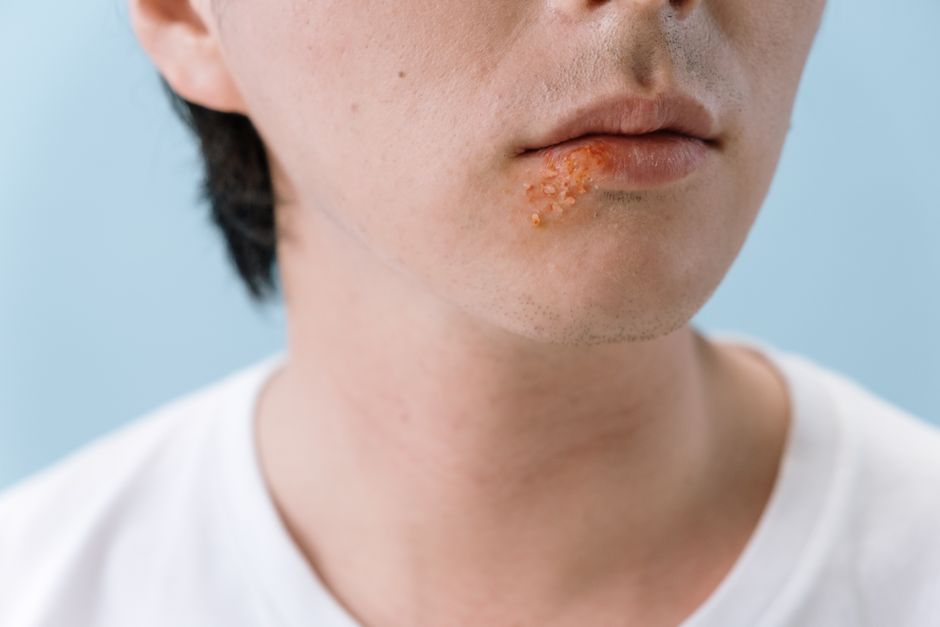
A cold sore on your lip is caused by the herpes simplex virus type 1 (HSV-1). You cannot cure the virus, but you can treat the outbreak. The most effective approach is to start antiviral medication within the first 24 to 48 hours of symptoms, which can shorten the healing time from roughly two weeks to about a week. Over-the-counter creams and home care can also ease pain and prevent the sore from worsening, but they do not kill the virus as effectively as prescription antivirals.
What Exactly Is a Cold Sore and Why Do You Get Them?
A cold sore is a cluster of small, fluid-filled blisters that usually forms on or around the lips. The herpes simplex virus type 1 causes most of them. You get the virus through direct skin contact, often during childhood from a kiss or shared utensil.
Once you have the virus, it stays in your body for life. It hides in nerve cells near your face. For many people, the virus never causes symptoms again. For others, it reactivates periodically, traveling back to the skin and creating a new sore.
That reactivation is not random. Common triggers include stress, illness, fatigue, sun exposure, and hormonal changes. A cold, the flu, or even intense physical exhaustion can bring one on. Knowing your personal triggers can help you predict and sometimes prevent outbreaks.
How To Treat A Cold Sore On The Lips: The First 48 Hours Matter Most
Time is the single most important factor in treating a cold sore. The best window to act is the prodrome phase—the day before the blister appears. You may feel tingling, itching, or burning in a specific spot on your lip. That sensation is the virus reactivating.
If you have a prescription for an antiviral like valacyclovir (Valtrex) or acyclovir (Zovirax), start it immediately. These medications work by stopping the virus from replicating. Taken early, they can prevent the blister from fully forming or reduce its size and duration significantly.
Without a prescription, you still have options. Over-the-counter creams containing docosanol (Abreva) are FDA-approved to shorten healing time. Docosanol works by preventing the virus from fusing with your cell membrane. It is most effective when applied at the first sign of tingling, before the blister appears.
Do not pop or pick at the blister. The fluid inside is highly contagious. Breaking the blister also increases your risk of a bacterial infection and can leave a scar.
What Actually Works: A Breakdown of Cold Sore Treatments
Not all cold sore treatments are equal. Some have strong clinical evidence behind them. Others are popular but lack proof. Here is what the research shows.
Prescription antivirals are the gold standard. Valacyclovir and acyclovir are well-studied and consistently shown to reduce healing time by one to two days when taken early. They also reduce pain and viral shedding. A typical course lasts one to five days depending on the medication and dose.
Docosanol (Abreva) is the only over-the-counter topical treatment with FDA approval for cold sores. Studies show it shortens healing time by about half a day to a full day. It is safe and well-tolerated, making it a reasonable choice for mild or infrequent outbreaks.
Topical antivirals like acyclovir cream and penciclovir cream (Denavir) are available by prescription. They work, but they are generally less effective than oral antivirals because they do not reach the virus deep in the nerve cells.
Lysine supplements are popular, but the evidence is mixed. Some small studies suggest high doses of lysine may reduce outbreak frequency, while others show no benefit. The research is not strong enough to recommend lysine as a reliable treatment.
Essential oils like tea tree oil and peppermint oil are often promoted online. No large human trials have confirmed they treat cold sores. Some may irritate the skin and delay healing. Avoid them on an open blister.
Ice and cold compresses do not kill the virus, but they can numb the area and reduce swelling. They are safe and can make you more comfortable while the antiviral does its work.




Home Care: What to Do While the Sore Heals
While medications attack the virus, good home care helps the sore heal cleanly and prevents complications.
Keep the area clean. Wash your hands before and after touching your lip. Use a gentle cleanser and pat the area dry. Do not rub.
Apply a cold compress for 10 to 15 minutes several times a day. This reduces pain, swelling, and redness.
Keep the sore moisturized. A dry, cracked cold sore is more painful and more likely to bleed. A plain lip balm or petroleum jelly can protect the area and prevent the blister from cracking open. Some dermatologists recommend applying it after your antiviral cream, not instead of it.
Avoid acidic and salty foods. Citrus fruits, tomatoes, and salty snacks can sting an open cold sore and make eating uncomfortable. Cool, bland foods like yogurt and applesauce are easier on the area.
Do not share cups, utensils, towels, or lip balm while you have an active sore. The virus spreads easily through saliva and skin contact.
How Long Does a Cold Sore Last and What Are the Stages?
A cold sore follows a predictable pattern. Knowing the stages helps you identify where you are in the process and what to expect next.
Stage 1: Tingling (Days 0–1). You feel itching, burning, or tingling. No visible sore yet. This is when treatment is most effective.
Stage 2: Blistering (Days 1–2). Small fluid-filled blisters appear. They may be red and swollen.
Stage 3: Ulceration (Days 2–4). The blisters burst, leaving a shallow open sore. This is the most painful and most contagious stage.
Stage 4: Crusting (Days 4–8). A yellow or brown crust forms over the sore. The crust may crack and bleed.
Stage 5: Healing (Days 8–12). The crust falls off. A pink area may remain for a few more days before returning to normal.
Without treatment, a cold sore typically heals in 8 to 12 days. With early antiviral treatment, that can shorten to about 6 to 7 days. Recurrent outbreaks tend to follow the same timeline each time.
When Should You See a Doctor for a Cold Sore?
Most cold sores do not require a doctor visit. They heal on their own or with over-the-counter treatment. But some situations warrant medical attention.
See a doctor if the cold sore does not heal within two weeks. A sore that lasts longer could be something else, or it could be a sign of a weakened immune system.
Seek care if the sore spreads to your eyes. Herpes keratitis—an eye infection caused by HSV-1—is a medical emergency. It can cause corneal scarring and vision loss if not treated promptly.
People with weakened immune systems—from HIV, chemotherapy, or organ transplantation—should call their doctor at the first sign of a cold sore. They are at higher risk of severe or widespread infection.
If you get frequent outbreaks—six or more per year—ask your doctor about suppressive therapy. Daily low-dose antivirals can reduce outbreak frequency by 70 to 80 percent. This is a well-established treatment approach for recurrent herpes infections.
Cold sores during pregnancy are generally not dangerous to the baby, but you should tell your obstetrician if you have an outbreak near your due date. The bigger concern is a first-time genital herpes infection late in pregnancy, which can be transmitted to the baby during delivery.
Can You Prevent Cold Sores From Coming Back?
You cannot eliminate the virus from your body, but you can reduce how often outbreaks occur.
Identify your triggers and manage them. If sun exposure brings on outbreaks, use a lip balm with SPF 30 or higher every day. If stress is your trigger, prioritize sleep and find a stress-reduction technique that works for you.
If you feel the tingling sensation that precedes an outbreak, start treatment immediately. Early intervention can stop the sore from developing or make it milder.
For people with frequent outbreaks, daily suppressive antiviral therapy is the most effective prevention. It does not cure the virus, but it keeps it dormant and significantly reduces both outbreaks and viral shedding.
One important note: the virus can shed even when you have no visible sore. This means you can potentially transmit the virus to others without knowing it. The risk is much lower than during an active outbreak, but it is not zero. Avoid intimate contact during an active sore, and be aware that transmission can occur between outbreaks.
Common Myths About Cold Sores You Should Ignore
Cold sores are common, and myths about them are everywhere. Here are the ones you can safely ignore.
Myth: Cold sores are caused by a cold. The name is misleading. The common cold virus is different from HSV-1. A cold can trigger an outbreak because it stresses your immune system, but it does not cause the sore itself.
Myth: You can only get a cold sore from someone who has one. The virus can shed from the skin even when no sore is visible. You can catch it from someone who has no idea they are carrying it.
Myth: Toothpaste dries out cold sores. This is a popular home remedy, but no evidence supports it. Toothpaste can irritate the skin and delay healing. Use a proper antiviral treatment instead.
Myth: Once the scab falls off, you are no longer contagious. The skin may still shed the virus for a few days after the scab is gone. Wait until the area is fully healed and the pink skin has returned to normal before resuming close contact.
Myth: Cold sores only affect the lips. HSV-1 can also cause sores on the nose, chin, cheeks, and inside the mouth. It can also be transmitted to the genitals through oral contact.
Frequently Asked Questions
What is the fastest way to get rid of a cold sore?
Prescription antiviral medication taken within the first 48 hours of symptoms is the fastest and most effective treatment. Starting it at the first sign of tingling can prevent the blister from fully forming.
Can I pop a cold sore blister?
No. Popping the blister spreads the virus to other areas and increases your risk of bacterial infection and scarring. Let it break naturally or crust over on its own.
Are cold sores contagious even after the scab falls off?
Yes, the skin can still shed the virus for a few days after the scab is gone. Wait until the area is completely healed before sharing utensils or having close contact.
Does Abreva actually work for cold sores?
Yes, docosanol (Abreva) is FDA-approved and clinically shown to shorten healing time. It works best when applied at the first sign of tingling, before the blister appears.
