
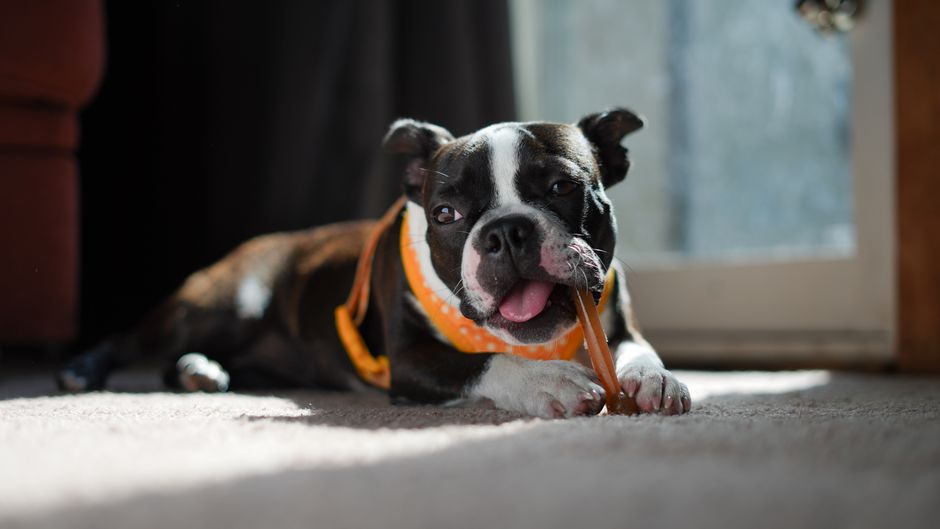
Puppy impetigo is a bacterial skin infection that causes small pus-filled bumps, usually on the belly, groin, or armpits of young dogs. Most mild cases can be managed at home with gentle cleansing and careful monitoring, but a veterinarian should confirm the diagnosis and decide whether antibiotics are needed. Impetigo is not something to treat blindly with human creams or leftover medications.
What Is Puppy Impetigo?
Puppy impetigo is a superficial bacterial infection of the skin. It sits in the outer layers of the skin rather than deep in the tissue, which is why it often looks like a scattered rash of small pimples rather than a deep, painful wound.
The condition is sometimes called puppy pyoderma. It is most common in puppies under a year old, and it tends to appear in areas with thinner hair and more skin-to-skin contact — the belly, the groin, the armpits, and sometimes the chin. The lesions are typically small pustules (pus-filled bumps) that may rupture and leave tiny crusts or circular scaling.
It helps to understand why young puppies are prone to this. Their immune systems are still developing, their skin barrier is relatively thin, and they spend a lot of time lying on surfaces that can harbor bacteria. Warm, moist skin folds create conditions where normal skin bacteria — often Staphylococcus species — can overgrow and cause infection.
Impetigo is generally not considered contagious to humans in the way some other skin conditions are. The bacteria involved are common skin organisms, but routine handwashing after handling a puppy with any skin infection is still sensible.
How Do You Tell Impetigo Apart From Other Puppy Skin Problems?
You often cannot tell for certain without a veterinarian, and that matters because several puppy skin conditions look similar but need different treatment. A visual guess made at home is unreliable.
Impetigo pustules are usually small, superficial, and non-itchy or only mildly itchy. They tend to cluster on the hairless parts of the belly and groin. They are not typically painful when touched gently, though the skin can be tender.
Other conditions that can look similar include:
- Puppy strangles — a deeper, more serious condition that causes swollen lymph nodes, fever, and pustules, often on the face and head. This needs veterinary care promptly.
- Demodex mites — can cause patchy hair loss and redness, usually not pustules in the same pattern.
- Ringworm — a fungal infection that causes circular scaly patches, not typically pus-filled bumps.
- Allergic skin reactions — often itchier and more widespread.
- Contact irritation — from bedding, grass, or grooming products, usually without pus.
Because these conditions can overlap in appearance, a veterinarian’s examination — and sometimes a skin swab or scrape — is the reliable way to confirm what you are dealing with. If the puppy has fever, is lethargic, is not eating, or has swelling of the face or lymph nodes, that is not a home-care situation. Seek veterinary care promptly.
How To Treat Puppy Impetigo At Home Safely
Home care for mild, veterinarian-confirmed impetigo focuses on keeping the skin clean, dry, and protected while the puppy’s immune system and any prescribed treatment do their work. The goal is to avoid making the skin worse and to avoid spreading bacteria.
Gentle cleansing
Wipe the affected areas gently with a clean, damp cloth or a mild pet-safe cleanser recommended by your veterinarian. Do not scrub. Scrubbing ruptures pustules and can spread bacteria and cause more irritation. Pat the skin dry afterward — moisture encourages bacterial growth.
Keep the area dry and clean
Change bedding frequently and keep it clean and dry. Avoid letting the puppy lie in damp grass or on wet surfaces for long periods. A dry environment supports the skin barrier.
Prevent licking and scratching
Puppies lick and scratch. An Elizabethan collar (cone) can help prevent a puppy from licking or chewing at lesions, which can worsen infection and delay healing. Ask your veterinarian whether a cone is appropriate for your puppy’s situation.
Follow prescribed treatment exactly
If your veterinarian prescribes an antibiotic — topical or oral — give it exactly as directed and complete the full course even if the skin looks better. Stopping early is a common reason infections return and a factor in antibiotic resistance. Never use leftover antibiotics or human antibiotic creams on a puppy without veterinary guidance. Some human products are not appropriate for dogs, and dosing differs.
Avoid harsh products
Do not use human shampoos, alcohol, hydrogen peroxide, or strong antiseptics on a puppy’s skin unless a veterinarian specifically recommends them. These can damage the skin barrier and irritate already inflamed skin.




When Should You See a Vet Instead of Treating at Home?
See a veterinarian if the lesions are spreading, if new pustules keep appearing, if the skin looks deeply red or swollen, or if the puppy seems uncomfortable. These signs suggest the infection may be deeper or not responding to home care.
Also seek care promptly if the puppy has any of the following:
- Fever or feeling warm to the touch
- Lethargy or reduced appetite
- Swelling of the face, muzzle, or lymph nodes
- Pustules that are large, deep, or painful
- Lesions on the face or head rather than the belly
- No improvement after a few days of gentle home care
Puppies can become systemically unwell quickly. A young puppy with a skin infection and any sign of illness should be evaluated rather than watched at home.
What Causes Puppy Impetigo and Can You Prevent It?
Impetigo usually develops when normal skin bacteria overgrow on skin that is already compromised — by moisture, friction, minor abrasions, or an immature immune system. It is not typically caused by poor hygiene alone, though a dirty, damp environment makes overgrowth more likely.
Prevention focuses on supporting skin health:
- Keep bedding clean and dry, and wash it regularly
- Dry the puppy gently after baths or time outdoors in wet conditions
- Avoid harsh grooming products and excessive bathing, which can strip the skin’s natural barrier
- Keep the puppy’s environment clean and free of irritants
- Ensure good nutrition and routine veterinary checkups as the puppy grows
Some puppies are simply more prone to skin infections during their first year. If impetigo keeps returning, that is worth discussing with your veterinarian, because recurrent skin infections can sometimes point to an underlying issue.
What Is the Outlook for Puppy Impetigo?
Most cases of superficial puppy impetigo resolve well with appropriate care, and many mild cases clear on their own as the puppy’s immune system matures. The condition is generally not dangerous when it stays superficial and is managed properly.
The main risks are that it spreads, deepens, or returns — and that it gets mistreated with the wrong products. Following veterinary guidance and completing any prescribed course of treatment gives the best chance of a clean recovery. If you are unsure whether what you are seeing is impetigo, get it checked. A confirmed diagnosis is the safest starting point for any home care.
Frequently Asked Questions
Can puppy impetigo go away on its own?
Mild superficial cases sometimes clear without antibiotics as the puppy’s immune system matures, but a veterinarian should confirm the diagnosis first. Do not assume it will resolve on its own if lesions are spreading or the puppy seems unwell.
Is puppy impetigo contagious to other dogs or people?
It is generally not considered highly contagious, but the bacteria involved are common skin organisms and can spread between dogs through close contact. Routine handwashing and keeping affected areas clean are sensible precautions.
Can I use human antibiotic cream on my puppy’s impetigo?
No, not without veterinary guidance, because some human products are not appropriate for dogs and dosing differs. Use only treatments your veterinarian recommends for your puppy.
How long does puppy impetigo take to heal?
Timelines vary with severity and treatment, and no single figure applies to every puppy. Ask your veterinarian what to expect for your puppy’s specific case and when to return if it is not improving.
