
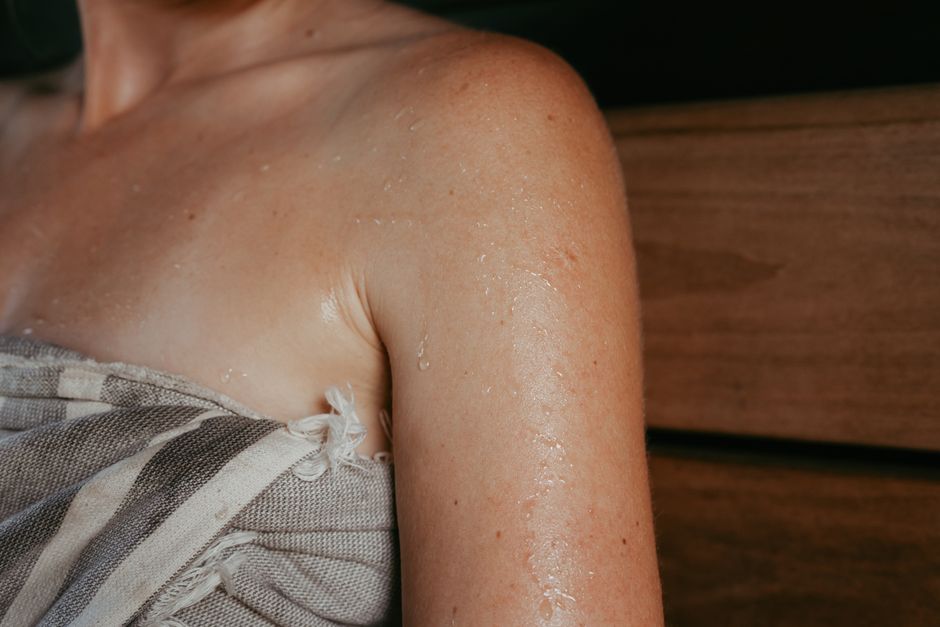
Heat rash happens when sweat gets trapped under your skin and blocks your sweat ducts. It usually clears up on its own within a few days once you cool down and keep the area dry. The most effective treatment is simple: move to a cooler environment, remove tight clothing, and let the affected skin air out. For most people, that is all it takes.
What Does Heat Rash Look Like?
Heat rash appears as tiny red bumps or small clear blisters. It can look like a cluster of pimples or a patch of rough, prickly skin. The medical name is miliaria, and it shows up most often on the neck, chest, back, and in skin folds like the armpits or groin.
There are a few types of heat rash. The mildest form affects the top layer of skin and causes clear, fluid-filled blisters that break easily. The more common form goes a little deeper and produces red bumps that can sting or feel prickly. A deeper form is less common and creates firm, flesh-colored bumps. All forms happen for the same reason: blocked sweat ducts.
Sweat is your body’s cooling system. When a duct gets blocked, sweat backs up under the skin. The trapped sweat irritates the skin and causes the rash. Babies get it often because their sweat ducts are still developing. Adults get it too, especially in hot, humid weather or when they sweat heavily.
How To Treat Heat Rash: Immediate Steps
The first step is to get out of the heat. Move to an air-conditioned room or a shaded, breezy spot. Remove any clothing that is tight or made of synthetic fabric. Let the rash breathe.
Keep the skin dry. Pat the area with a clean towel after sweating. Do not rub — rubbing irritates the skin further. You can use a fan to circulate air over the rash. A cool shower or a cool compress can help bring down skin temperature and ease the prickly feeling.
Let the rash air dry after showering. Do not apply heavy creams, ointments, or lotions. These can block sweat ducts further and make the rash worse. If you need something, a light dusting of powder can help absorb moisture, but skip it if the rash is already weeping or blistered.
What To Avoid When You Have Heat Rash
Do not use thick ointments like petroleum jelly or heavy body butters. They trap heat and moisture, which is the opposite of what the skin needs. Skip greasy sunscreens and switch to a lightweight, water-based formula if you need sun protection.
Avoid tight clothing and synthetic fabrics like polyester that trap sweat against the skin. Wear loose cotton or moisture-wicking fabrics instead. Cotton allows air to circulate and helps sweat evaporate.
Do not scratch. Scratching can break the skin and lead to infection. If the rash itches intensely, that is a sign you may need medical advice rather than home treatment alone.
Do not pop the blisters. The blisters are tiny pockets of trapped sweat. Popping them opens the skin to bacteria and increases infection risk. They will resolve on their own as the sweat ducts clear.




When Home Treatment Is Not Enough
Most heat rash resolves within 2 to 3 days of cooling down. If the rash does not improve after a few days, or if it spreads, you may need medical attention. A healthcare provider can prescribe a mild steroid cream to reduce inflammation or an antibiotic if the rash has become infected.
Signs of infection include increased redness, warmth, swelling, pain, or pus. A fever with a rash is another reason to see a doctor. These symptoms suggest the blocked ducts have become a bacterial infection, which requires prescription treatment.
Some research suggests that a topical steroid can help reduce the prickling sensation and speed healing. However, over-the-counter hydrocortisone cream is not appropriate for everyone. Do not use it on broken skin, on large areas of the body, or on children without a doctor’s guidance.
How To Prevent Heat Rash From Returning
Prevention focuses on keeping sweat ducts clear and skin cool. In hot weather, take frequent breaks in air conditioning or shade. Shower after heavy sweating to wash away sweat and oil that can clog ducts.
Wear loose, breathable clothing. Choose cotton or technical fabrics designed to wick moisture away from the skin. Change out of sweaty clothes promptly, especially after exercise.
Stay hydrated. Drinking water helps your body regulate temperature and sweat more efficiently. When your body is dehydrated, sweat becomes more concentrated, which may increase the chance of blocked ducts.
In humid environments, air conditioning is the most effective prevention tool. Humidity keeps sweat from evaporating, which increases the chance of blocked ducts. A dehumidifier can help indoors.
Heat Rash in Babies and Young Children
Babies get heat rash frequently because their sweat glands are not fully mature. It often appears on the neck, shoulders, and chest, and in the diaper area. The treatment is the same as for adults: cool the skin and keep it dry.
Dress babies in light layers and avoid overdressing. A common mistake is wrapping a baby too warmly in hot weather. If the back of the neck feels hot or sweaty, remove a layer.
Use cool compresses on the rash and allow the skin to air dry. Do not use powders on babies. Inhaled powder can irritate a baby’s lungs. If the rash does not improve within a few days, or if your baby develops a fever, contact your pediatrician.
When Heat Rash Is a Sign of Something More Serious
Heat rash itself is not dangerous. But it can be a warning sign that your body is struggling to cool down. If you have heat rash along with heavy sweating, weakness, dizziness, nausea, or a rapid pulse, you may be experiencing heat exhaustion.
Heat exhaustion is a medical condition that requires immediate attention. Move to a cool place, loosen clothing, sip water, and seek medical care if symptoms do not improve quickly. Heat stroke is a medical emergency. Symptoms include a body temperature above 103°F, confusion, and hot, dry skin. Call emergency services immediately if you suspect heat stroke.
Heat rash is common in people who exercise in hot weather, work outdoors, or live in climates without air conditioning. If you develop heat rash repeatedly in the same spot, or if it happens in cool weather, talk to a doctor. There may be an underlying condition affecting your sweat glands.
Frequently Asked Questions
How long does heat rash last?
Most heat rash clears up within 2 to 3 days once you cool down and keep the area dry. If it lasts longer than a few days or worsens, see a healthcare provider.
Is it safe to put lotion on heat rash?
No, heavy lotions and creams can block sweat ducts further and make the rash worse. Use a cool compress or let the skin air dry instead.
Can heat rash turn into an infection?
Yes, scratching or popping blisters can introduce bacteria and cause an infection. Seek medical care if the rash becomes red, swollen, painful, or starts draining pus.
Does heat rash spread from person to person?
No, heat rash is not contagious. It is caused by blocked sweat ducts, not by a virus or bacteria, so it cannot spread to other people.
