
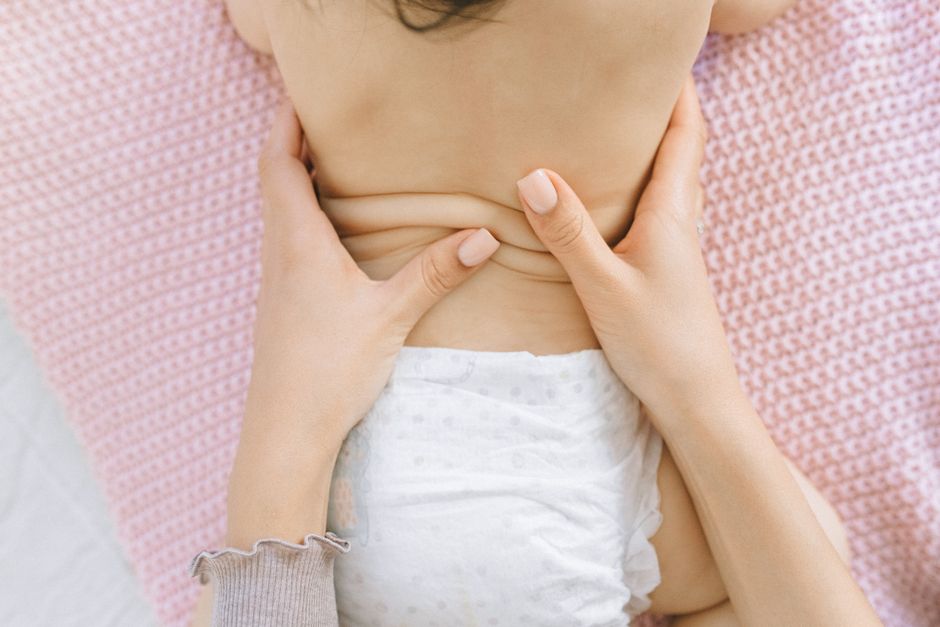
Diaper rash hurts because the skin’s outer barrier is damaged. Wiping that skin — even gently — can feel like sandpaper on a scrape. The way to clean a baby with diaper rash without causing pain is to stop wiping the rash itself, use only water or a soft disposable cloth with no rubbing, and pat or rinse instead of stroking.
Most parents reach for a wipe and a firm hand out of habit. With diaper rash, that habit is the problem. The goal is to remove stool and urine while touching the inflamed skin as little as possible. Everything below explains how to do that, why it works, and when a rash needs a doctor.
Why Does Wiping A Diaper Rash Hurt So Much?
Diaper rash is an injury to the top layer of skin. The outer layer, called the stratum corneum, normally holds in water and blocks irritants. When it breaks down, the nerve endings underneath are exposed. That is why a wipe that feels fine on normal skin can make a baby cry out during a change.
The damage usually comes from prolonged contact with urine and stool. Urine raises skin pH, and stool contains enzymes that break down the skin’s proteins and fats. A wet, dirty diaper left on too long sets up the irritation. Friction from the diaper and from wiping adds to it. Some babies also develop a yeast rash, which looks like red, raised, sharply bordered patches with smaller spots around the edges — but only a clinician can confirm that.
The practical takeaway is simple. The skin is already wounded. Wiping adds friction and chemicals to wounded skin. Reduce both, and the change gets easier for everyone.
How To Wipe A Baby With Diaper Rash Without Pain
The least painful method is to stop wiping the rash and rinse it instead. You can do this at the sink, in the tub, or with a squeeze bottle over the changing pad. Warm water runs over the skin and carries stool away without any rubbing.
If you must use a cloth, use a soft one and dab. Never stroke back and forth across the rash. Pat from clean skin toward the dirty area, not the other way around, so you are not dragging stool into broken skin.
Here is a step-by-step approach that works for most babies:
- Lay the baby on a clean, absorbent pad. Have everything within reach before you start, so you are not leaving the baby alone mid-change.
- Undo the diaper and fold the front down. If there is a lot of stool, use the front of the diaper to lift most of it away without touching skin.
- Rinse with warm water. A peri bottle, a clean squeeze bottle, or a gentle pour from a cup all work. Let gravity do the cleaning.
- For sticky stool, use a soft cloth or cotton ball soaked in water and dab gently. Do not scrub.
- Pat dry with a soft cloth, or let the area air-dry for a minute. Do not rub.
- Apply a thick barrier cream or ointment. You do not need to remove all of it at the next change — wiping it off irritates skin. Just clean what is soiled and add more on top.
Warm water is the key detail. Cold water is uncomfortable and can startle a baby. Test it on your wrist first, the same way you would test a bath.
Are Baby Wipes Safe To Use On A Diaper Rash?
Ordinary baby wipes are often too harsh for broken skin. Many contain alcohol, fragrance, or preservatives that sting. Even “sensitive” wipes can cause pain when the skin barrier is damaged.
If you want to use wipes, choose ones labeled fragrance-free and alcohol-free, and look for a short ingredient list. Some parents find that water-based wipes with very few additives are gentler. But during an active, painful rash, plain water is the safest choice. There is no clinical evidence that any specific brand of wipe heals a rash faster than water.
Warm water and a soft cloth cost almost nothing and cause the least irritation. Save the wipes for when you are out of the house and cannot rinse.
What Barrier Cream Should You Use — And How Much?
A barrier cream or ointment is the single most useful product during a diaper rash. It forms a physical layer between the skin and urine and stool. The important part is that it must be thick. A thin smear does nothing.
Products built on petrolatum or zinc oxide are the standard choices. Zinc oxide creams are widely used and are the ones most clinicians reach for first. You want a layer thick enough that you can still see it on the skin — like frosting on a cake. Apply it at every change.
One common mistake is trying to scrub the old cream off at each change. Do not. Removing it means rubbing already-irritated skin. Just wipe away what is dirty, and add a fresh layer on top. The old cream will come off gradually.
If the rash does not improve after a few days of careful barrier care, or if it looks like a yeast infection, a clinician may recommend a specific medicated cream. Do not use steroid creams on a diaper rash unless a doctor tells you to, and never use them on a rash that might be fungal — steroids can make a fungal rash worse.
How Often Should You Change A Diaper With A Rash?
Change more often than usual. The longer urine and stool sit against the skin, the more the rash is irritated. Check the diaper frequently and change as soon as it is wet or dirty.
Some clinicians suggest checking every couple of hours during the day, and always right after a bowel movement. Nighttime is trickier, because you may not want to wake a sleeping baby. If the rash is bad, a nighttime change may be worth it. If it is mild, a thick barrier cream before bed can help protect the skin until morning.
Air time helps too. Letting the baby go without a diaper for short stretches, on a towel or waterproof pad, gives the skin a chance to dry. This is one of the few things that reliably helps, and it costs nothing.
When Should You Call A Doctor About A Diaper Rash?
Most diaper rashes clear up within a few days with gentle care. Call a doctor if the rash is severe, is spreading, or has blisters, pus, or open sores. Also call if the baby has a fever, seems to be in a lot of pain, or is not feeding well.
A rash that does not improve after several days of consistent barrier care may need a different treatment. Rashes caused by yeast, bacteria, or an allergy can look similar to ordinary irritation but need different care. Only a clinician can tell them apart.
Trust your instincts. If something seems wrong, or if the rash keeps coming back, get it checked. A quick visit can save a lot of guessing.
Frequently Asked Questions
Can I use regular baby wipes on a diaper rash?
It is better to avoid them during an active rash, because many contain alcohol or fragrance that can sting broken skin. Use plain warm water and a soft cloth instead, and save wipes for when you are away from home.
How do I clean a diaper rash without rubbing?
Rinse the area with warm water using a squeeze bottle or a gentle pour, then pat dry. If you must use a cloth, dab it lightly instead of stroking across the rash.
Should I remove all the diaper cream at each change?
No. Wiping off every bit of cream means rubbing irritated skin. Clean away what is soiled and apply a fresh thick layer on top.
How long does a diaper rash usually last?
Most mild rashes improve within a few days with frequent changes and a thick barrier cream. If it does not get better after several days, or it spreads or blisters, see a doctor.
