
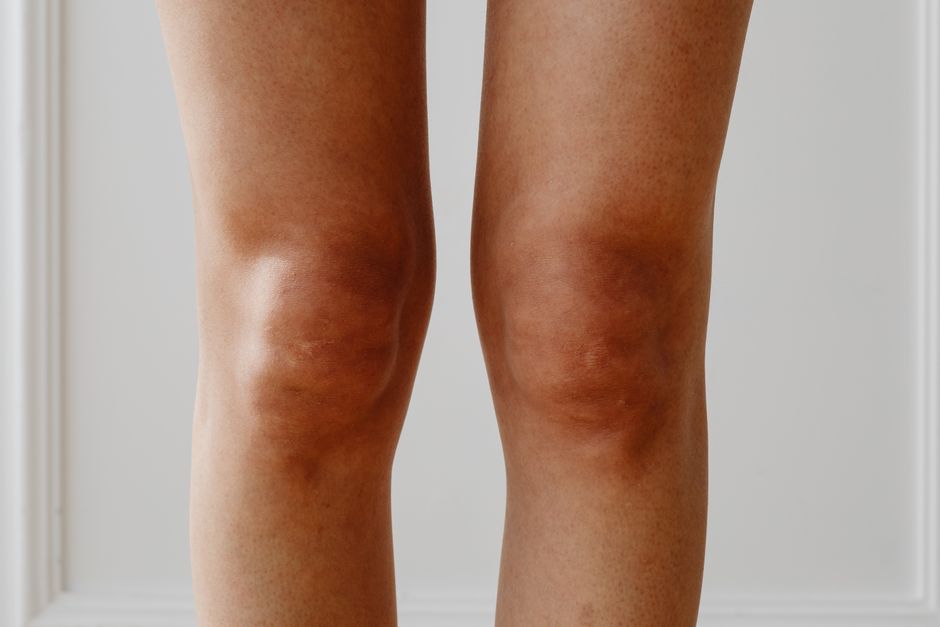
Your kneecap is the small, round bone sitting at the front of your knee. Doctors call it the patella. It is the largest sesamoid bone in the human body — a bone embedded within a tendon rather than connected to other bones by joints at both ends. It protects the knee joint and acts as a lever that makes your thigh muscles more effective when you straighten your leg.
What Are Knee Caps? Key Information
The kneecap is a flat, triangular bone that develops inside the quadriceps tendon, the strong band of tissue connecting your thigh muscles to your shin. It sits in a groove at the end of the thigh bone called the trochlear groove, and it glides up and down within that groove as you bend and straighten your knee.
Three things make the kneecap matter:
- Protection. It shields the front of the knee joint from direct impact.
- Leverage. It increases the mechanical advantage of the quadriceps muscles, which means your thigh can generate more force to straighten the leg.
- Tracking. It must slide smoothly in its groove. When it does not, pain and instability often follow.
People sometimes use “kneecap” loosely to mean the whole front of the knee. That is not accurate. The kneecap is one specific bone. The pain, swelling, or stiffness around it can come from several different structures — the tendon, the cartilage behind the bone, the bursa, or the joint itself.
What Is the Kneecap Made Of?
The kneecap is bone covered by the thickest layer of cartilage in the human body. That cartilage, on the back surface that faces the joint, can be several times thicker than the cartilage lining other joints. It has to be — the forces passing through the kneecap during activities like stair climbing or squatting are substantial.
Like other bones, the kneecap has an outer shell of hard cortical bone and an inner core of spongy trabecular bone. It is not a solid lump. It has a blood supply and can heal from fractures, though healing depends heavily on whether the broken pieces stay in position.
The cartilage has no blood supply of its own. It gets nutrients from the synovial fluid that bathes the joint. This is one reason cartilage injuries in the knee are slow to heal and often do not heal completely.
What Does the Kneecap Actually Do?
The kneecap does two main jobs, and both are mechanical.
First, it protects. The front of the knee is exposed. Without the kneecap, a direct blow to that area would land on the joint surface and the soft tissues behind it. The bone acts as a shield.
Second, it improves how your thigh muscles work. The quadriceps tendon attaches to the top of the kneecap, and the patellar tendon connects the bottom of the kneecap to the shin bone. This arrangement moves the tendon line away from the center of the knee joint, which increases the angle of pull. The result is that your quadriceps can extend your knee with less muscular effort than they would need without the bone in place.
A useful way to picture it: the kneecap works like a pulley. It does not generate force itself. It redirects and improves the force your muscles already produce.
Why Does the Kneecap Sometimes Hurt?
Kneecap pain is common, and it rarely has a single cause. Several distinct problems can produce pain in or around the kneecap, and they are often confused with each other.
Patellofemoral pain syndrome is the most common label for pain around the front of the knee without a clear structural injury. The pain typically worsens with squatting, stairs, or sitting for long periods. The exact cause is debated. Most clinicians point to a combination of muscle imbalance, overload, and how the kneecap tracks in its groove.
Chondromalacia patellae refers to softening or breakdown of the cartilage on the back of the kneecap. It can be seen on imaging, but here is a point worth knowing: cartilage changes on a scan do not always match a person’s pain. Some people with visible cartilage wear have no symptoms, and some with significant pain have minimal changes on imaging.
Patellar tendinopathy is injury to the tendon below the kneecap, common in jumping and running sports. The pain is usually localized to the tendon, not the whole knee.
Instability or dislocation. The kneecap can slip partially or fully out of its groove. This is more common in younger people and often follows a specific injury.
Osteoarthritis of the kneecap joint can develop with age and wear. It produces stiffness and pain that tends to build gradually.
Because these conditions overlap in symptoms, a physical exam matters more than a single imaging result. What shows up on an X-ray or MRI is only part of the picture.
When Should You Take Knee Pain Seriously?
Most kneecap pain is not an emergency. Some signs mean you should get medical attention rather than wait.
- The knee gave way and you cannot bear weight
- The kneecap looks visibly out of place
- Rapid swelling within a few hours of an injury
- Fever, redness, or warmth around the knee
- Pain that keeps getting worse instead of better
Sudden swelling that appears within hours of an injury often points to bleeding inside the joint, which can signal a serious problem such as a ligament tear or fracture. This is different from the gradual swelling that develops over a day or two.
If you have been managing knee pain on your own for several weeks with no improvement, that is also a reasonable point to have it looked at. Persistent pain is information, not something to push through indefinitely.
How Are Kneecap Problems Diagnosed?
Diagnosis starts with a conversation and a physical exam, not a scan. A clinician will ask when the pain started, what makes it worse, and whether there was an injury. They will watch you walk, bend your knee, and may press on specific points to locate the source.
Imaging is used selectively:
- X-ray shows the bone, alignment, and signs of arthritis. It does not show cartilage or tendons well.
- MRI shows cartilage, tendons, and ligaments in detail. It is often used when surgery is being considered or when the diagnosis is unclear.
- Ultrasound can assess tendons and is sometimes used for guidance during injections.
One caution about imaging: findings like mild cartilage wear are common in people without any knee pain, especially as they get older. A scan result needs to be interpreted alongside your symptoms, not in isolation.
Can You Live Without a Kneecap?
Yes, but not as well. The kneecap can be removed in a procedure called a patellectomy, usually as a last resort after severe fracture or irreversible damage. People can still walk and function after this surgery, but the quadriceps lose mechanical advantage, and the knee is generally weaker when straightening against resistance.
This is why surgeons work hard to preserve the kneecap when possible. Modern fracture treatment usually aims to reconstruct the bone rather than remove it, because the long-term function is better when the bone is kept.
Some people are born without a kneecap, a rare condition called patellar aplasia. It is often part of a broader genetic syndrome. Function varies widely depending on the associated conditions.
What Keeps Kneecaps Healthy?
There is no single exercise or supplement that guarantees healthy kneecaps. The evidence for most specific products marketed for knee health is weak or absent. What does have support is general muscle function and load management.
Strong quadriceps and hip muscles help control how the kneecap moves. Gradual increases in activity give tendons and cartilage time to adapt. Sudden jumps in training volume are a common trigger for front-of-knee pain.
Maintaining a healthy body weight reduces the load the knee joint carries with every step. This is one of the more consistent findings in knee osteoarthritis research, though the relationship between weight and kneecap pain specifically is more complex than simple cause and effect.
If a particular activity consistently causes pain, modifying it — not necessarily stopping it — is often the practical path. Complete rest can weaken the muscles that support the knee, which can make the problem worse over time.
Frequently Asked Questions
What are knee caps made of?
Knee caps are made of bone covered by the thickest cartilage layer in the body on the surface that faces the joint. The bone has a hard outer shell and a spongy inner core, with its own blood supply.
Can you walk without a kneecap?
Yes, people can walk after the kneecap is removed, but the knee is generally weaker when straightening against resistance. This is why surgeons try to preserve the bone whenever possible.
Why does my kneecap hurt when I bend my knee?
Pain with bending often comes from patellofemoral pain syndrome, which involves how the kneecap tracks in its groove under load. It can also come from tendon injury or cartilage changes, so the cause is not always clear without an exam.
Does cracking in the kneecap mean arthritis?
No. Cracking or grinding sounds without pain are common and do not by themselves indicate arthritis. Pain, swelling, or stiffness are the symptoms that matter more than noise.
