
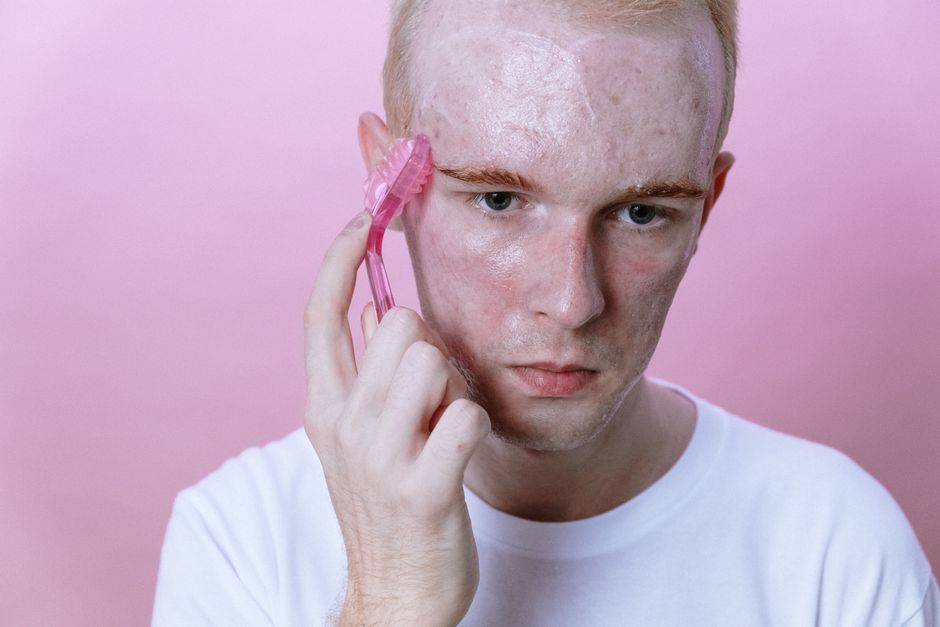
Adderall can cause acne, and the connection is real but indirect. The medication itself does not deposit oil into your pores. Instead, it changes sweating, stress hormones, sleep, and sometimes appetite — and those changes can push skin that was already prone to breakouts into a flare. Treating it means treating those downstream causes, not just spot-treating the pimples. For most people, a standard acne routine plus a few Adderall-specific adjustments makes a meaningful difference. If the acne is severe or leaving scars, that is a reason to talk to the prescriber rather than to keep experimenting on your own.
Does Adderall Actually Cause Acne?
There is no evidence that amphetamine salts directly clog pores. Adderall is a central nervous system stimulant, and its known side effects include increased sweating, reduced appetite, dry mouth, and insomnia — none of which are acne.
What the drug does do is shift the conditions under which your skin operates. Several of those shifts are known contributors to acne in general.
Increased sweating is the clearest one. Adderall raises body temperature and stimulates sweat glands. Sweat itself is mostly water and salt, which does not cause acne on its own. But sweat mixed with dead skin cells and surface oil can trap material in the follicle opening. Add friction from a hat, helmet, or tight collar and you get the pattern dermatologists call acne mechanica — breakouts driven by heat, moisture, and rubbing rather than by bacteria alone.
Stress hormones matter too. Stimulants raise circulating catecholamines and can nudge cortisol upward. Cortisol increases sebum production. More sebum means more fuel for the Cutibacterium acnes bacteria that live in everyone’s follicles. This is a normal part of acne biology, not a sign that something is wrong with you.
Sleep loss is the third piece. Adderall commonly disrupts sleep, especially when taken later in the day. Poor sleep is associated with worse skin barrier function and higher inflammatory markers in some studies. The evidence linking sleep directly to acne severity is not as strong as the evidence for sweating and hormones, but the pattern is plausible and commonly reported by patients.
One more thing worth knowing: some people on Adderall eat far less than usual, and a diet heavy in high-glycemic foods is one of the better-supported dietary links to acne. If Adderall suppresses appetite and you end up eating mostly quick carbs when you do eat, that is a plausible contributor.
How To Treat Adderall Acne And Clear Your Skin
The strategy has two layers: a solid basic acne routine and Adderall-specific adjustments. Do the basics first. They do most of the work.
Wash twice a day with a gentle cleanser. Benzoyl peroxide 2.5% to 5% or salicylic acid 0.5% to 2% are the two best-studied over-the-counter options. Benzoyl peroxide kills C. acnes and reduces inflammation. Salicylic acid helps unclog pores. Benzoyl peroxide can bleach towels and clothing, so plan accordingly.
Shower after sweating. This is the single most useful Adderall-specific habit. If you sweat on your commute, at the gym, or just sitting at your desk, rinse off within an hour or so when you can. If a full shower is not possible, at minimum change out of damp clothing and wipe down the areas that sweat most.
Use a non-comedogenic moisturizer. Stimulants can dry out skin indirectly through dehydration and reduced food intake. Dry skin cracks and irritates, and irritated skin breaks out more. A light moisturizer labeled non-comedogenic will not clog pores.
Do not over-wash. Scrubbing three or four times a day strips the skin barrier and makes inflammation worse. Twice daily is the standard recommendation.
Watch your sleep. If Adderall is keeping you up, that is a conversation to have with your prescriber. Dose timing, dose amount, and extended-release versus immediate-release formulations all affect sleep, and adjusting them is a medical decision — not something to do on your own.
Do not stop or change your Adderall dose to fix your skin. Adderall is prescribed for ADHD or narcolepsy, and stopping abruptly can cause significant problems. Skin is a reason to talk to your prescriber, not a reason to self-adjust.
What about prescription acne treatments?
If over-the-counter products have not worked after about 8 to 12 weeks of consistent use, a dermatologist can consider prescription options. These include topical retinoids like tretinoin, topical antibiotics, or oral medications. Some oral acne treatments interact with stimulants or affect mood, so the dermatologist and the prescriber need to know about each other’s prescriptions.
Isotretinoin is effective for severe nodular acne, but it requires monitoring and has significant risks, including birth defects. It is not a casual option. No clinical guidelines support using it for mild Adderall-related breakouts.
Which Skincare Ingredients Help Most?
Not all acne products are equal. The evidence is strongest for a small number of ingredients.
- Benzoyl peroxide — kills acne bacteria and reduces inflammation. Well supported by decades of clinical use.
- Salicylic acid — a beta-hydroxy acid that helps unclog pores. Best for blackheads and mild inflammatory acne.
- Adapalene 0.1% — a topical retinoid available over the counter in the US. Strong evidence for both comedonal and inflammatory acne.
- Niacinamide — some evidence for reducing inflammation and oil production, though the effect is modest.
- Azelaic acid — evidence for mild to moderate acne, and often better tolerated than retinoids.
Ingredients with weak or no supporting evidence for acne include most “detox” products, charcoal cleansers, and essential oil blends marketed for breakouts. Some of these can irritate skin further.




What Makes Adderall Acne Worse?
Several common habits make the problem harder to control.
Touching and picking. This spreads bacteria and drives inflammation deeper. It also raises the risk of scarring.
Heavy or occlusive makeup. If you wear foundation to cover breakouts, look for products labeled non-comedogenic. Thick, oil-based formulas can make things worse over time.
High-glycemic diets. Research published in the American Journal of Clinical Nutrition and other journals has found associations between high-glycemic diets and acne severity. The effect size is modest, and the evidence is not uniform, but the pattern shows up across multiple studies.
Whey protein and some sports supplements. Several studies have reported an association between whey protein and acne in athletes. The mechanism is not fully understood, but the finding is consistent enough to mention.
Skipping moisturizer because you have oily skin. Oily skin still needs barrier support. Dry, irritated skin produces more oil in response.
Starting five new products at once. If your skin reacts, you will not know what caused it. Introduce one product at a time and give it several weeks.
When Should You See a Doctor About Adderall Acne?
See a dermatologist or your prescriber if any of the following apply.
- Acne is leaving scars or dark marks that persist
- You have deep, painful nodules or cysts
- Over-the-counter treatments have not helped after 8 to 12 weeks of consistent use
- The acne is affecting your mood or daily life
- You are considering stopping Adderall because of your skin
That last point matters most. Do not stop a prescribed stimulant on your own. Abrupt discontinuation can cause fatigue, depression, and a return of ADHD symptoms that may be worse than before. There are almost always adjustments — dose timing, formulation, or adding a targeted acne treatment — that can be explored first.
Some people find that switching from immediate-release to extended-release Adderall, or adjusting the timing of the dose, changes their sweating and sleep patterns enough to affect their skin. This is a decision for the prescriber, and it does not work for everyone.
How Long Does It Take to Clear Up?
Most acne treatments take 6 to 12 weeks to show clear improvement. That timeline is well established in dermatology. Expecting results in a week leads people to abandon routines that were actually working.
Adderall-related breakouts often improve faster than that once the sweating and sleep issues are addressed — sometimes within a few weeks — because the trigger is being removed rather than just the symptom being treated.
If nothing has changed after 12 weeks of consistent, correct use of a basic routine, the next step is a dermatologist, not a stronger over-the-counter product.
Frequently Asked Questions
Can Adderall cause acne on its own?
Adderall does not directly clog pores, but it can trigger acne indirectly through increased sweating, higher stress hormones, and disrupted sleep. People with existing acne-prone skin are more likely to notice a flare.
Does Adderall acne go away if I stop taking Adderall?
Breakouts often improve when the trigger is removed, but stopping Adderall abruptly can cause serious problems and should only be done under medical supervision. Talk to your prescriber about dose or formulation changes before considering anything else.
What is the best face wash for Adderall acne?
A gentle cleanser with benzoyl peroxide 2.5% to 5% or salicylic acid 0.5% to 2% is the best-studied over-the-counter option. Wash twice a day and avoid scrubbing, which irritates skin and can make breakouts worse.
Does Adderall make acne worse in adults?
Adderall can worsen acne in adults for the same reasons it does in younger people — sweating, stress hormones, and poor sleep. Adult acne also has hormonal drivers, so the picture can be more complex.
