
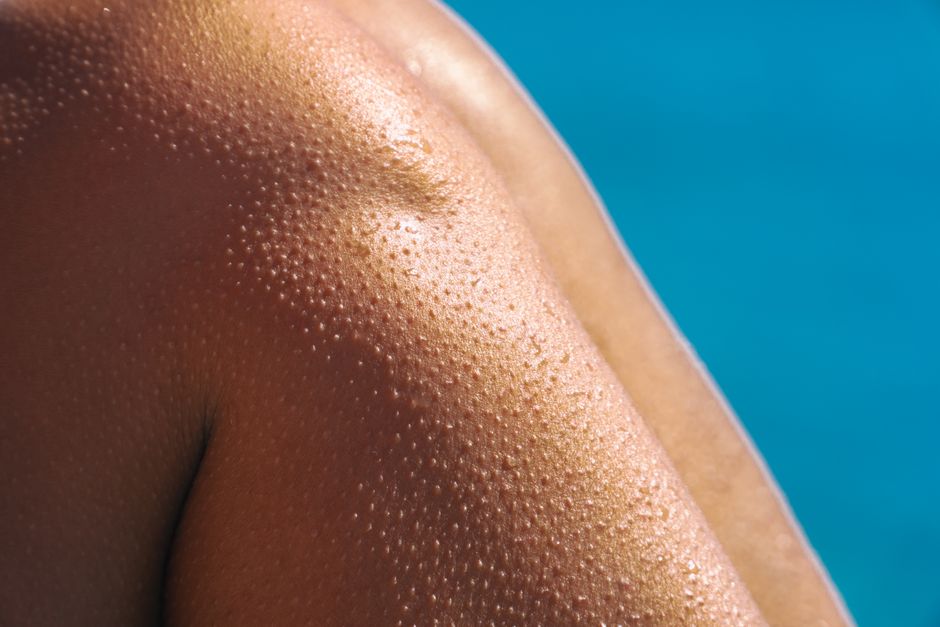
Heat rash happens when sweat gets trapped in your skin and clogs your sweat ducts. The trapped sweat causes tiny red bumps or blisters that can itch or feel prickly. The best way to avoid it is to keep your skin cool and dry so your sweat can evaporate normally. Staying in air conditioning, wearing loose breathable clothing, and showering after sweating are the most reliable ways to prevent heat rash from forming.
What Causes Heat Rash?
Heat rash forms when your sweat ducts become blocked. Your body produces sweat to cool you down. When that sweat cannot reach the surface of your skin, it builds up under the surface and causes inflammation.
The blockage usually happens in hot, humid weather. When the air is already full of moisture, sweat evaporates slowly. Your skin stays wet for long periods. That constant wetness makes the outer layer of skin swell and close off the sweat ducts.
Anything that keeps sweat on your skin for too long raises your risk. Tight clothing, synthetic fabrics that do not breathe, heavy lotions, and staying in bed for long periods can all contribute. Babies get heat rash often because their sweat ducts are still developing.
How To Avoid Heat Rash Keep Skin Cool And Clear
Keep your skin cool and dry. That is the entire strategy in one sentence. Sweat needs to evaporate quickly so it cannot clog your ducts.
Air conditioning is the most effective tool. When your skin stays cool, you simply do not sweat as much. If you do not have air conditioning at home, spend time in cooled public spaces like malls, libraries, or movie theaters during the hottest part of the day.
Fans help, but they have limits. A fan moves air across your skin, which speeds up evaporation. In very humid weather, though, the air is already saturated with moisture. A fan can only do so much. If the humidity is extreme, air conditioning is the more reliable option.
Choose your clothing carefully. Loose, lightweight, breathable fabrics allow air to reach your skin. Cotton and moisture-wicking athletic fabrics are good choices. Tight clothing presses fabric against your skin and traps sweat. Synthetic fabrics that do not breathe, like some polyesters, can make the problem worse.
Shower after heavy sweating. A cool shower washes away sweat and salt that can contribute to blocked ducts. After your shower, pat your skin dry gently. Do not rub. Then let your skin air dry completely before getting dressed.
What Does Heat Rash Look Like?
Heat rash can look different depending on how deep the blockage is. The most common form appears as small red bumps on the skin. These bumps are often clustered together and may feel prickly or itchy. This is sometimes called prickly heat.
A milder form looks like tiny clear blisters filled with fluid. These usually appear on the neck, chest, or upper back. They do not typically itch much and often clear up on their own within a few days.
A deeper form of heat rash produces larger, firmer bumps that match your skin color. These can be more painful than itchy. They are less common but can last longer.
Heat rash most often appears on areas where clothing rubs against skin. The neck, shoulders, chest, armpits, elbow creases, and groin are common spots. In babies, it often shows up in the diaper area and skin folds.





How To Treat Heat Rash When It Appears
Most heat rash clears up on its own once your skin cools down. The first step is to move to a cooler, less humid environment. Get out of the heat and into air conditioning as soon as you notice the rash.
Keep the affected area dry. Gently pat the skin with a clean towel after showering. Let the area air dry before putting on clothing. Avoid heavy creams, ointments, or lotions on the rash. These can worsen the blockage by sealing the skin.
A cool compress can relieve itching. Soak a clean cloth in cool water, wring it out, and place it on the rash for 10 to 15 minutes. Repeat as needed throughout the day.
If the rash itches, calamine lotion can help. Some clinicians also recommend a low-dose hydrocortisone cream for short-term relief of itching. Use these products only on intact skin, not on broken or blistered areas.
See a doctor if the rash does not improve within a few days, if it becomes painful, or if you develop a fever. These symptoms can indicate an infection that needs medical treatment.
What Not To Do
Do not pop the blisters. The blisters are not pimples. Popping them opens the skin to bacteria and increases the risk of infection. Let them heal on their own.
Do not apply thick ointments or heavy moisturizers to the rash. These products can trap more sweat and make the blockage worse. The same applies to baby oil and petroleum jelly.
Do not scrub the rash. Scrubbing irritates already inflamed skin. Wash gently with a mild soap and pat dry.
Do not keep exercising in the heat while the rash is active. More sweating means more moisture on already blocked skin. Take a break from intense physical activity until the rash clears.
Do not use powders as a preventive measure unless a doctor recommends them. Some powders can clump with sweat and contribute to the problem rather than solving it.
Who Gets Heat Rash Most Often?
Anyone can get heat rash, but some groups are more vulnerable. Babies and young children get it frequently because their sweat ducts are still maturing. Their bodies also heat up faster than adult bodies.
People who exercise outdoors in hot weather are at higher risk. Athletes, outdoor workers, and military personnel in hot climates all develop heat rash regularly. The combination of heavy sweating and tight or heavy clothing creates ideal conditions.
People who are bedridden or have limited mobility can develop heat rash. When you stay in one position for long periods, sweat collects under your body. This is why caregivers should check skin folds and pressure points regularly.
People with certain medical conditions that cause heavy sweating may also be more prone. If you sweat heavily regardless of temperature, you may need to take extra precautions during hot weather.
When Heat Rash Signals Something More Serious
Heat rash itself is rarely dangerous. But it can be a sign that your body is struggling to cool down. Pay attention to other symptoms that may accompany the rash.
Heat exhaustion is a more serious condition. Symptoms include heavy sweating, weakness, dizziness, nausea, and a rapid pulse. Your skin may feel cool and clammy. If you experience these symptoms along with heat rash, move to a cool place, drink water, and rest.
Heat stroke is a medical emergency. Symptoms include a body temperature above 103°F, hot red dry skin, confusion, and loss of consciousness. If you suspect heat stroke, call emergency services immediately.
Heat rash alone does not progress to heat stroke. But both conditions share the same cause: your body overheating. Do not ignore the warning signs.
Frequently Asked Questions
How long does heat rash last?
Most heat rash clears up within 2 to 3 days once you cool down and keep the area dry. Deeper forms can last up to a week or longer.
Can you get heat rash in winter?
Yes, if you sweat and the sweat cannot evaporate. Overdressing in cold weather, wearing heavy non-breathable fabrics, or having fever-related sweating can all trigger heat rash indoors during winter.
Is heat rash contagious?
No. Heat rash is a blocked sweat duct, not an infection. You cannot pass it to another person through skin contact.
Does baby powder help prevent heat rash?
Evidence is limited. Some clinicians advise against it because powder can clump with sweat and worsen blockage. Keeping skin cool and dry is the more reliable approach.
