
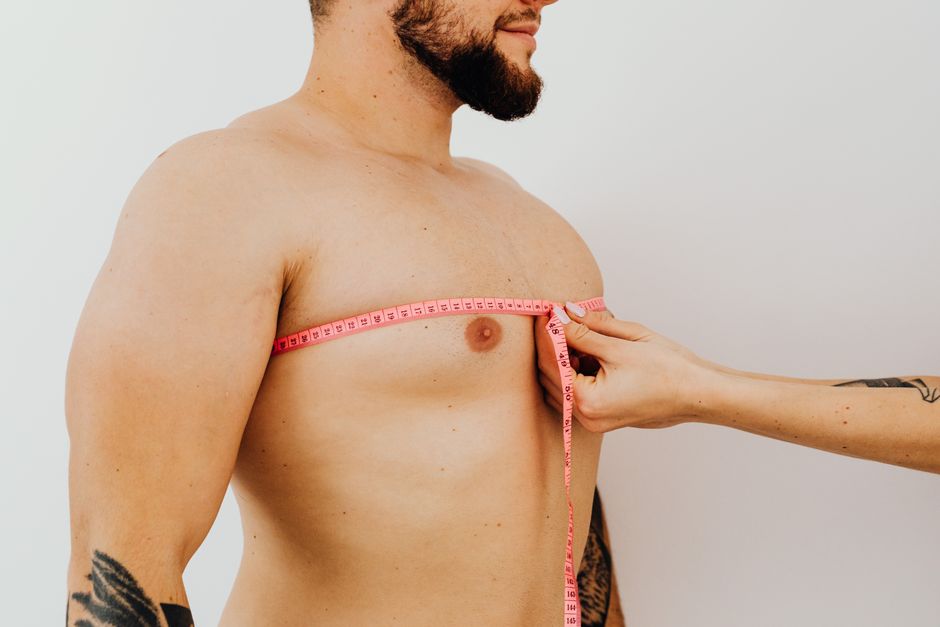
Chest skin loosens for the same reasons skin elsewhere does: collagen and elastin fibers break down over time, sun exposure speeds that process, and rapid weight loss or pregnancy can stretch skin beyond its ability to snap back. No exercise tightens skin directly, because exercise builds muscle, not skin. What exercise can do is build the pectoral muscles underneath, which changes how the chest looks and feels. Treatments that act on skin itself range from topical creams with modest evidence to in-office procedures with more noticeable but temporary results.
Why Does Chest Skin Become Loose?
Skin firmness comes down to two proteins: collagen, which gives skin its structure, and elastin, which lets it stretch and return to shape. Both decline with age, and the chest is one of the first places this shows.
Several factors speed up that decline:
- Sun exposure. The chest is often exposed to sun without sunscreen, and ultraviolet radiation breaks down collagen and elastin faster than aging alone.
- Rapid weight loss. Losing a large amount of weight quickly can leave skin that stretched to accommodate the extra volume without enough time or elasticity to contract back.
- Pregnancy and breastfeeding. Breast tissue and skin expand significantly, and the return to a smaller size does not always restore the original firmness.
- Smoking. Smoking reduces blood flow to skin and is associated with earlier wrinkle formation and reduced skin elasticity.
- Genetics. Some people simply have skin that ages faster or slower than average, independent of lifestyle.
One detail that surprises people: the skin on the chest is thinner than the skin on the face and back. It has less structural support to begin with, which is part of why it shows laxity earlier than other areas.
Can Exercises Tighten Chest Skin?
No exercise tightens skin. This is worth stating plainly because it is widely misunderstood. Skin is not a muscle. It does not contract or grow firmer in response to resistance training the way muscle tissue does.
What chest exercises do is build the pectoralis major and minor, the muscles beneath the breast tissue. A larger, firmer muscle can push the chest forward and create a more lifted appearance. But the skin itself is unchanged. If you pinch the skin on your chest and it feels thin and loose, exercise will not thicken it or restore its elasticity.
That said, the visual difference from building chest muscle is real. For someone with mild laxity and a small amount of underlying muscle, consistent strength training can noticeably improve how the chest looks in a bra or swimsuit. It is not a skin treatment, but it changes the underlying shape.
Which Chest Exercises Actually Help?
Any exercise that loads the pectoral muscles will build them over time. The specific movement matters less than consistency and progressive resistance.
Exercises that target the chest include:
- Push-ups. A bodyweight option that works the pectorals, shoulders, and triceps. Can be modified by doing them on an incline or against a wall for beginners.
- Chest press. Done with dumbbells, a barbell, or a machine. Allows progressive loading as strength increases.
- Chest fly. Dumbbell or cable flys stretch and contract the pectorals through a wider range of motion.
- Incline press. Shifts emphasis toward the upper chest, which some people find improves the appearance of the upper chest area.
For visible change, most people need to train chest at least twice a week with gradually increasing resistance. Muscle growth takes time. Noticeable changes typically take several months of consistent training, not weeks.
Important: exercise cannot reverse significant skin laxity. If skin is hanging or crepey, building muscle underneath will not fix the skin itself. It may improve the silhouette, but the texture and looseness remain.





Do Chest Firming Creams Work?
Most over-the-counter chest firming creams do not produce lasting structural change. This is not cynicism. It reflects what the evidence shows.
Some ingredients have modest supporting data:
- Retinoids. Prescription tretinoin and some over-the-counter retinol products have evidence for improving skin texture and increasing collagen production over time. Effects are gradual and typically modest.
- Vitamin C. Involved in collagen synthesis and may offer some protection against oxidative damage. Topical forms vary widely in stability and absorption.
- Niacinamide. Some studies suggest it supports the skin barrier and may reduce water loss. Firming claims are weaker.
- Peptides. Certain peptides have shown collagen-stimulating activity in laboratory studies. Whether they penetrate skin deeply enough to matter in real use is less clear.
What these ingredients generally cannot do is reverse significant laxity. A cream might slightly improve hydration, texture, and fine lines over months of use. It will not lift sagging skin or replace lost volume.
Be skeptical of products claiming to firm skin in days or weeks. Collagen remodeling takes months even with prescription-strength ingredients.
What In-Office Treatments Are Available?
Procedures that act on skin structure tend to produce more noticeable results than creams, though results vary and most are temporary.
Options include:
- Laser resurfacing. Fractional lasers create controlled injury that triggers collagen remodeling. Multiple sessions are often needed, and results build over months.
- Microneedling. Creates tiny punctures to stimulate collagen. Evidence supports improvement in skin texture and some tightening, though effects are generally modest.
- Radiofrequency. Uses heat to stimulate collagen contraction and new collagen formation. Results vary, and some people see little change.
- Ultrasound tightening. Delivers focused energy below the skin surface. Some studies show improvement in laxity, but results are not dramatic and typically fade over time.
- Chemical peels. Medium to deep peels can improve texture and stimulate collagen. Superficial peels have little effect on firmness.
These procedures carry risks including burns, scarring, pigmentation changes, and infection. Results depend heavily on the practitioner’s skill and the specific device used. No procedure stops the aging process. Improvement typically lasts months to a few years before skin continues to age naturally.
The evidence base varies by procedure. Laser resurfacing and microneedling have more supporting research than radiofrequency or ultrasound for skin tightening specifically. That does not mean the latter do nothing, but the evidence is less consistent.
What About Surgery?
Surgical options exist for significant laxity, but they are not minor. A chest lift, sometimes combined with breast surgery, removes excess skin and repositions tissue. This is the only approach that physically removes loose skin rather than trying to tighten it.
Surgery carries real risks: scarring, infection, changes in nipple sensation, asymmetry, and the need for revision procedures. It is not a decision to make lightly, and it does not prevent future skin aging. Results typically last years but not indefinitely.
For people with mild laxity, surgery is usually disproportionate to the problem. For those with significant hanging skin after major weight loss, it may be the only option that produces substantial change.
Can You Prevent Chest Skin From Loosening?
You cannot stop skin aging entirely, but some steps reduce how fast it happens.
- Sun protection. Daily sunscreen on the chest, especially in low-cut tops, is the single most evidence-supported step. UV damage is a major driver of collagen breakdown.
- Avoid smoking. Smoking is linked to reduced skin elasticity and earlier aging.
- Maintain stable weight. Repeated cycles of weight gain and loss stress skin elasticity.
- Stay hydrated. Dehydrated skin looks less plump, though drinking water does not restore lost collagen.
- Sleep on your back. Side sleeping compresses the chest and may contribute to creasing over time, though evidence for this is limited.
None of these will reverse existing laxity. They slow the process going forward.
Frequently Asked Questions
Do chest exercises tighten loose skin?
No. Exercise builds the pectoral muscles underneath the skin but does not change the skin’s collagen or elastin content. It can improve the appearance of the chest by adding underlying volume, but the skin itself remains unchanged.
How long does it take to see results from chest firming creams?
If a cream produces any effect, it typically takes several months of consistent use. Results are usually modest and limited to texture and hydration rather than actual lifting or tightening.
Is microneedling effective for chest skin tightening?
Some studies suggest microneedling can improve skin texture and produce mild tightening by stimulating collagen. Results are generally modest and multiple sessions are usually needed.
Can I tighten chest skin without surgery?
Non-surgical options like lasers, microneedling, and radiofrequency can produce mild to moderate improvement in skin laxity, but results are temporary and vary. Significant sagging usually requires surgical removal of excess skin.
