
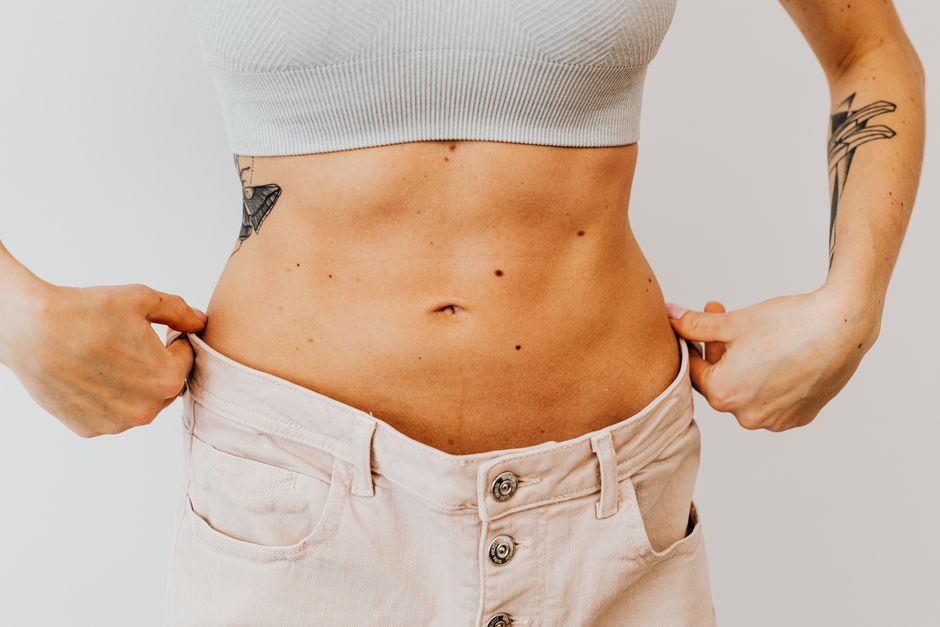
You can tighten loose skin, but how much and how fast depends almost entirely on why it loosened in the first place. Skin that has stretched gradually and still has good elasticity can firm up somewhat on its own. Skin that has lost collagen and elastin to age, sun, or major weight loss usually needs a procedure to see a real change. No cream or supplement has been shown to reverse significant laxity.
That is the honest summary. The rest of this article explains what skin can and cannot do, which approaches have evidence behind them, and which are mostly marketing.
What actually makes skin loose?
Skin holds its shape through a scaffold of two proteins: collagen, which gives it strength, and elastin, which lets it stretch and snap back. When that scaffold is damaged or stretched beyond its limit, skin sags.
Three things damage the scaffold most. Sun exposure breaks down collagen over decades, which is why laxity often shows up first on the face, neck, and hands. Aging reduces collagen production, and women lose collagen faster after menopause. And rapid stretching — from pregnancy, weight gain, or bodybuilding — can outpace elastin’s ability to recoil.
Major weight loss deserves its own mention. When fat volume drops quickly, the skin that was stretched around it does not always shrink back to match. How much it retracts depends on age, how long the skin was stretched, genetics, and how much elasticity was there to begin with. Younger skin tends to recover more. Skin stretched for many years tends to recover less. This is a general pattern, not a guarantee for any one person.
Can you tighten loose skin naturally?
Your skin constantly rebuilds collagen, and some natural firming does happen — but slowly and within limits. The question is how much you can influence that process.
Two lifestyle factors have the most consistent evidence behind them. The first is sun protection. Ultraviolet light is the single biggest external driver of collagen breakdown, and daily sunscreen use helps slow further damage. The second is not smoking. Smoking narrows blood vessels and interferes with collagen production, and smokers tend to show earlier and more pronounced skin aging.
Beyond those, the picture gets softer. Some research suggests adequate protein intake and a diet rich in fruits and vegetables support skin health, though the effect on visible laxity is modest at best. Staying hydrated supports general skin function but does not “plump away” loose skin. No food, drink, or daily habit has been shown to reverse established laxity.
Here is a point worth being clear about: biological plausibility is not the same as proven benefit. It makes sense that nutrients involved in collagen production would help skin. That does not mean eating more of them visibly tightens loose skin. The evidence for most dietary “skin firming” claims is thin.
Do creams and supplements tighten loose skin?
No topical cream or oral supplement has been shown to reverse significant skin laxity. That is the straight answer, and it applies to most of what is sold for this purpose.
Some ingredients have modest evidence for improving skin appearance. Retinoids (vitamin A derivatives) are among the better studied — prescription retinoids have evidence for improving fine lines and skin texture over months of use. But improving texture and reversing sagging are different things. A cream can smooth the surface of skin; it cannot rebuild a stretched scaffold.
Collagen supplements are widely marketed and heavily debated. Some small studies have reported improvements in skin elasticity and hydration, but the research is limited, results vary, and the effect sizes are generally small. There is no strong evidence that swallowing collagen rebuilds collagen in sagging skin in a way you would notice. The evidence here is genuinely mixed, and anyone who tells you it is settled is overselling.
Be skeptical of before-and-after photos. Lighting, posture, and angle can create dramatic-looking changes with no real structural difference.
What treatments can tighten loose skin?
When people see real, lasting tightening, it usually comes from a procedure. These range from noninvasive to surgical, and the trade-off is consistent: the more effective the option, the more invasive and costly it tends to be.
Noninvasive and minimally invasive options include energy-based treatments such as radiofrequency and ultrasound, which deliver heat to stimulate collagen. Some studies suggest modest tightening, particularly on the face and neck, but results are gradual and vary widely between people. Laser resurfacing can improve skin texture and mild laxity. Injectable treatments can add volume but do not tighten skin itself.
Surgical options — such as a tummy tuck, arm lift, or facelift — remove excess skin outright. These produce the most dramatic and reliable results, but they involve anesthesia, recovery time, scarring, and real risks. They are a significant medical decision, not a cosmetic errand.
Which option fits depends on the location and degree of laxity, your age and skin quality, and your health. A board-certified dermatologist or plastic surgeon can assess what is realistic for you. Be wary of anyone promising dramatic results from a single noninvasive session.
How much can skin tighten on its own after weight loss?
Some skin retraction after weight loss is normal, and it continues for months after the weight stabilizes. How much varies enormously from person to person.
Younger age, slower weight loss, good skin elasticity, and a shorter time spent at a higher weight all tend to favor more retraction. Older age, rapid loss, a long history of obesity, and smoking tend to work against it. Genetics matter too, and you cannot change those.
What you can do is give your skin the best conditions to recover: protect it from sun, avoid smoking, eat enough protein, and be patient. What you cannot do is force a specific outcome. Some people regain firm skin after substantial loss; others are left with persistent loose skin no matter what they try. That difference is real and not a personal failing.
What makes loose skin worse over time?
Laxity tends to progress, not improve, without intervention. The main accelerants are the same factors that caused it.
- Sun exposure — the leading external cause of collagen breakdown
- Smoking — interferes with collagen production and blood flow
- Repeated weight cycling — stretching and re-stretching skin over years
- Natural aging — collagen production declines steadily, faster after menopause in women
You cannot stop aging. You can meaningfully reduce sun damage and stop smoking, and those are the two changes with the clearest evidence behind them.
The bottom line
Skin can tighten somewhat on its own, especially if it loosened gradually and still has elasticity. For significant laxity, procedures are the only approaches with reliable results, and even those come with trade-offs. Creams and supplements are not a substitute for what they promise. The most honest path is to understand what is realistic for your situation and to get a professional assessment rather than chasing products that cannot deliver.
Frequently Asked Questions
Can you tighten loose skin without surgery?
Some noninvasive treatments, such as radiofrequency and ultrasound, show modest tightening in studies, mainly on the face and neck. Results are gradual and vary widely, and they are generally less dramatic than surgery.
Does collagen really help loose skin?
The evidence is mixed. Some small studies report improvements in skin elasticity and hydration, but results vary and effects are generally small, so it is not a reliable fix for significant laxity.
How long does it take for skin to tighten after weight loss?
Some retraction can continue for many months after weight stabilizes, but the amount varies greatly by age, genetics, and how long the skin was stretched. There is no set timeline that applies to everyone.
At what age does skin stop tightening?
Skin does not stop tightening at a specific age, but collagen production declines steadily with age and drops faster after menopause in women. Older skin generally retracts less after stretching than younger skin.
