
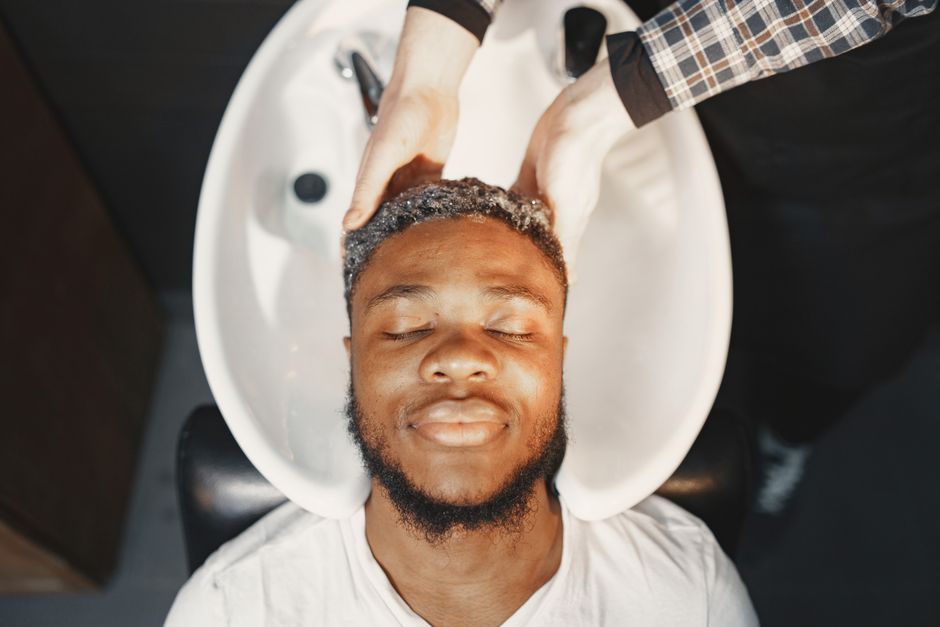
Hair thickness is largely determined by genetics and the number of active hair follicles on your scalp, not by what you apply to the surface. Oils can reduce breakage and improve how hair looks and feels, but they cannot create new follicles or permanently change the diameter of individual strands. A diet with enough protein, iron, zinc, and vitamin D supports the hair you already grow, and gentle care prevents the breakage that makes hair look thinner than it actually is.
What Actually Determines How Thick Black Hair Is?
The width of a single hair strand and the total number of strands on your scalp are set by genetics. You are born with a fixed number of hair follicles, and no product changes that number.
What you can influence is how much of that hair stays on your head and how much breaks off. Hair grows from the follicle in cycles: a growing phase, a short transition phase, and a resting phase before shedding. Most people shed somewhere between 50 and 100 hairs a day as part of this normal cycle. When shedding increases or breakage accelerates, hair looks thinner even though the follicles themselves have not changed.
This distinction matters because it separates what oils and diet can realistically do from what they cannot. Oils and nutrition support the hair you have. They do not add density that genetics did not provide.
Can Oils Really Make Black Hair Thicker?
No oil has been shown in clinical trials to increase hair follicle count or strand diameter. What oils can do is reduce breakage, add slip that makes detangling easier, and coat the strand so it reflects light and appears fuller.
For tightly coiled and textured hair, breakage is often the main reason hair looks thinner over time. Coils have natural weak points where the strand bends, and mechanical stress from combing, brushing, and styling can snap hair at these points. An oil or oil-based sealant that reduces friction during styling can lower that breakage.
Some oils have modest evidence behind them for scalp and hair support:
- Coconut oil — research indicates it can reduce protein loss from hair during washing, which may help limit damage. This is about protecting existing hair, not growing more of it.
- Jojoba oil — chemically similar to the sebum your scalp produces, so it spreads easily and can soften dry strands.
- Castor oil — widely used in textured hair care, but claims that it stimulates faster growth are not supported by strong clinical evidence.
- Rosemary oil — some small studies suggest it may support circulation to the scalp, but the evidence is limited and it is not equivalent to proven treatments.
The honest position: oils are useful for manageability and breakage reduction. They are not a proven treatment for hair thinning caused by genetics, medical conditions, or nutrient deficiency.
How Should You Apply Oils to Black Hair?
Apply oil to damp or dry hair, focusing on the ends and mid-lengths rather than saturating the scalp. The scalp produces its own oil, and heavy buildup can clog follicles and cause irritation for some people.
A practical routine looks like this:
- Section hair and apply a small amount of oil from mid-shaft to ends first.
- Use your fingertips to work a lighter amount into the scalp if it feels dry.
- Detangle gently with a wide-tooth comb or your fingers, starting at the ends.
- Cover with a satin scarf or bonnet at night to reduce friction against cotton pillowcases.
How often you oil depends on your hair’s porosity and your scalp. High-porosity hair tends to lose moisture faster and may need oil more often. Low-porosity hair can feel weighed down quickly. There is no single correct frequency — adjust based on how your hair and scalp respond.
One point worth clearing up: oil is not a moisturizer. Moisture comes from water. Oil seals water in and slows its escape. If hair is bone dry, applying oil alone traps dryness underneath. Water first, then oil to seal.




Does Diet Affect Hair Thickness?
Yes, but indirectly. Hair is a fast-growing tissue, and it needs a steady supply of nutrients. When the body is short on key nutrients, it prioritizes vital organs and hair growth slows or shedding increases.
Nutrients with established roles in hair growth include:
- Protein — hair is made mostly of a protein called keratin. Chronically low protein intake is linked to hair shedding.
- Iron — iron deficiency, with or without anemia, is a well-recognized cause of hair loss, especially in women.
- Zinc — zinc deficiency is associated with hair loss and poor hair growth.
- Vitamin D — low vitamin D levels have been linked to several forms of hair loss, though the exact relationship is still being studied.
- B vitamins, especially biotin — biotin deficiency causes hair loss, but biotin supplements only help if you are actually deficient.
This is where a lot of marketing gets ahead of the science. Biotin supplements are heavily promoted for hair growth, yet in people who are not deficient, there is no good evidence they increase hair thickness. If you eat a varied diet, you likely get enough. If you suspect a deficiency, a blood test is more useful than guessing.
What Else Causes Black Hair to Look Thinner?
Several common causes of thinning have nothing to do with oil or diet:
- Traction alopecia — tight braids, weaves, and ponytails pull on follicles and can cause permanent damage if continued over time.
- Chemical damage — relaxers and repeated coloring can weaken strands and lead to breakage.
- Heat damage — flat irons and blow dryers used at high heat can cause bubbles in the hair shaft that lead to snapping.
- Medical conditions — thyroid disorders, anemia, and a condition called central centrifugal cicatricial alopecia (CCCA) are all linked to hair loss, and CCCA is more common in Black women.
- Medications and stress — certain drugs, illness, and physical or emotional stress can trigger temporary shedding.
If hair loss is sudden, patchy, or accompanied by scalp pain, itching, or scaling, that is a reason to see a doctor or dermatologist. Some causes of hair loss are reversible when treated early, and others are not. Getting an accurate diagnosis matters more than any at-home oil routine.
What Care Habits Protect Hair Thickness?
Protecting the hair you have is more effective than trying to force new growth. The habits below are widely recommended by dermatologists and hair specialists, and they focus on reducing stress on the hair and scalp.
- Loosen tight styles and avoid pulling hair back tightly for long periods.
- Limit heat styling and always use a heat protectant when you do.
- Space out chemical treatments and give hair time to recover.
- Detangle gently, working from ends to roots.
- Wash the scalp regularly enough to prevent buildup, even if you do not wash the full length every time.
- Sleep on satin or silk to reduce friction.
None of these habits will change your genetics. They will reduce the breakage and traction that make hair look thinner than it is.
When Should You See a Doctor About Thinning Hair?
See a doctor if you notice sudden shedding, visible patches of missing hair, a widening part, or scalp symptoms like pain, burning, or scaling. These can point to conditions that need medical treatment rather than home care.
A doctor can check for nutrient deficiencies, thyroid problems, and scalp conditions that cause permanent hair loss. Some of these are treatable, and early treatment tends to work better than waiting.
It is also worth being clear about what no oil or supplement can promise. If a product claims to regrow hair or double thickness, that claim is not supported by clinical evidence. Hair thickness is mostly genetic, and the realistic goal is keeping the hair you have healthy and reducing what you lose to breakage and damage.
Frequently Asked Questions
Can oils make Black hair grow thicker?
No oil has been shown to increase hair follicle count or strand thickness. Oils can reduce breakage and make hair look fuller by improving manageability.
Does diet really affect hair thickness?
Yes, indirectly. Getting enough protein, iron, zinc, and vitamin D supports normal hair growth, and deficiencies in these nutrients are linked to hair loss.
Is castor oil good for thickening Black hair?
Castor oil is popular for textured hair, but there is no strong clinical evidence it stimulates faster or thicker growth. It can help soften hair and reduce breakage.
What causes thinning hair in Black women?
Common causes include traction from tight styles, chemical and heat damage, nutrient deficiencies, thyroid problems, and a scarring condition called CCCA. A doctor can help identify the cause.
