
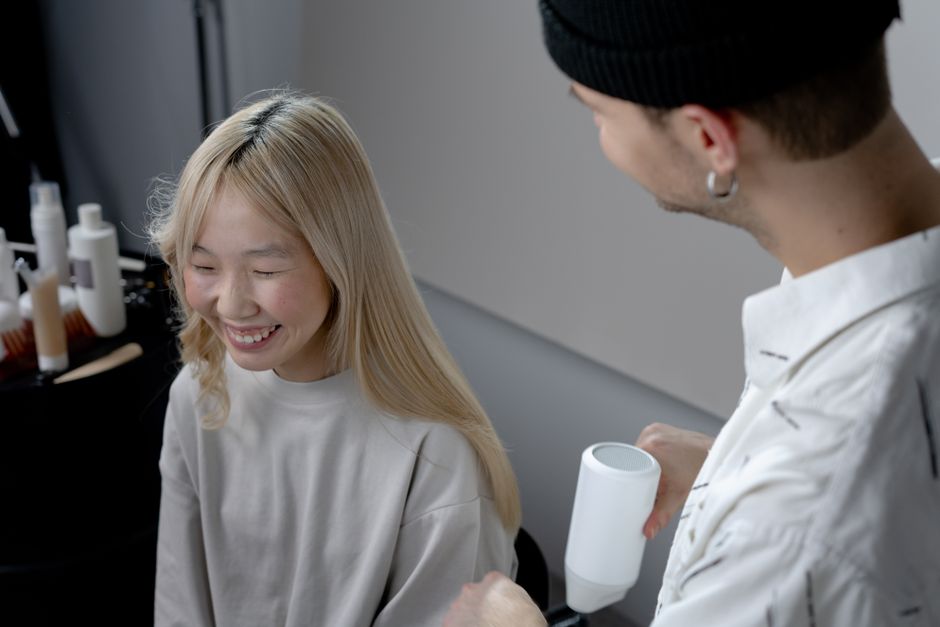
Does blow drying hair dye make it brighter? No. Heat does not boost color intensity, and it does not change how dye molecules interact with your hair. What heat does is speed up the chemical reaction already happening inside the dye. That can affect how evenly color develops, but “brighter” is the wrong word for what is going on.
Hair dye works through chemistry that happens on its own once the product touches your hair. Temperature can change how fast that chemistry moves. It cannot add pigment that was not in the formula, and it cannot make a color more vivid than the dye was designed to be.
How Does Hair Dye Actually Work?
Permanent hair dye does two things at once. It lifts your natural pigment, and it deposits new color inside the hair shaft.
The process starts when you mix the dye with a developer, usually hydrogen peroxide. That mixture opens the outer layer of the hair, called the cuticle, so the chemicals can reach the cortex underneath. The peroxide breaks down melanin, the pigment that gives hair its natural color. At the same time, dye molecules move into the cortex and link together into larger colored compounds. Those compounds are too big to easily escape, which is why the color stays.
This is a chemical reaction, and like most chemical reactions, it moves faster when it is warm. That single fact is the source of most confusion about blow drying and brightness.
Does Blow Drying Hair Dye Make It Brighter?
Blow drying does not make dye brighter. It can make the reaction happen faster, which is a different thing entirely.
Here is the distinction that matters. Speed and intensity are not the same. Warming a reaction can shorten how long it takes to reach its endpoint. It does not raise the endpoint itself. If a dye is designed to produce a medium brown, heat will not turn that result into a rich espresso. The color you get is set by the formula, the developer strength, and how long the product stays on your hair.
There is also a practical problem. Blow drying is a drying process. Hair dye needs moisture and time to work properly. Blasting wet, freshly dyed hair with hot air can dry out the product before it has finished developing. That tends to produce uneven or patchy color, not brighter color.
Some people apply gentle warmth during the processing time, using a cap or a low dryer, based on the idea that it helps color take evenly. This is common in some salons. It is not the same as blow drying your hair dry, and the evidence that it improves results is limited.
Why Do People Think Heat Makes Color Pop?
The belief comes from a real phenomenon that gets misapplied.
Warmth does accelerate the dye reaction. If you have ever noticed that color seems to develop faster in a warm room, that is not imagination. Heat speeds up the chemistry. But faster development is not the same as a brighter final color. It just means the reaction reaches its end point sooner.
There is a second source of confusion. Heat styling can change how hair looks by affecting the cuticle. When the outer layer of hair lies flat and smooth, light reflects off it more evenly. That can make color look richer or more reflective, even though the pigment inside has not changed at all. The color is the same. The surface is different. Shine gets mistaken for brightness.
This is a useful distinction. If your hair looks more vivid after heat styling, you are usually seeing a change in light reflection, not a change in dye.



What Actually Affects How Bright or Vivid Your Color Turns Out?
The factors that genuinely shape your color result are the ones set before heat ever enters the picture.
- Developer strength. A higher-volume developer lifts more natural pigment. That affects how light the base becomes, which changes how the final color reads.
- Processing time. Leaving dye on for the recommended time lets the reaction finish. Cutting it short leaves color underdeveloped.
- Your starting color. The same dye looks different on dark hair than on light hair. This is not a flaw. It is how the chemistry works.
- Hair porosity. Porous hair absorbs and releases color differently. Damaged or over-processed hair can grab dye unevenly.
- Formula choice. A dye designed for vivid results will look vivid. A dye designed for natural tones will look natural. Heat does not override the formula.
Notice that heat is not on this list as a brightness factor. It shows up only as something that can speed up or disrupt the process.
Can Heat Damage Freshly Dyed Hair?
Yes, and this is the more important concern than brightness.
Freshly dyed hair has just been through a chemical process that opened the cuticle and altered the inside of the shaft. That leaves it more vulnerable than usual. Applying high heat right after coloring can add stress to hair that is already stressed.
Heat damage to hair is well documented. High temperatures can degrade the proteins that give hair its structure and can cause the cuticle to crack or lift. Over time, that shows up as dryness, breakage, and dullness. Dullness is the opposite of what most people are trying to achieve.
If you color your hair and then immediately blow dry it on high heat, you are stacking two harsh treatments back to back. Some stylists recommend waiting before applying heavy heat, and giving hair time to settle. The general principle of being gentle with freshly treated hair is sound, even where specific timing recommendations vary.
Does Heat Help Color Take Better, or Just Faster?
Faster, in most cases. Better is a claim the evidence does not strongly support.
This is where a lot of hair advice goes wrong. People reason that if heat speeds up a reaction, more heat must produce a better result. That logic does not hold. Chemical reactions have an endpoint. Once the dye has developed, adding more heat does not improve it. It can only cause problems.
There is a narrow situation where gentle warmth during processing is used in professional settings. Some colorists apply low, controlled heat to help the product work evenly on resistant hair. This is a controlled technique, not the same as blow drying, and it is not something most people should try to replicate at home with a standard dryer.
The takeaway is simple. If a product or a stylist tells you that blow drying will make your color brighter, treat that claim with skepticism. Speed and intensity are not the same thing, and no amount of hot air adds pigment that was never in the formula.
What Should You Do Instead to Get the Color You Want?
Focus on the variables that actually control your result.
Follow the processing time on the product. Use the developer strength the instructions call for, or that your colorist recommends for your goal. If you want a more vivid result, choose a formula built for vivid color rather than trying to force it with heat. If your hair is porous or damaged, address that before coloring, because healthy hair holds color more predictably.
When it comes to drying, gentler is generally better for freshly colored hair. Lower heat settings and less time under high heat reduce the chance of damage. If shine is what you are after, that comes from hair condition and cuticle smoothness, not from the dye itself.
The honest summary: blow drying hair dye does not make it brighter. It can speed up a reaction that is already happening, and it can change how light reflects off your hair. Neither of those is the same as brighter color, and pushing heat too far risks damage that makes color look worse over time.
Frequently Asked Questions
Does blow drying hair dye make it brighter?
No. Blow drying does not increase color intensity or add pigment. It can speed up the dye reaction, but speed is not the same as brightness.
Does heat help hair dye develop faster?
Warmth can speed up the chemical reaction in dye, so color may develop faster. It does not change the final color the formula was designed to produce.
Can I blow dry my hair right after dyeing it?
Freshly dyed hair is more fragile because the coloring process opens the cuticle and alters the hair shaft. Applying high heat right away adds stress, so gentler drying is generally safer.
Why does my hair color look more vivid after heat styling?
Heat styling can smooth the outer layer of hair, so light reflects more evenly and color appears richer. The pigment inside the hair has not changed.
