
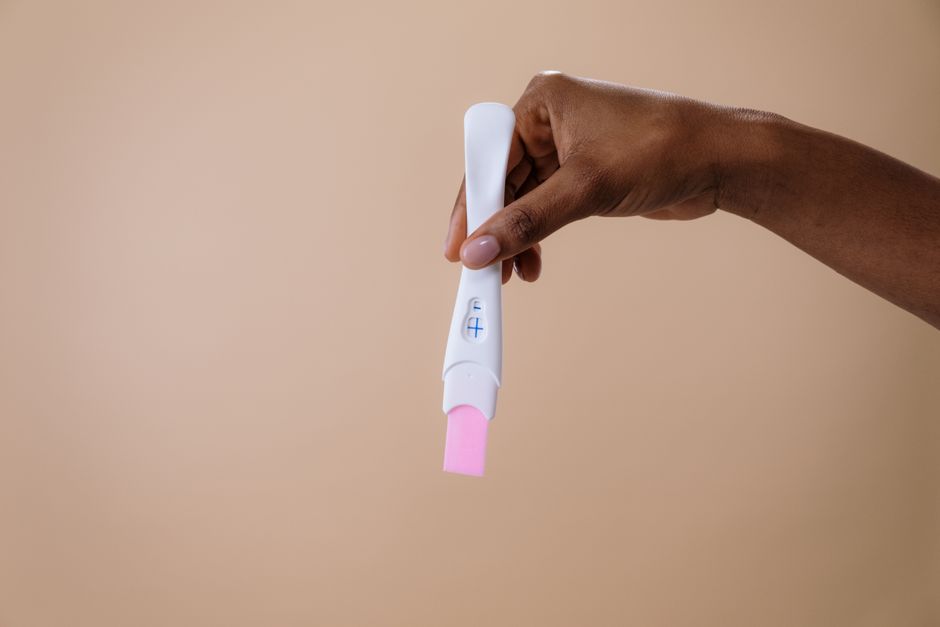
There is no single lab test that can tell you whether you are in perimenopause. Healthcare providers diagnose perimenopause based on your age, changes in your menstrual cycle, and your symptoms. Blood tests for hormones like FSH are not reliable for perimenopause because hormone levels go up and down throughout this stage. The most accurate way to know if you are in perimenopause is to track your cycle and symptoms and talk to your doctor.
Can a Blood Test Diagnose Perimenopause?
Not reliably. Many women ask for a “hormone test” to check if they are in perimenopause. But standard hormone tests — including FSH (follicle-stimulating hormone), estradiol, and AMH (anti-Müllerian hormone) — were not designed to diagnose this transition.
FSH is the most common test requested. During perimenopause, the ovaries produce less estrogen. The brain releases more FSH to try to stimulate the ovaries. But FSH levels rise and fall unpredictably during this stage. One day the level may be high, and the next it may be normal. A single high FSH result does not confirm perimenopause, and a normal result does not rule it out.
AMH measures the number of eggs remaining in the ovaries. It can give some information about ovarian reserve, but it does not tell you whether you are currently in perimenopause. Many women with low AMH still have regular cycles, and women with normal AMH can have perimenopausal symptoms.
Estradiol levels also fluctuate. Low estradiol is common in later perimenopause, but during early perimenopause estrogen may be normal or even high at times.
The North American Menopause Society states that a diagnosis of perimenopause should be based on a woman’s age, menstrual history, and symptoms — not on a single blood test.
What Hormone Levels Change During Perimenopause?
Perimenopause is a time of hormonal chaos, not a steady decline. The changes happen in stages:
- FSH often starts to rise, especially in the early follicular phase (days 2–4 of your cycle). But levels can vary widely from month to month.
- Estradiol may be high some months and low others. Because of this, cycles can become shorter, longer, or unpredictable.
- Progesterone declines because ovulation becomes less frequent. This can cause heavy, irregular bleeding.
Because these hormones fluctuate, a single measurement at one point in time is not useful for diagnosis. Even a pattern of tests over several months does not reliably predict when perimenopause started or how long it will last.
Another non-obvious point: the first sign of perimenopause is often a change in cycle length. Cycles that are consistently 7 days shorter than your usual pattern are one of the earliest markers. That can happen before any hormone test changes.
Is There a “Perimenopause Test” You Can Buy?
Several over-the-counter urine tests claim to detect perimenopause. Most measure FSH. Some combine FSH with estradiol or other markers. The problem is the same: FSH fluctuates throughout the cycle and during perimenopause.
In 2005, the U.S. Food and Drug Administration (FDA) warned that FSH home tests should not be used to diagnose menopause or perimenopause. The FDA stated that “the tests may give false results.” Many tests still on the market carry disclaimers saying they are not for diagnosis.
These tests might show a high FSH level, but that does not mean you are in perimenopause. It could be a mid-cycle surge or a normal monthly variation. Relying on a home test can lead to unnecessary worry or false reassurance.
If you are tracking symptoms and want additional information, a test that measures AMH can be purchased online. But again, AMH does not diagnose perimenopause. It only gives information about ovarian reserve, which is not the same as menopausal transition.





How Do Doctors Actually Diagnose Perimenopause?
Diagnosis is based on three things: age, cycle pattern, and symptoms.
Age. Perimenopause most commonly begins in a woman’s 40s, but it can start as early as the mid-30s. If you are under 35 and have irregular cycles, the cause is more likely something else — such as thyroid disease, polycystic ovary syndrome (PCOS), or stress.
Cycle pattern. The first noticeable change is often that cycles become shorter — for example, going from 28 days to 24 or 25 days. Later, cycles become longer. You may skip a month or have two periods in one month. The clinical definition of late perimenopause is having at least 60 days between periods.
Symptoms. Common symptoms include hot flashes, night sweats, trouble sleeping, vaginal dryness, mood swings, and brain fog. These symptoms alone do not confirm perimenopause, but together with cycle changes and age they strongly point to it.
Your healthcare provider should also rule out other conditions. They may check your thyroid function, iron levels, or do a pregnancy test. Sometimes prolactin or other hormones are checked if the symptoms are unusual.
No single lab test confirms perimenopause. The diagnosis is clinical.
What Should You Do If You Think You’re in Perimenopause?
First, track your menstrual cycle for at least a few months. Note the length between periods, the number of days you bleed, and any symptoms you have. Many smartphone apps make this easy.
Second, make an appointment with your primary care provider or a gynecologist. Tell them what you have observed. They may or may not order tests. If you are in your 40s and have typical cycle changes and symptoms, many doctors will diagnose perimenopause without any lab work.
If you are under 40, or if your cycles are very irregular without other symptoms, blood tests may be needed to rule out other causes. A doctor might check FSH, TSH, prolactin, and sometimes a pregnancy test. But even then, a single FSH is not enough to say you are in perimenopause.
Do not let a lab result overrule your symptoms. Many women are told “your FSH is normal, so you cannot be in perimenopause” and then dismissed. That is not supported by evidence. The cycle and symptoms matter more.
If you want a more definitive answer about where you are in the transition, a test like AMH can show if your ovarian reserve is low. But again, that does not diagnose perimenopause — it just gives you information. Talk to a clinician before ordering such a test on your own.
Frequently Asked Questions
What is the most accurate test for perimenopause?
There is no accurate test. Diagnosis is based on your age, menstrual cycle changes, and symptoms. No blood or urine test can confirm perimenopause.
Can FSH levels tell me if I’m in perimenopause?
No. FSH levels go up and down during perimenopause, so a single reading is not reliable. A consistently high FSH (above 40 IU/L) on two tests a month apart is a sign of menopause, not perimenopause.
Do I need a hormone test for perimenopause?
Not usually. Most women can be diagnosed based on their symptoms and cycle history. Hormone tests are mainly used to rule out other conditions, not to confirm perimenopause.
What age does perimenopause start?
For most women, perimenopause begins in their 40s. It can sometimes start in the late 30s. If you are under 35 and have irregular periods, other causes should be considered first.
