
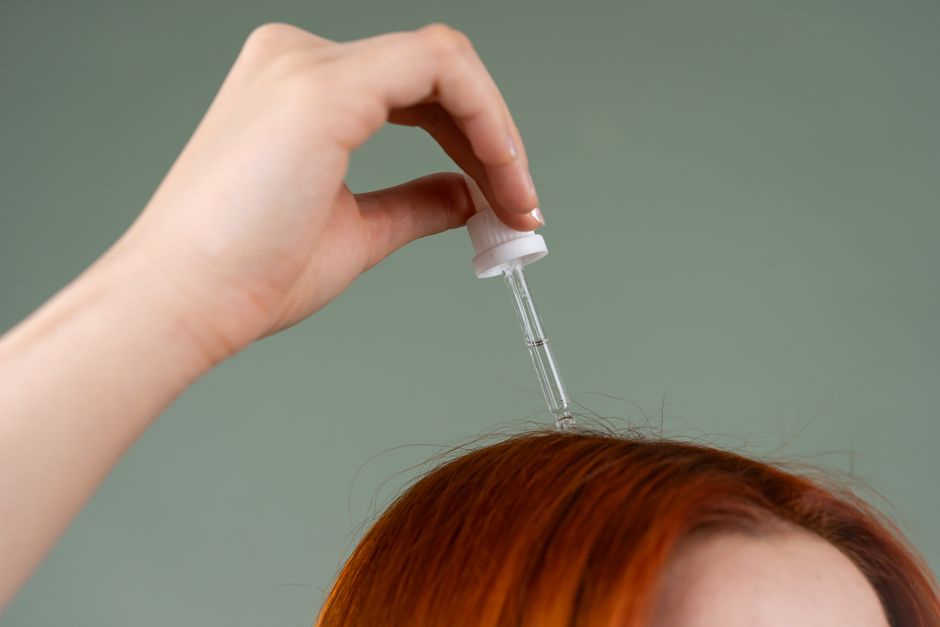
You cannot remove DHT from your scalp completely. Your body makes it locally, in the hair follicle itself, and no shampoo, scrub, or “detox” product can eliminate it. What actually works is lowering DHT production or blocking its effect on the follicle — and only a few approaches have real evidence behind them.
DHT stands for dihydrotestosterone. It is a hormone your body makes from testosterone. In people who are genetically sensitive to it, DHT shrinks hair follicles on the scalp over time. This is the core mechanism behind androgenetic alopecia, also called male or female pattern hair loss.
The key point most articles miss: DHT is not sitting on your scalp like dirt. It is being made inside the follicle by an enzyme called 5-alpha reductase. That changes what “removing” it actually means.
How To Remove Dht From Your Scalp What Actually Works?
Two categories of treatment have solid evidence behind them: drugs that block DHT production or action, and a few topical agents with clinical trial support. Everything else ranges from promising to unproven.
The most studied approach is finasteride, an oral prescription drug. It blocks the type 2 form of the 5-alpha reductase enzyme. This lowers scalp and blood DHT levels. Research consistently shows it slows hair loss and can regrow some hair in men with androgenetic alopecia. It requires a prescription and has known side effects, including sexual side effects in a minority of users.
Minoxidil is the other widely used option. It does not block DHT. It works through a different mechanism, likely by extending the growth phase of the hair cycle and improving blood flow to the follicle. It is available over the counter as a topical liquid or foam.
Topical finasteride has also been studied. Some evidence suggests it lowers scalp DHT with less systemic absorption than the oral form. It is not approved by the FDA in topical form, though some clinicians prescribe compounded versions.
What does not work: scalp scrubs, “DHT blocking” shampoos with caffeine or saw palmetto as the main claim, detox treatments, and scalp massage for DHT removal. These may feel good. None has been shown to lower scalp DHT in a meaningful way.
Does DHT Sit On Your Scalp Or Is It Made There?
DHT is made in the hair follicle, not deposited on the scalp from somewhere else. This is the single most important fact for understanding why most “DHT removal” products cannot work as advertised.
The pathway works like this. Testosterone circulates in your blood. Inside certain tissues, including hair follicles, an enzyme called 5-alpha reductase converts testosterone into DHT. DHT then binds to androgen receptors in the follicle.
In people with a genetic sensitivity, this binding triggers a process called follicular miniaturization. The hair shaft gets thinner. The growth phase shortens. Eventually the follicle stops producing visible hair.
Because DHT is made locally, washing your scalp cannot remove it. Even if you could strip every trace from the surface, the follicle would keep making more. This is why oral finasteride works — it reduces the enzyme’s activity inside the follicle, not on the surface.
There is one nuance worth knowing. Sebum, the oil your scalp produces, does contain some DHT. Some research has measured DHT levels in scalp oil. But reducing surface DHT has not been shown to change hair loss outcomes on its own.
Which Ingredients Have Real Evidence For Blocking DHT?
A short list has meaningful clinical evidence. Most natural ingredients marketed for DHT have only lab or animal data, which does not always translate to real results in people.
- Finasteride — oral prescription drug. Blocks type 2 5-alpha reductase. Strong evidence for slowing hair loss in men.
- Dutasteride — oral prescription drug. Blocks both type 1 and type 2 forms of the enzyme. Used for hair loss off-label in some cases. Not FDA approved for this purpose.
- Topical finasteride — some clinical trial evidence for reducing scalp DHT with fewer systemic effects. Not FDA approved as a topical product.
- Ketoconazole shampoo — a prescription-strength antifungal shampoo. Some studies suggest it has mild anti-androgen effects on the scalp. Evidence for hair loss specifically is limited.
- Saw palmetto — a plant extract. Some small studies suggest mild effects on DHT, but results are mixed and the evidence is not strong enough to call it proven.
Caffeine, rosemary oil, pumpkin seed oil, and green tea extract appear in many “DHT blocker” products. Some small studies suggest possible benefit for hair growth, but the evidence is early and mixed. None has been shown to lower scalp DHT in the way finasteride does.





Do DHT Blocking Shampoos Actually Work?
No shampoo has been shown to meaningfully lower scalp DHT or stop pattern hair loss. That is the honest position based on current evidence.
The problem is contact time and penetration. Shampoo sits on your scalp for a minute or two, then gets rinsed off. For an ingredient to affect the enzyme inside the follicle, it would need to penetrate the skin and reach the follicle in enough concentration to matter. Most shampoo ingredients do not do this.
Ketoconazole shampoo is a partial exception. It is a prescription antifungal that some research suggests has mild effects on androgen activity in the scalp. It is often used alongside other treatments. But it is not a standalone solution for hair loss, and the evidence for it as a DHT blocker specifically is limited.
If a shampoo claims to “remove DHT from your scalp,” treat that claim with skepticism. It is not supported by clinical evidence.
What About Natural DHT Blockers Like Saw Palmetto?
Saw palmetto is the most studied natural option. The evidence is mixed, and it is not equivalent to prescription treatment.
Saw palmetto extract comes from the berries of a palm plant. In lab studies, it shows some ability to inhibit 5-alpha reductase. Some small human trials have suggested mild improvement in hair growth or slowed loss. Other trials found no significant difference from placebo.
This is the pattern with most natural DHT blockers. A plausible mechanism, some early data, and results that do not hold up consistently across studies. That does not mean they do nothing. It means we do not have strong enough evidence to say they work reliably.
If you are considering saw palmetto, know that it can interact with blood thinners and other medications. It is also not recommended during pregnancy or breastfeeding. No clinical guidelines currently exist for its use in these groups.
Can You Lower Scalp DHT Without Medication?
Lifestyle changes alone have not been shown to significantly lower scalp DHT. This is a common source of frustration, but it is the accurate picture.
Diet, stress, and sleep affect hormones in general. Some research suggests that insulin resistance and metabolic factors may influence androgen levels. But no diet or lifestyle intervention has been shown to reduce scalp DHT enough to stop pattern hair loss.
Things sometimes suggested but not proven to lower scalp DHT:
- Cutting dairy or sugar
- Scalp massage
- Certain supplements like zinc or biotin
- Detox diets or cleanses
Some of these may support overall health. None has clinical evidence for lowering scalp DHT or treating hair loss.
One clarification: biotin is often marketed for hair. It helps only if you have a biotin deficiency, which is uncommon. Taking it without a deficiency has not been shown to improve hair growth.
What Is The Most Effective Approach For DHT Related Hair Loss?
The most effective approach combines treatments that work through different mechanisms. This is what dermatologists generally recommend, though individual results vary.
For men with androgenetic alopecia, the typical combination is finasteride plus minoxidil. Finasteride lowers DHT. Minoxidil supports hair growth through a separate pathway. Research consistently shows this combination outperforms either treatment alone.
For women, the approach is different. Oral finasteride is generally not recommended for women of childbearing age because of birth defect risks. Minoxidil topical is commonly used. Some clinicians prescribe other anti-androgens off-label. This is an area where you need a doctor’s guidance, not a general article.
Timeline matters. These treatments take months to show results, and they only work while you keep using them. Stopping finasteride typically leads to losing any gained hair within a year. This is not a short-term fix.
If you are considering treatment, see a dermatologist or a doctor who specializes in hair loss. They can confirm the cause, rule out other conditions, and discuss what is appropriate for you.
Frequently Asked Questions
Can I remove DHT from my scalp naturally?
No. DHT is made inside the hair follicle, so it cannot be washed or detoxed away from the scalp surface. Natural approaches have not been shown to meaningfully lower scalp DHT.
Does washing my hair more often reduce DHT?
No. Shampooing removes oil and dirt from the scalp surface, but it does not affect the DHT being produced inside the follicle. Frequent washing has no impact on pattern hair loss.
Is finasteride the only thing that actually blocks DHT?
Finasteride and dutasteride are the most effective known DHT blockers, and both require a prescription. Topical finasteride and ketoconazole shampoo have some evidence but are less established.
How long does it take to see results from DHT blocking treatment?
Most treatments take several months before any change is noticeable, and results vary by person. Treatment usually needs to continue long term to maintain any benefit.
